Three kinds of businesses answer this search
Type “rust repair near me” into a search box and you get three very different operations wearing the same label. Collision and refinish shops like ours handle corrosion on body panels as part of everyday metal and paint work. Restoration shops rebuild badly rusted vehicles from the structure outward, often over months. And then there are patch-and-spray outfits that grind the brown spot, skim it with filler, and blow color over the top before the weekend.
Matching your problem to the right kind of shop matters more than any star rating. Each business model exists for a different stage of corrosion, and a mismatch either costs far more than the job needed or leaves you with a repair that fails before the next spring melt.
You can usually sort them with one phone call. Ask how the shop handles the metal itself and listen for specifics: a collision shop talks about cutting, welding, and refinishing; a restorer talks about projects and timelines; a patch operation talks mostly about price. None of the three is dishonest by definition — the trouble starts when a car that needs one kind of work gets sold another.
What a collision shop takes on
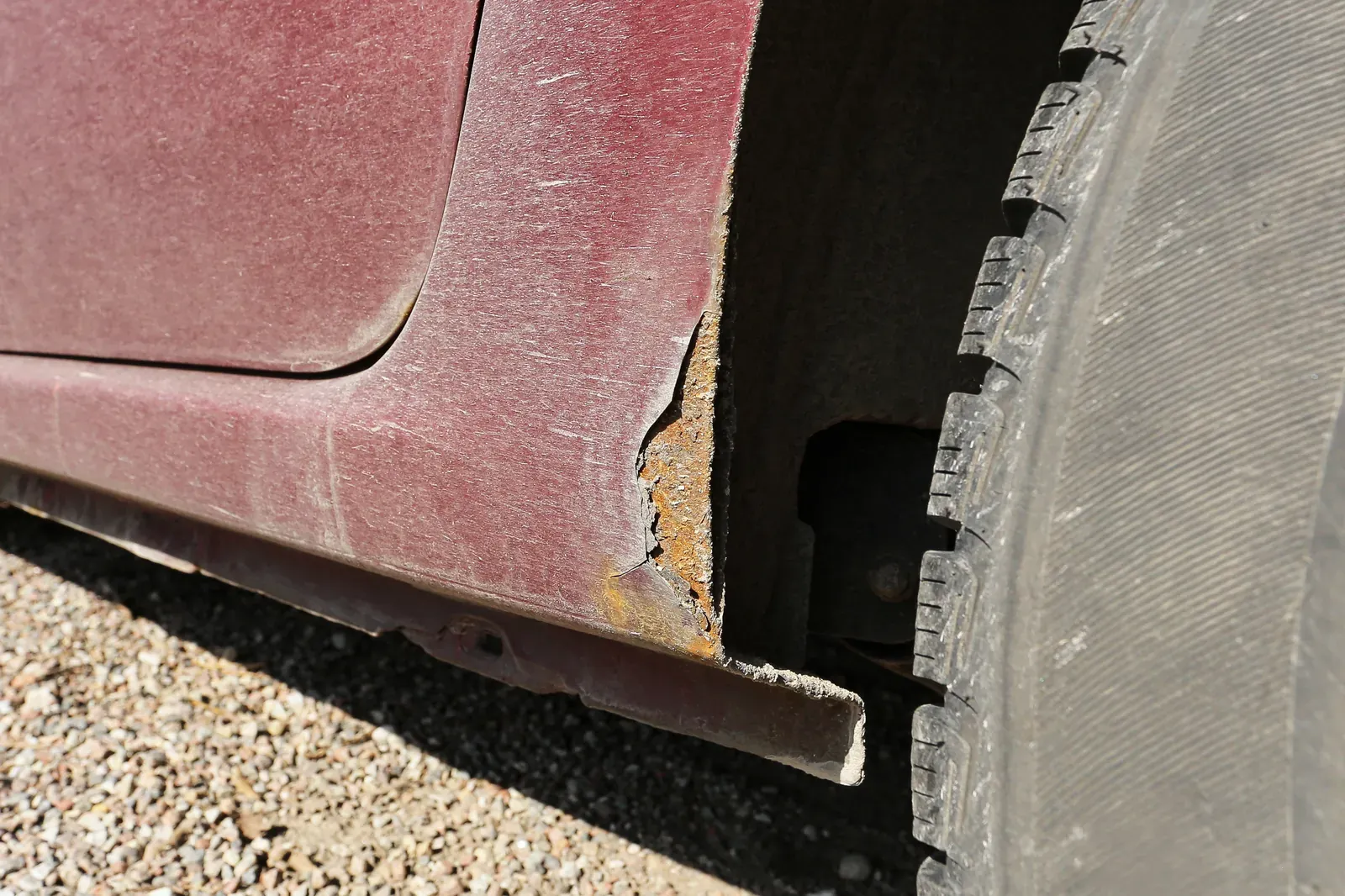
Our lane is rust that has not gone through the steel yet. Blistering along a rocker, a wheel arch lip turning brown, door bottoms starting to bubble, old chips and scratches that were never sealed — that work sits naturally inside a paint and body shop, because the second half of every rust job is refinishing, and refinishing is what our booth and color-matching equipment exist to do.
The repair itself removes the corroded metal instead of covering it, then seals, primes, and paints with a computerized color match so the panel disappears back into the car. Anything we refinish carries our written lifetime paint warranty, which is the practical line between a repair and a patch: one of them the shop is willing to stand behind for as long as you own the vehicle.
Booking works like any other body work here. The estimate is free, the booth schedule is set when you approve it, and the doors are open Mon–Sat with evening hours, so a rust repair can fit around a workday instead of costing you one. Small spots often share a paint cycle with other jobs, which is one more reason catching them small pays.
- Bubbling or blistered paint on rockers, arches, doors, and tailgates
- Chips and scratches that have started to brown at the edges
- Corrosion creeping out from trim holes, badges, and seams
- Rust returning where a previous shop patched over it
- Refinishing and blending once the metal is made sound again
What we refer out — and why that helps you
Once corrosion has perforated the metal — daylight through a rocker, a soft floor pan, frame sections shedding layers — the job stops being repair and becomes fabrication. That is restoration work: cutting out structure, forming replacement sections by hand, and rebuilding seams the factory originally welded. It is a genuine trade with its own specialists and its own pace, and it is not ours.
A shop that accepts every rusty car that rolls in is not doing anyone a favor. When a vehicle needs a restorer, we say so and point you toward one, because a collision shop attempting fabrication at collision-shop speed is exactly how the region’s worst rust repairs get made.
If you are not sure which side of the line your car sits on, that is a normal place to be — perforation is not always obvious under bubbled paint and old undercoat. Send photos anyway. Part of what an estimate does is sort the car honestly: what we can repair and warranty, what belongs with a restorer, and what is not worth either path.
Why the cheap patch always loses
Filler laid over corrosion is the repair we are most often asked to redo. It photographs beautifully the day it is finished, and then the rust that was never removed keeps working underneath until the blister returns — larger this time, because the patch held moisture against the steel while it worked.
If a quote seems remarkably low for the size of the job, ask one question: does this price include cutting out the bad metal, or covering it? The answer separates real repair from cosmetics in a single sentence, and any shop doing honest work will answer it without flinching.
The frustrating part is that the patch is not even cheaper over time. Pay once for a covered-up panel and once more for the proper repair after it fails, and you have spent more than the honest job would have cost — plus another winter of spread in between. Rust rewards doing it once, correctly, at the smallest size you will ever see it.
Paying for it, since insurance will not
There is no claim to file for rust. Auto policies classify gradual corrosion as wear — the same category as brake pads — so this is out-of-pocket work by design. That makes an accurate written number matter more, not less: send photos of each spot and a wider shot of the panel, and a free written estimate comes back within 1 hour.
When the budget is tight, we help you rank the damage: which spot is actively spreading, which can wait a season, and which panel is honestly not worth money at all. Riaz has run this shop since 2010, and telling people where not to spend is a large part of how it earned its reviews.