
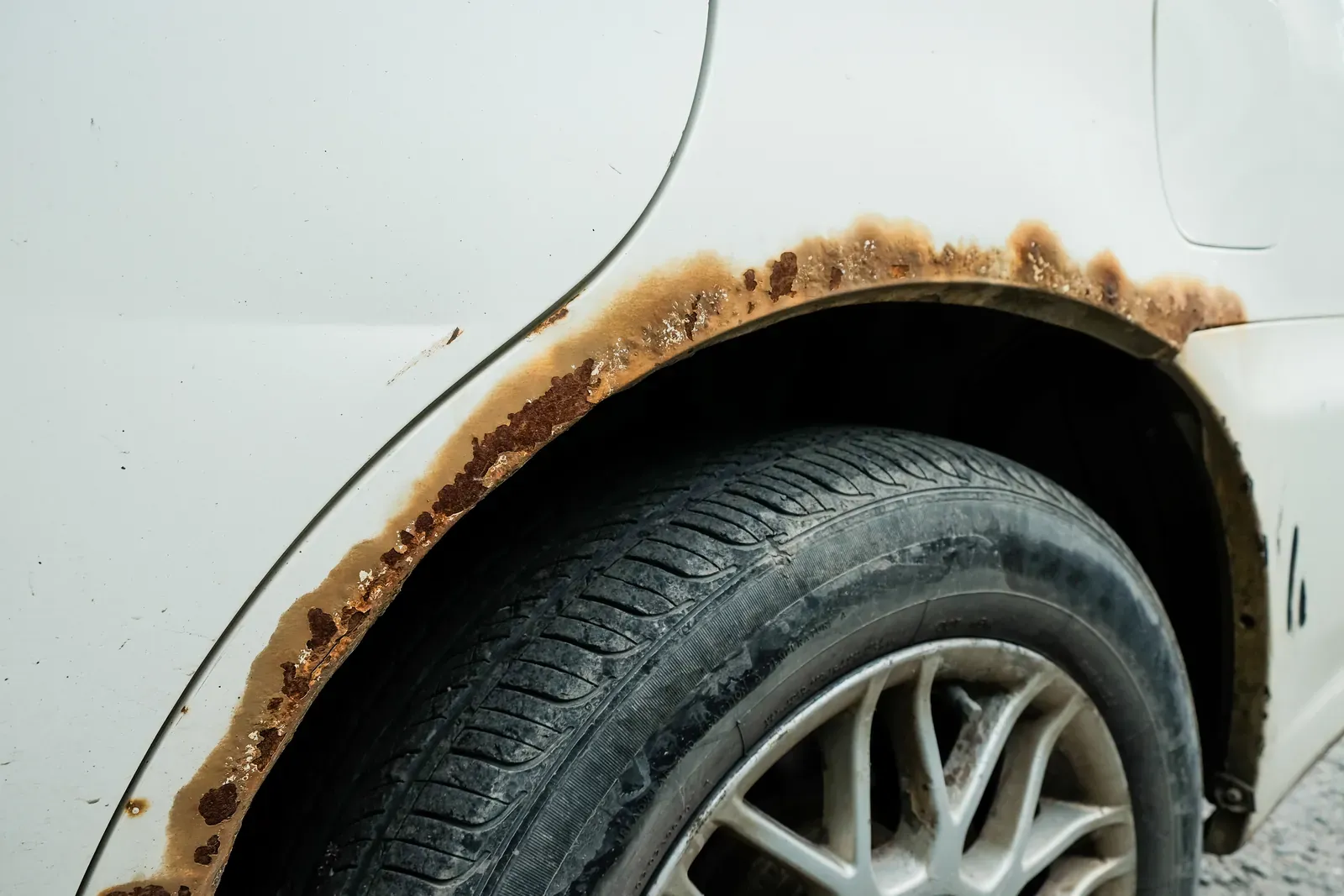
First: photograph it and date it
Before anything else, take pictures — one straight on, one at a low angle so raking light shows any bubbling, and one with a coin beside the spot for scale. Your phone stamps the date, and that stamp is the useful part: rust decisions are easier with evidence than with memory. Good photos also make a remote estimate accurate, which is what lets you skip the trip to the shop entirely.
Recheck after thaws and big slushy storms. If the spot is identical for weeks, you have time to plan calmly. If it visibly widens or the paint around it starts to lift, it is active and feeding, and the booking should move up your list accordingly.
While the camera is out, walk the rest of the car and shoot the usual suspects: the other arches, both rockers, the lower door edges, the tailgate lip, and the hood’s leading edge. Rust spots are social — the conditions that produced one usually produced another somewhere less obvious, and finding the second spot today means one booth visit instead of two.
Second: starve it of moisture
Corrosion needs water and salt to keep working, so your interim job is drought. Rinse the area when the temperature allows, hand-dry it, and make sure nearby drain slots — door bottoms, rocker undersides — are clear of sand so water is not pooling behind the spot.
Two things not to do: do not pick or peel the bubbled paint, and do not attack it with sandpaper as a hobby project. Opening the blister exposes raw steel to the next storm, and DIY sanding widens the broken-paint edge — the exact opening rust exploits. Leave the surface closed until it is repaired.
Where the car sleeps matters during this holding period, too. A spot that spends nights above freezing in a humid garage keeps corroding all winter, while one frozen solid in the driveway mostly pauses. No need to change your life over it — just rinse and dry the area before warm storage when you can, and avoid parking over snowmelt puddles when you cannot.
A note for lease drivers and soon-to-sellers: the early window counts double for you. A documented small repair reads far better at turn-in or sale than an active rust spot ever will, and it costs far less than the deduction or the lost offer the spot would otherwise trigger.
Third: book it while it is small
The early version of this repair is the cheapest it will ever be: the spot gets sanded back to clean metal, treated, primed, refinished, and blended, and the finish leaves under our written lifetime paint warranty. On a spot with no perforation, that is a booth job, not a fabrication project.
Timing beats season. A spot found in October should not see December roads untreated; one found in March should be gone before the next winter, when repair calendars are calmer anyway. Either way the goal is the same — never let a known spot cross a full salt season.
Booking early carries a quieter benefit: options. A small spot can wait for a calm week on the shop calendar, share a booth cycle with another panel, or fit around your travel — flexibility that evaporates once it has grown into cut-and-weld work with parts on order. Small repairs are the easiest ones to schedule around a life, which is one more reason to do them while they are small. Waiting, by contrast, converts an errand into a project.
What not to put on it while you wait
The auto-parts aisle offers a shelf of hope in cans, and most of it makes the eventual repair harder. Nothing sold over the counter stops corrosion that is already working underneath intact paint — at best you pause the surface while the spread continues out of sight. Save the aisle money and put it toward the repair, or toward the wash habits that actually slow the chemistry down.
- Body filler — sealing active rust under filler guarantees a return visit
- Touch-up paint dabbed over metal that has already browned
- Rust converter as a final finish — a stopgap on bare scale at most
- Stickers, patches, or tape — trapped condensation, faster spread
- Undercoating sprayed over the spot — it hides progress, nothing more
Chip or bubble? One distinction worth making
A stone chip that just turned brown is a surface entry — caught at this stage, the repair is about as small as body work gets. A bubble rising under otherwise unbroken paint means corrosion is established beneath the finish and has been for a while. Both are fixable before perforation; the second simply deserves more urgency and a slightly larger estimate.
One thing not to wait for: an insurance company. Corrosion is excluded from every standard auto policy, so there is no adjuster, no claim, and no deductible in this story — just photos, a free written estimate within 1 hour, and a booth slot with your name on it. The timing is entirely in your hands, which cuts both ways.
And if the honest answer to “did I catch this early?” turns out to be no — the spot marks a panel that has been going for years — you will hear that too, along with the realistic options. Catching it late still beats catching it never; the playbook just hands off from this page to our worth-it framework.