
The depth test: four layers, four answers
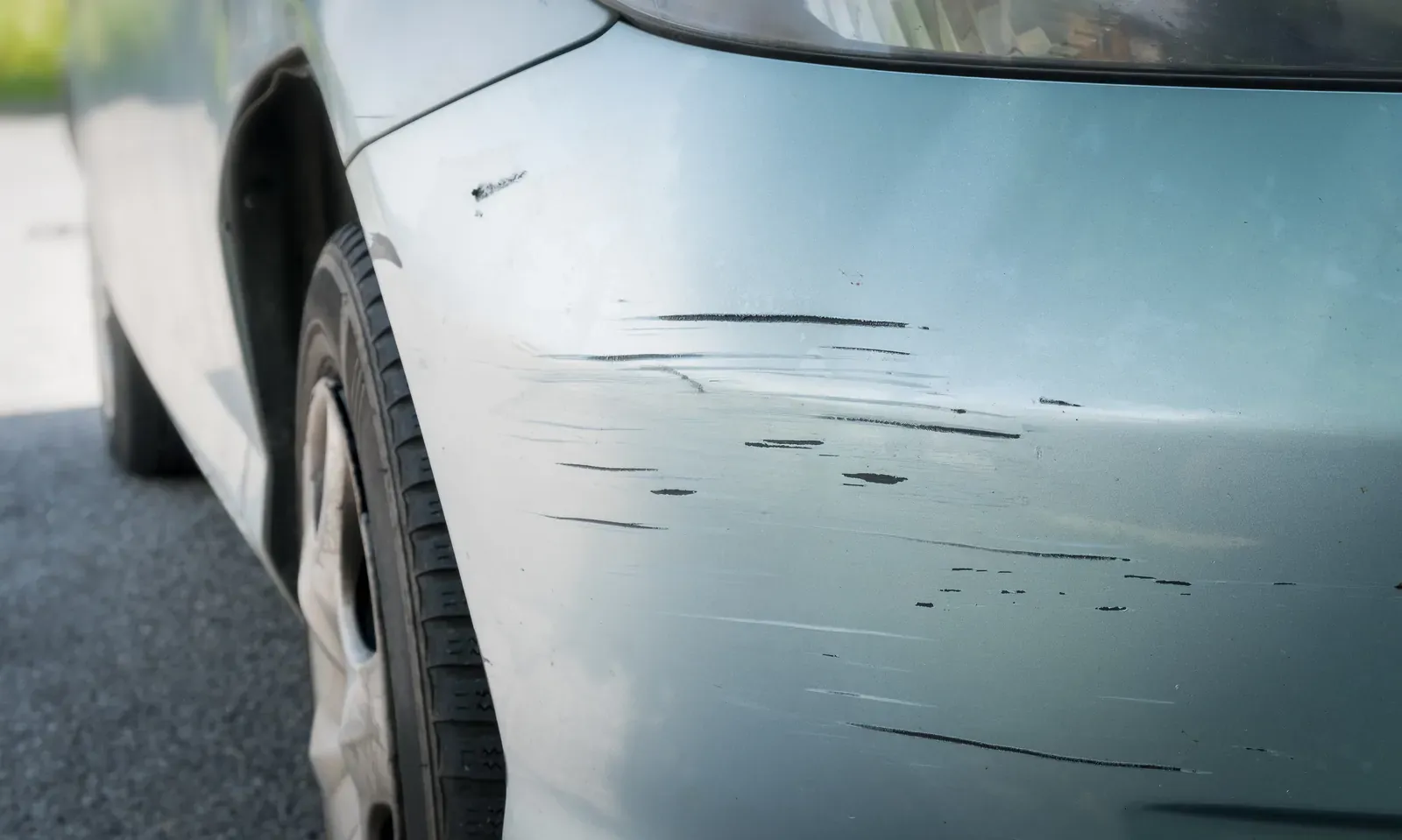
Your paint is a stack, not a single layer. Bare steel or aluminum sits at the bottom, then a corrosion-fighting primer, then the colored basecoat, then a glossy clear coat that carries all the shine. A scratch is really a question about how far down that stack the damage went, because each layer has a different fix. The good news is that most scratches people worry about live entirely in the clear.
The test takes seconds and no tools. Wash the area, then drag a fingernail slowly across the scratch at a right angle. Gliding over means clear-coat damage. A light catch with no color change means it went deeper into the clear or nicked the base. A firm catch with white, gray, or silver showing at the bottom means primer or metal is exposed, and the decision changes completely.
Scratches that buff out — and how to try at home
Clear-coat scratches respond to abrasion because the fix is simply leveling the surface: polishing removes a whisper of clear around the scratch until light stops catching in the groove. A quality rubbing compound, a soft applicator, and patience genuinely work at home on light marks — this is one of the DIY jobs we will honestly tell you to try first. Work a small area, keep the pressure light, and finish with a finer polish so the spot does not end up duller than the panel around it.
Where home buffing goes wrong is edges and enthusiasm. Clear coat is thinnest on curves and panel edges, and a machine polisher held too long in one spot can cut through it — turning a small cosmetic issue into a repaint. If a mark has not improved after a couple of careful passes, it is deeper than the clear, and more compound will not change that. A professional machine buff still costs a fraction of any paint work, so bringing it in is not an expensive admission of defeat.
Touch-up paint: honest expectations
Touch-up paint exists to seal, not to disappear. On a stone chip or a short scratch that caught your nail, a dab of factory-matched touch-up keeps moisture off the primer and steel, which is the whole battle in a salt state. Applied carefully — dabbed into the chip rather than brushed across it, built up in thin layers — it can look tidy from a step back.
What touch-up cannot do is vanish. The paint sits in the groove with no clear coat sprayed over it, so it reflects light differently than the panel around it. On a long scratch, a brushed line of touch-up often reads worse than the scratch did. Use it where sealing matters more than looks: chips on the hood, the leading edge of the roof, door edges. For a scratch across the middle of a door, skip the brush and get an estimate instead.
When repainting is the right call
Primer or bare metal showing, a scratch you can feel with the pad of your finger, or damage crossing a body line all point to refinishing. The repair is not a paint pen over the mark — the area gets sanded, primed where needed, resprayed, and cleared, with color blended into the surrounding panel so no edge shows. That process is why a proper scratch repair is invisible and a quick one is not.
Length and location drive the decision as much as depth. A deep chip the size of a pencil eraser can be spot-repaired; the same depth running the length of a door means refinishing the panel. We cover what actually drives the price in our scratch cost answer, so we will not repeat it here — the short version is that the paint work, not the scratch itself, is what you are paying for.
Why winter moves the deadline
A scratch that reaches primer or metal is an open door, and Minnesota winters walk right through it. Water gets into the groove, freezes, and pries the surrounding paint loose; salt reaches the steel and starts corrosion under the finish, where you cannot see it happening. A scratch that would have been a simple spot repair in September can need rust remediation by April. Here is the whole guide as a decision tree:
- Nail glides over, no color change: buff it out — try a rubbing compound at home first
- Catches slightly, your paint color intact: professional polish or a small spot refinish
- Chip or short scratch showing primer: touch-up to seal it now, refinish when looks matter
- Primer or metal in a long scratch: refinish the panel before winter
- Brown staining or bubbling around the scratch: rust has already started — book it soon
Not sure which bucket yours is in?
Text photos to (651) 460-9996 and we will tell you straight — including when the honest answer is a bottle of compound and an afternoon in your driveway. Estimates are free, in writing, and we would rather earn your trust on a small call than oversell a scratch.
One more reason to ask before you sand anything: a scratch is sometimes the visible edge of a bigger story. A crease you had not noticed, an earlier repair hiding under the paint, or a door edge that has been touched up before can all change the right approach, and each is easier to spot before a well-meant afternoon of compounding blurs the evidence. A quick look — in person or over photos — costs you nothing and occasionally saves the panel. We are at 8080 W 125th St Unit G in Savage, open late through the week, and the coffee is on either way.