Why bumpers scuff differently than steel panels
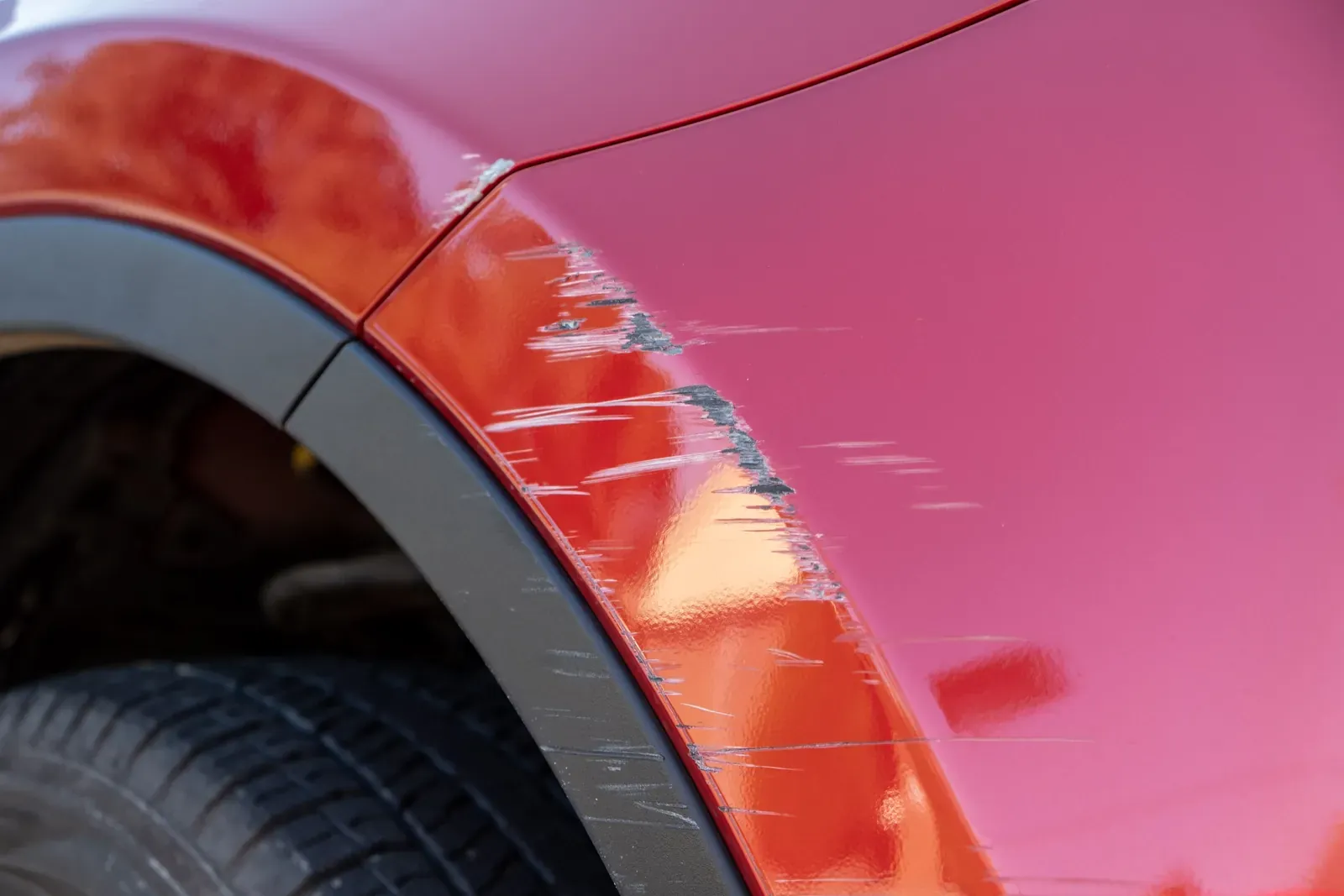
A bumper cover is a flexible plastic skin, and it meets the world first — parking blocks, garage corners, other bumpers. When it scrapes, the paint scuffs and the plastic beneath can smear, gouge, or stretch. Flexibility saves you from dents a steel panel would take, but it also means bumper paint lives a harder life: it has to bend with the plastic every time the cover flexes.
That flex is why bumper refinishing is its own discipline. Paint sprayed on plastic without the right additives cracks the first cold snap the cover moves, and fresh paint over unsealed plastic can lift in sheets. Temperature swings pile on, since plastic expands and contracts far more than steel — and Minnesota supplies the swings. These are solved problems inside a shop, and they are the reason parking-lot touch-up jobs fail.
The four fixes, lightest to heaviest
Most corner scuffs land in the middle two options below. A buff handles surprising amounts of damage when the clear coat held. Once plastic shows through the paint, refinishing is the honest fix, and the choice between spot work and the whole cover comes down to how far the damage spreads and how the existing paint has aged. Cracked plastic changes the conversation to repair-versus-replace, which we cover in a separate answer worth reading before anyone quotes you.
How do we choose between spot work and the full cover? Age and sun, mostly. Fresh paint blends beautifully, so a corner repair disappears into it. A bumper that has faded for years can show a blended repair as a faint halo, and respraying the whole cover erases that risk. We make that call with you at the car, in daylight, rather than surprising you with it on the invoice.
- Buff and polish: for transfer and shallow scuffs that never broke through the clear
- Spot refinish: sand, prime, and repaint the scuffed area, blending into the rest of the cover
- Full cover respray: for wide damage, multiple scuffs, or paint compromised by earlier bad repairs
- Replacement: for cracks, broken mounting tabs behind the cover, or gouges too deep to fill reliably
Why DIY bumper kits show from a few steps away
Bumper repair kits are honest about being cheap and quiet about being visible. Their paint comes in a handful of stock shades rather than your vehicle’s exact color variant, they include no clear coat blending, and they leave the repair’s edge exactly where your brush stopped. The result usually passes at night and fails in daylight — a slightly wrong patch with a hard edge, in the corner your eye goes to first.
To be fair about where DIY does work: paint transfer and light scuffing genuinely respond to compound and patience, and we would rather you try that than pay us to wipe a streak off. The line is broken paint. Once color or plastic shows through, a lasting repair means proper prep, sprayed paint, and blended clear — none of which comes in a tube. One exception worth naming: a dark, low corner on an aging commuter, where a careful brush job is honestly good enough for the car’s mission, and we will say so when it is true.
Textured plastic is a different repair
The grained, unpainted plastic on lower bumpers, cladding, and running boards cannot be sanded and polished like paint, because you would erase the factory texture along with the scuff. Fixing scuffed texture means either replacing the piece or re-texturing it with specialized coatings that mimic the grain — a real technique, though honest shops admit the match is close rather than perfect.
Sometimes the smart play on textured pieces is nothing at all. A light scuff low on gray cladding disappears into the finish at any normal viewing distance. We will say so when that is the case, and put the money where it shows — bring photos and we will tell you which camp your piece falls in.
Parking sensors live in that bumper
Many bumpers now carry parking sensors, and a scuff near one deserves a moment of attention. The sensors read through the cover, so a hard scrape can knock one out of its bracket or scar the sensor face itself, and a proper repaint means pulling them and reseating them correctly afterward. If your car started beeping at nothing — or stopped beeping at things — after the scrape, mention it at the estimate, because that detail changes the checklist.
This is also the honest argument against gluing and painting around sensors on a driveway. Paint applied over a sensor face can dull its hearing, and a sensor pushed loose behind the cover rattles forever. Neither problem is expensive to avoid when the cover is handled properly, and a quick function check at pickup takes moments and settles it.
What makes a bumper repair last
Longevity comes from steps you never see: cleaning the plastic of silicones and road film, sanding the damage to a feathered edge, sealing with adhesion promoter, adding flex agent to the paint, and curing it properly before the cover goes back into the weather. Skip any one of those and the repair looks fine at pickup and peels at a corner within a couple of Minnesota winters.
Every refinish we do is backed by a written lifetime paint warranty, which is only a rational thing to offer because the prep happens every single time. If your bumper corner is scuffed, send photos — the estimate is free, and small bumper repairs are among the quickest jobs we schedule.