
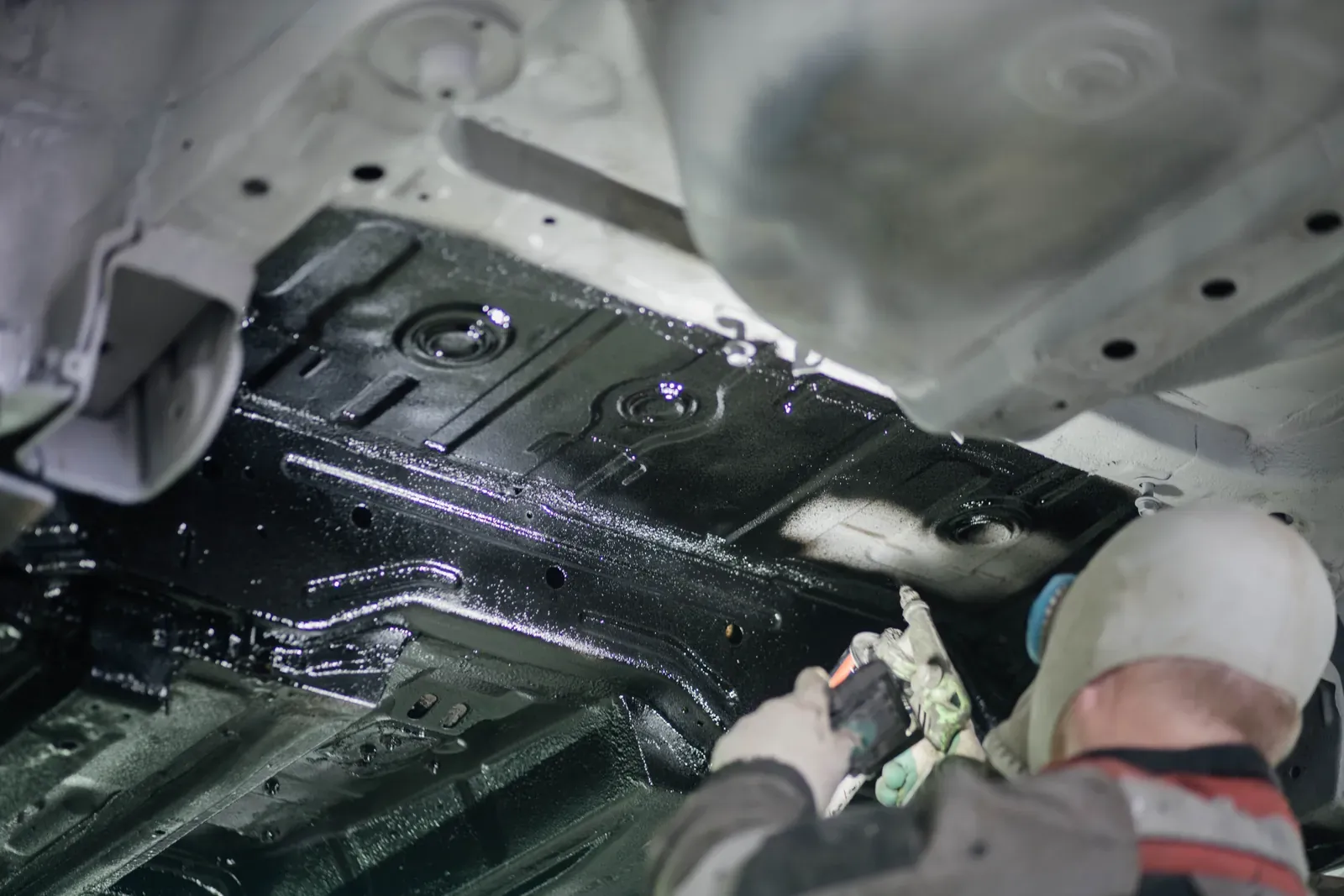
The difference in plain terms
Surface rust is oxidation on the visible face of steel — a discolored patch on a panel, a haze across an exposed bracket. It looks alarming and progresses slowly on thick metal, and its real cost is cosmetic. No wheel arch bubble ever made a car dangerous by itself.
Structural rust is corrosion consuming the parts that hold the car together and manage crash energy: frame members, the seams that tie the floor to the rockers, the points where suspension and safety hardware bolt to the body. Steel that has thinned there does not just look bad — it behaves differently under load, which is the entire problem.
The distinction matters because it decides who should look at the car, how soon, and what kind of money is in play. Surface oxidation is a cosmetic and prevention conversation you can schedule at leisure. Structural corrosion is an inspection conversation that should happen promptly — not because the car will fail tomorrow, but because you are making decisions about a vehicle whose condition you do not fully know.
Where structural rust hides
The dangerous corrosion is rarely the corrosion you can see from standing height. It concentrates where moisture collects and inspection is awkward, which on most vehicles means the same short list of places.
Notice what the list below has in common: joints, pockets, and brackets where two pieces of steel meet and hold moisture between them. Flat, open surfaces shed water and survive for decades; seams drink it and fail first, which is why a shiny floor pan can sit next to a crumbling mount. Trailer hitches make the list because they bolt through some of the most rust-prone metal on the whole car.
- Frame rails and crossmembers, especially at bends and boxed sections
- Subframe and engine cradle mounting points
- Suspension pickups, spring perches, and shock towers
- The rocker-to-floor seam and the floor pan edges
- Seat and seat-belt anchor areas
- Around a trailer hitch and its mounting hardware
Telling scale from trouble
Healthy-enough steel with surface oxidation shows an even brown discoloration and still feels solid when pressed. Trouble looks layered: rust that flakes like pastry, seams that appear swollen or lifted, powder that falls away at a touch, or any spot where gentle pressure with a plastic trim tool finds give. Holes settle the question on their own. Sound helps too — solid steel answers a knuckle tap with a ring, while rot answers with a dull thud.
Driveway checks have honest limits. Undercoating, grime, and plastic shields hide exactly the areas that matter most, and prodding blind at a car on the ground proves very little. If anything underneath looks layered or soft, the next step is a hoist and good lighting, not a guess.
Rocker panels deserve special mention because they straddle the line. The outer rocker is a skin, and rust there is cosmetic to moderate; the inner rocker ties into the floor and contributes to the body’s stiffness, so corrosion that crosses from outer to inner has changed categories while looking, from the curb, like the same brown streak. It is the most common place we see owners underestimate what they have.
What a collision shop can do about each
Surface oxidation gets cleaned back and treated whenever we have a panel or an underside apart for other work — cheap insurance done at the right moment. Localized corrosion that has not perforated can be cut out and rebuilt with welded steel where access allows, refinished, and warrantied like any panel repair.
Widespread structural rot is a different trade. Replacing frame sections and fabricating floor structure is restoration work, and pretending otherwise would waste your money — we refer those cars to specialists. Where our structural equipment does earn its keep is verification: after a collision, our laser measuring bench confirms the body’s geometry, and on an older Minnesota car it also tells us honestly whether corroded mounting areas can support a proper repair before anyone spends anything.
The constraint on the repair side is what the welded metal must anchor to. Body panels tolerate local patches because their loads are light; structural sections have to carry the same forces the original steel did, which is why the standard for them is stricter and why honest shops decline work they cannot stand behind. When we say no to a frame rot job, that is the entire reason.
Not sure which you have? Get it on a hoist
This is a look-with-eyes question, and the look is free. Bring the car by 8080 W 125th St Unit G — open Mon–Sat with late hours — and we will put eyes and a light on the underside, tell you what is haze and what is trouble, and write down what we find. Bring along any photos you have taken over the months, too; they tell us how fast things have been changing.
One more expectation to set: no insurance company covers corrosion, structural or not, so what you do with the answer is a planning decision rather than a claims process. Cosmetic rust waits politely for your budget. Structural findings deserve a faster plan, whether that plan is repair, a specialist, or an honest goodbye to the car.
Shopping for a used Minnesota car? Run the same inspection in reverse: get any candidate on a hoist before money changes hands. Sellers rarely volunteer the underside — usually not from dishonesty, but because they have never looked either — and an hour of looking has saved more buyers than any printed history report.