Where Minnesota rust starts
Salt does not attack good paint. It attacks whatever opened the paint first — a stone chip on the leading edge of a hood, a scuff on a wheel arch, a scratch along a rocker. Winter brine keeps those spots wet and salty for months, and corrosion works sideways under the finish from there.
The tell is a bubble. Paint lifting in a small blister means rust is already underneath and larger than what shows, which is why sanding a bubble reveals two or three times the area you expected. Wheel arches, rocker seams, tailgate lower edges, and door bottoms go first on most cars here.
- Rear wheel arches and the lip behind the tire
- Rocker panels, especially at the seam and the jack points
- Lower door edges and the drain slots at their base
- Tailgate and trunk lid lower lips
- Any old chip or scratch that was never sealed
Why insurance will not pay for it
Every standard auto policy excludes rust, corrosion, and wear and tear. Comprehensive covers sudden events like hail and falling branches; collision covers impacts. Gradual salt corrosion is neither, so there is no claim to file and no deductible to weigh — it is a repair you choose to make.
The exception is rust that follows unrepaired accident damage. If a covered loss left bare metal that later corroded, the corrosion is part of that repair, which is a good argument for fixing collision damage promptly instead of driving a scraped panel through a Minnesota winter.
What proper rust repair involves
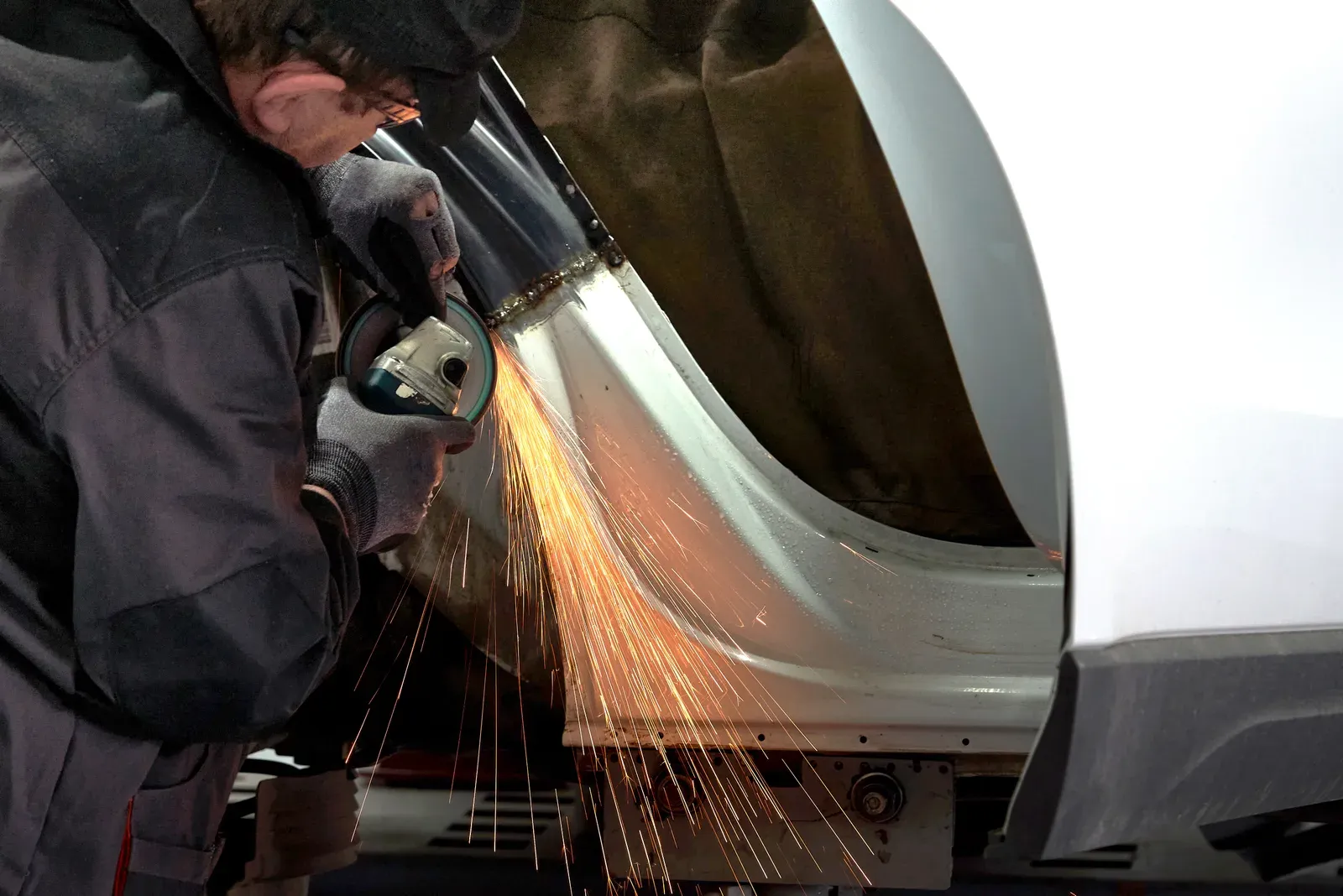
There is a right way and a fast way. The fast way is filler over rust, which looks fine for a season and bubbles again the next winter because the corrosion underneath never stopped. The right way removes the affected metal entirely and rebuilds the area with clean steel.
That means cutting back to sound material, fabricating or fitting a patch or a replacement section, sealing the seams, applying corrosion protection to both sides of the panel, and then priming and refinishing with a blended color match. Done that way, the repair carries our lifetime paint warranty.
- Affected metal cut back until only sound steel is left
- A patch or replacement section fabricated and fitted in
- Seams sealed and corrosion protection applied front and back
- Primer, sealer, and a color mixed to the panel’s measured shade
- A blend into the panels alongside so the work has no visible border
Have it looked at before it spreads
Rust is one of the few repairs where waiting reliably costs more, because the area only ever grows. Send photos of each spot and a wide shot of the panel, and you will have a free written estimate within 24 hours telling you what stage it is at.
If you are keeping the car for years, it is worth doing properly once. Riaz has been repairing Minnesota corrosion at this shop since 2010 and will tell you honestly when a panel is too far gone to be worth saving rather than selling you a repair that will not last.