Two different products, described honestly
Maaco is a franchise system built around production painting: standardized packages, high daily volume, and quick turnaround at a price point a traditional respray can’t touch. That isn’t a scam — it’s a category. Plenty of older cars need to look presentable more than they need collision-grade refinishing, and the franchise model exists to serve exactly that job.
A body shop respray has a different goal: making a refinished area indistinguishable from the factory paint around it. The two products share spray guns and not much else. Comparing their prices without comparing their scope is how people end up disappointed in either direction — paying too much for a beater or too little for a keeper. Knowing which product your car needs is the entire game.
What production painting typically involves
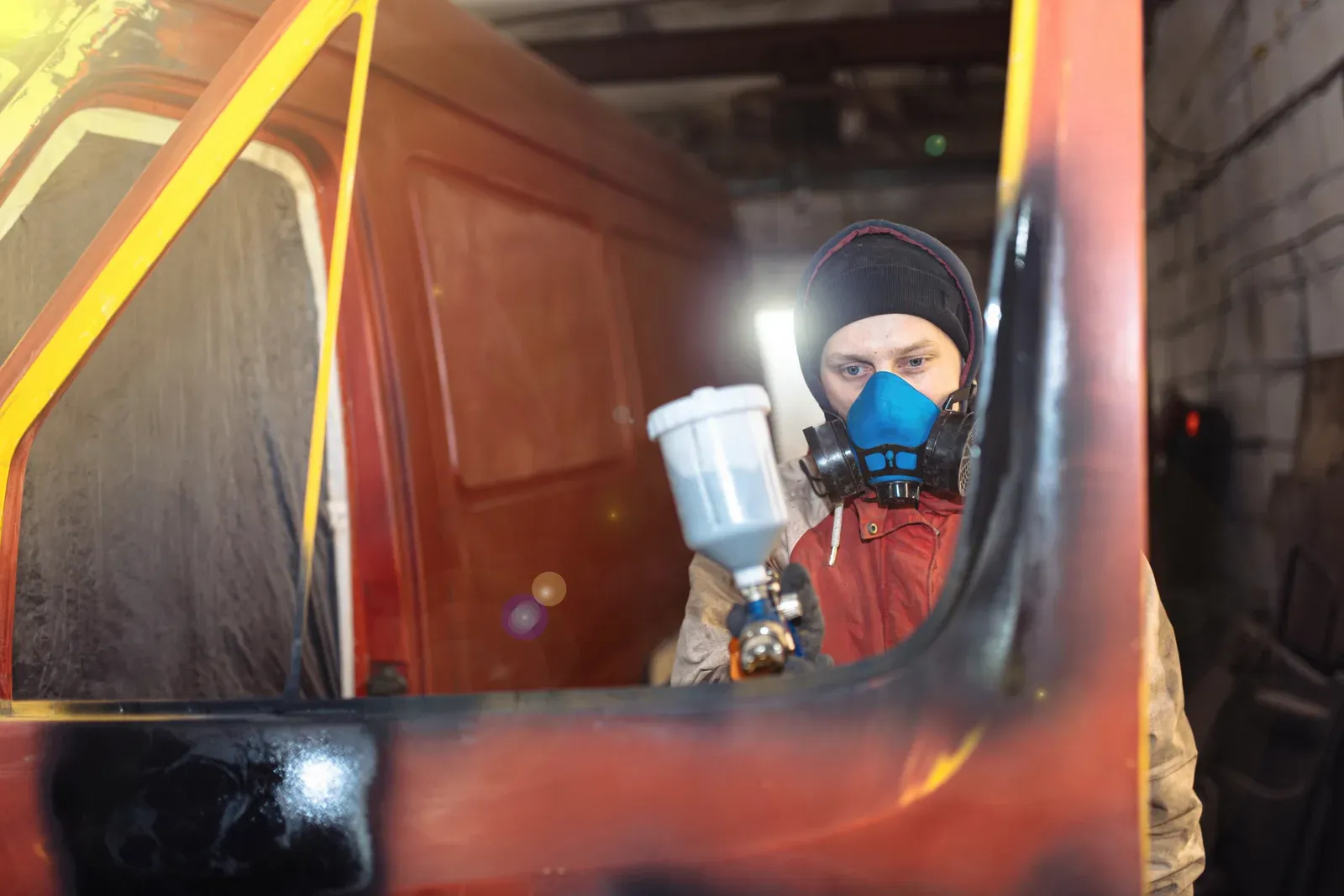
The economy comes from what stays on the car. Trim, moldings, handles, and glass are masked in place rather than removed, the existing finish is scuff-sanded rather than stripped or fully repaired, and the paint comes from an economy tier — often with upgrade steps you pay to climb. Bodywork, rust grinding, and dent repair are add-on line items, not assumptions.
Sprayed edge to edge in a single color, a car prepared this way can look genuinely sharp from a few steps back on delivery day. The compromises live at the boundaries — taped edges, masked rubber, paint bridging onto trim — and in how the finish holds where prep was light. That’s the honest deal on the table.
Volume shapes the schedule as much as the scope. Production shops book many cars a day and keep them moving, which is exactly how the price stays low — a booth that sits idle costs money. The practical consequence is that your car gets the package you bought, executed briskly, with little room for the fiddly judgment calls that eat a schedule. Whether that trade fits depends entirely on the car.
What a collision-shop respray involves
Our version starts with removal instead of masking wherever the part allows it: moldings off, handles off, lamps out, so paint lands where the factory put it and nowhere else. Damage gets repaired and block-sanded flat, bare areas get primed and sealed, and the color is matched to your actual paint rather than mixed straight off the code.
Then the car goes into a downdraft booth for basecoat and clearcoat with a controlled cure, and the color is blended into neighboring panels so no edge announces the work. Those steps are covered properly on our booth and color-matching pages — the point here is simply that every one of them is labor, and the labor is the price difference.
The other half of the product is what happens when something is off. A respray here gets checked panel by panel in raking light before delivery, and if anything about the finish bothers you later, the written warranty and the people who sprayed it are in the same building. That loop — spray, inspect, stand behind it — is priced into the number.
When budget paint is the right call
We mean this sincerely: sometimes the franchise is the correct answer. A collision-shop respray on a car worth little more than the paint job makes no financial sense, and pretending otherwise would be selling you something you don’t need.
The pattern in these cases: the car needs uniform color and protection, nobody will inspect the boundaries closely, and extra craft would be spent past the point the vehicle can repay it.
- An aging commuter with baked, peeling clearcoat that you plan to drive until it quits.
- A work truck or plow rig that needs one uniform color and rust held at bay, not showroom gloss.
- A first car for a teenager that will collect its own dings soon enough.
- A quick cosmetic refresh before selling an inexpensive vehicle as-is.
When it isn’t
Partial work is where production painting struggles most. Matching a repaired fender to the aged factory paint beside it takes measurement, tinting, test cards, and blending — craft a volume model isn’t built to spend hours on. On a late-model car, a close-but-not-quite panel is visible every time light rakes across it.
The same logic applies to lease returns, insurance repairs written to restore pre-accident condition, and any car whose resale value you care about. Warranties differ in kind too, not just length: ours covers the paint on your repair in writing for as long as you own the vehicle, which only makes sense for a shop betting on its own prep.
One more quiet difference: documentation. A collision-shop respray produces a paper trail — what was repaired, what materials went on, what the warranty covers — that a future buyer or appraiser can actually read. A budget package produces a receipt. On a car with resale in its future, that difference follows the vehicle around.
Deciding with your actual car
The right choice depends on the car in your driveway, not on anyone’s marketing. Text us photos and tell us what the vehicle is worth to you — if a budget franchise honestly suits the job, we’ll say so and you’ll have lost nothing. If the car deserves a real respray, you’ll get a free written estimate and a plain walkthrough of what you’re paying for. Either way you leave with a straight answer instead of a pitch, which is the only way we know how to run an estimate desk.