
The quiet sublet arrangement
Collision repair takes a paint booth, frame equipment, and a trade of its own — a serious capital investment many dealerships never made. Their solution is ordinary and legal: the dealership takes your car in, then contracts the actual body work out to a collision shop it has a relationship with. The industry word is sublet.
From the customer’s side, the experience is seamless by design. You drop the car at the brand’s gleaming service drive, and you pick it up there weeks later. What happened in between — where the car sat, who welded and painted it, what shop’s standards applied — happened at an address you were never told about unless you asked. Nothing about the sublet is improper — businesses subcontract constantly — but you are owed the fact, because you are choosing a repairer whether you know its name or not.
The arrangement isn’t rare, and it isn’t new. The sales floor wants to say yes when a customer asks about crash repair, so the booking-desk model fills a gap the store never built a trade for. Some dealerships disclose it readily; others let the impression stand that everything happens behind the service wall. The difference between those two postures tells you plenty about how the rest of the relationship will go.
What the middle layer means for you
A sublet adds a business between you and your repair. Questions travel from you to a service advisor to the body shop and back, which slows answers and blurs them. The dealership also has to be compensated for coordinating, and that arrangement is priced in somewhere — an extra layer never makes a repair cheaper.
Accountability gets fuzzier too. If the paint shows a flaw next summer, is that the dealership’s problem or the subcontractor’s? Good dealers stand behind sublet work, but you’re now navigating two companies’ policies instead of one. And you never chose the shop that actually touched your car — someone else’s contract did. Two companies also means two margins riding on one repair, and only one place that money can come from.
Timelines stretch for structural reasons too. The subcontracted shop prioritizes its own direct customers and its program work; a sublet car joins that queue with an extra approval loop attached, since changes route back through the dealership before anyone can proceed. When hidden damage turns up mid-repair — and it often does — that loop runs again. None of this appears on the friendly status calls, but it is where the delays quietly live.
When a dealer collision center is real
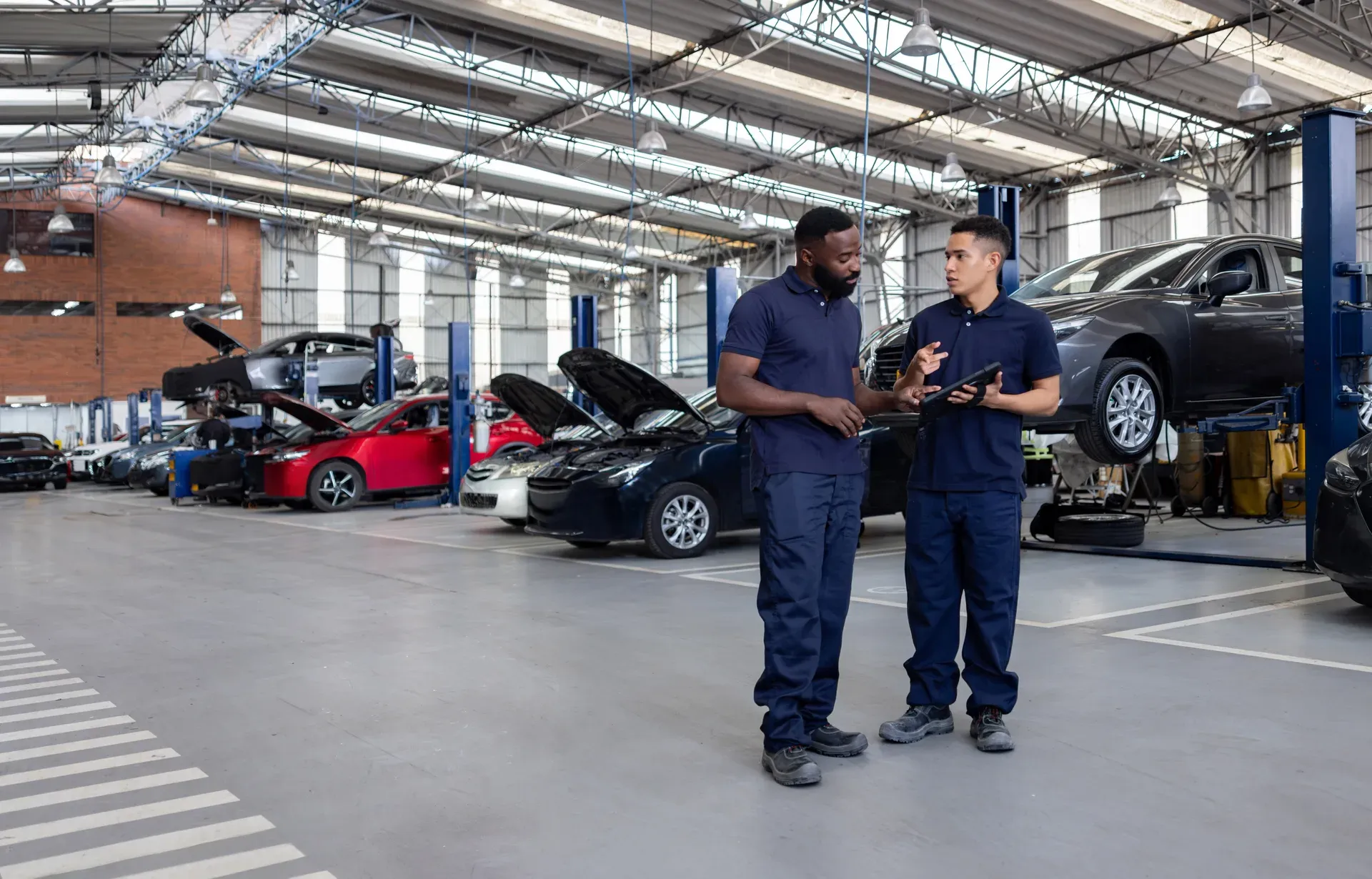
Some dealer groups do run true in-house collision centers, with their own booths, frame benches, and body technicians on payroll. Those operations are real body shops that happen to share ownership with a dealership, and for some owners — especially with a brand-new car under the same roof it came from — that’s a comfortable choice.
No argument from us. Our point is narrower: “take it to the dealer for body work” only means something once you know whether the dealer is a body shop or a booking desk. The difference between those two is the entire subject of this page, and one question at the counter settles it.
How do you tell a real one? Ask for a tour. A genuine dealer collision center will happily show you its booth, its frame equipment, and its technicians — exactly as we would. If the answer to “can I see where the work happens” involves another address, you have your answer, and you should meet the shop at that address before agreeing to anything. Verify with your eyes, not the brochure.
Questions that reveal where your car goes
Ask these before you sign anything, and expect direct answers. None are rude and none require expertise — they’re the questions any transparent business answers easily. Collect the answers in writing if you can; an email reply works fine, and it settles in advance who owns any problem that surfaces later.
- Will the body work happen at this address? If not, what shop does it go to?
- Who employs the technicians who will repair and paint it?
- Whose name is on the paint and workmanship warranty — yours or the subcontractor’s?
- Can I speak with the person writing the repair plan?
- Who do I call for status while the car is away?
Why we welcome the comparison
The honest case for a dealership is brand familiarity and factory parts. Both are worth having — which is why our estimates carry an OEM parts promise, and why we repair vehicles across every brand you’ll find on our roads. What we add is directness: your estimate is written by the people who will do the work, in the building where it happens.
Teardown comes before the final number, the paint carries a written lifetime warranty, and when you call, you reach the shop — not a desk that has to call the shop. If a dealer quote is in your hand, bring it by or send photos; we’ll walk you through where the two paths actually differ for your car.
There’s a telling detail across the industry, too: the outside shops receiving dealership sublet work are very often independents, which says a great deal about where the actual repair capability lives. We simply prefer the front-door version of that relationship — same trade, same standards, no layer in between, and the estimate explained to your face by the people responsible for it.