What a downdraft booth actually controls
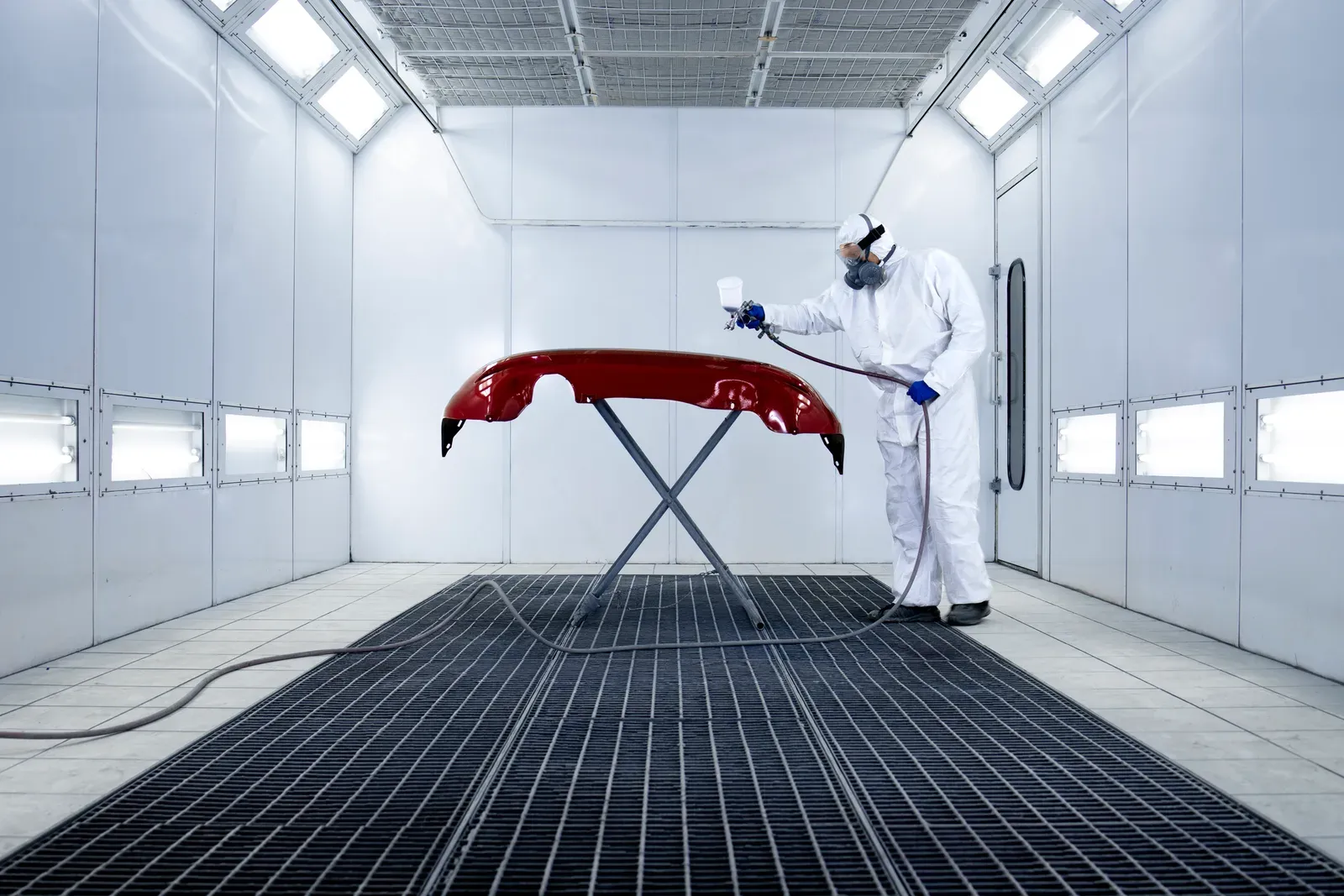
Fresh paint stays wet for several minutes, and anything floating in the air during those minutes ends up in the finish. A downdraft booth solves that with direction: filtered air enters through the ceiling, travels straight down past the panel, and exits through grates in the floor. Dust, sanding residue, and overspray move away from the surface rather than swirling back onto it. Spray the same car in an open bay and those particles settle into the clearcoat while it flashes.
The second thing the booth controls is how the finish cures. Air movement and temperature are held steady while the basecoat flashes and the clearcoat sets, so film builds evenly across the panel instead of drying quickly at one edge and slowly at another. Uneven curing is what produces the subtle texture difference people notice in poor body work — the repaired panel reads slightly different in the light even when the color itself is right.
How your car moves through the booth
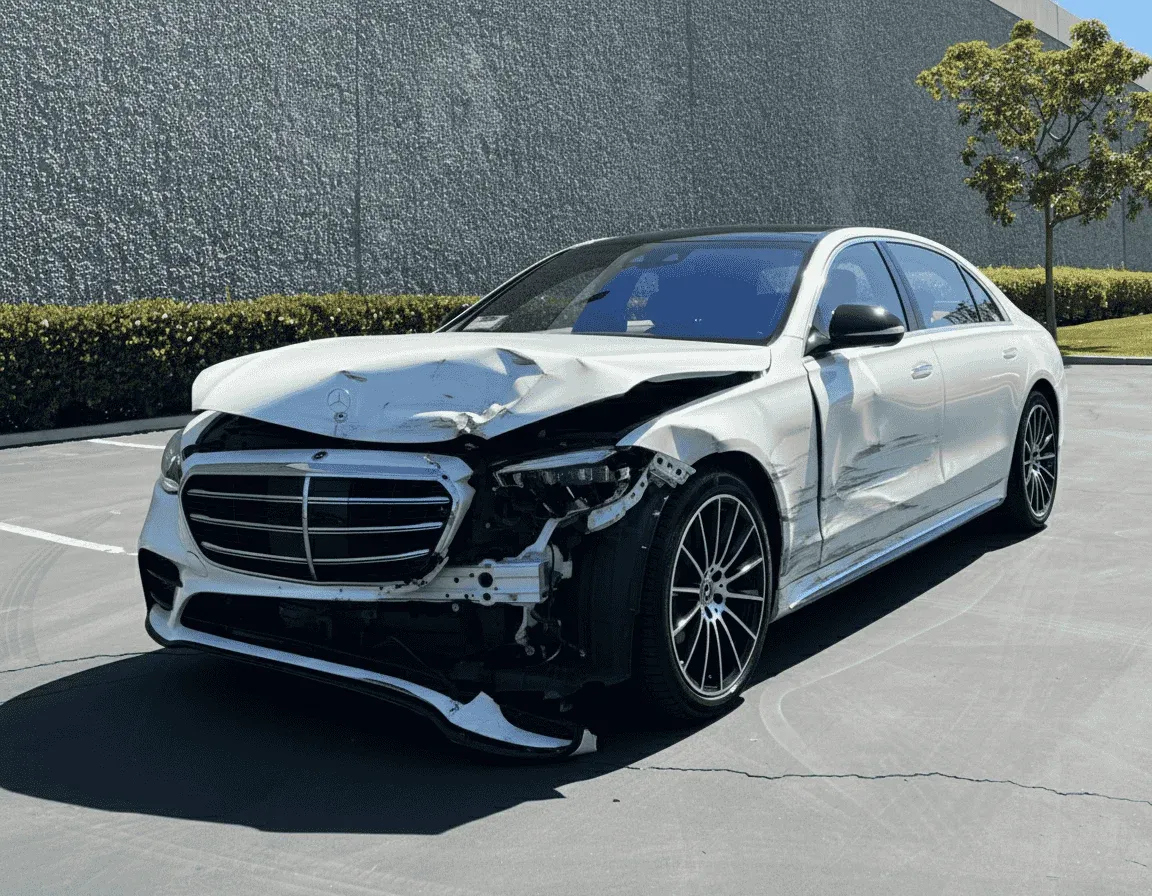
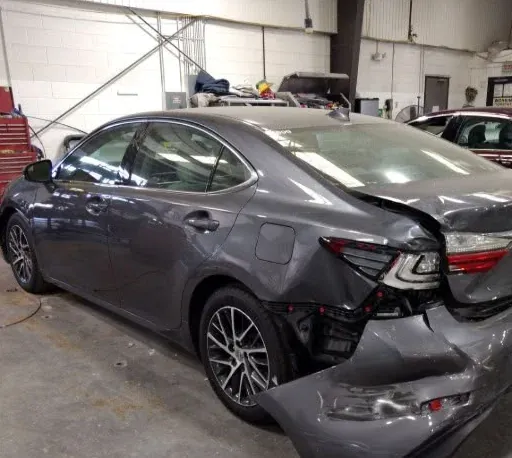
Nothing goes in until the bodywork under it is finished. Panels are straightened, primed, and block-sanded flat in the prep area first, because paint magnifies a low spot rather than hiding one. Masking comes next — glass, trim, jambs, and every opening the mist could reach. Only then does the car roll onto the booth floor for a final tack-off and the spray itself. A panel that goes in with a low spot comes out with that low spot sealed under clearcoat, where the only fix is starting over.
After the cure, masking comes off and the vehicle is reassembled: lamps, moldings, badges, and clips back where the factory put them. The refinished area is then de-nibbed and polished so its gloss matches the panels around it. A repair can be exactly the right color and still stand out for being shinier than the ten-year-old paint beside it. Matching the sheen is the last quiet step, and it is the one that decides whether a stranger can find the repair.
- Bodywork, filler, and priming all completed outside the booth
- Panels block-sanded flat, then cleaned and degreased
- Full masking of glass, trim, jambs, and openings
- Basecoat sprayed and blended, then clearcoat across the blend area
- Controlled cure before the car is unmasked and reassembled
Why booth conditions still matter five years later
A refinish sprayed in clean air with proper film build holds up. One that was rushed shows itself on a schedule. Trapped dust creates high points where the clearcoat sits thin, and thin clear is where a Minnesota winter starts working — salt, sand, and freeze-thaw cycles find the weak spot until an edge lifts. Most peeling that gets blamed on cheap paint is really contamination or film thickness.
That is why every paint and refinish job here carries a lifetime warranty for as long as you own the vehicle, in writing with your estimate. A shop can only offer that if it controls the conditions the work happens in. If you want to judge the result rather than the process, look at the finished cars in our gallery — color match and gloss are what customers mention most.