Paint is cheap; hours are expensive
The materials in a paint job — primer, basecoat, clearcoat — are a modest slice of the bill at any shop. The rest is time: disassembly, repair, sanding, masking, spraying, curing, reassembly, polishing. So when one quote comes in far below another, the difference is rarely the paint in the can. It’s hours that one shop plans to spend and the other plans to skip.
That’s not an accusation; it’s arithmetic. A low-cost operation openly builds its price around fewer hours per car. The useful question for you isn’t whether corners exist — it’s which specific corners, and whether they matter for your car. The rest of this guide names them one by one. Watch a full respray happen and the invoice explains itself; watch a production line run and the price explains itself. Both are rational businesses. Only one of them is restoring a factory finish.
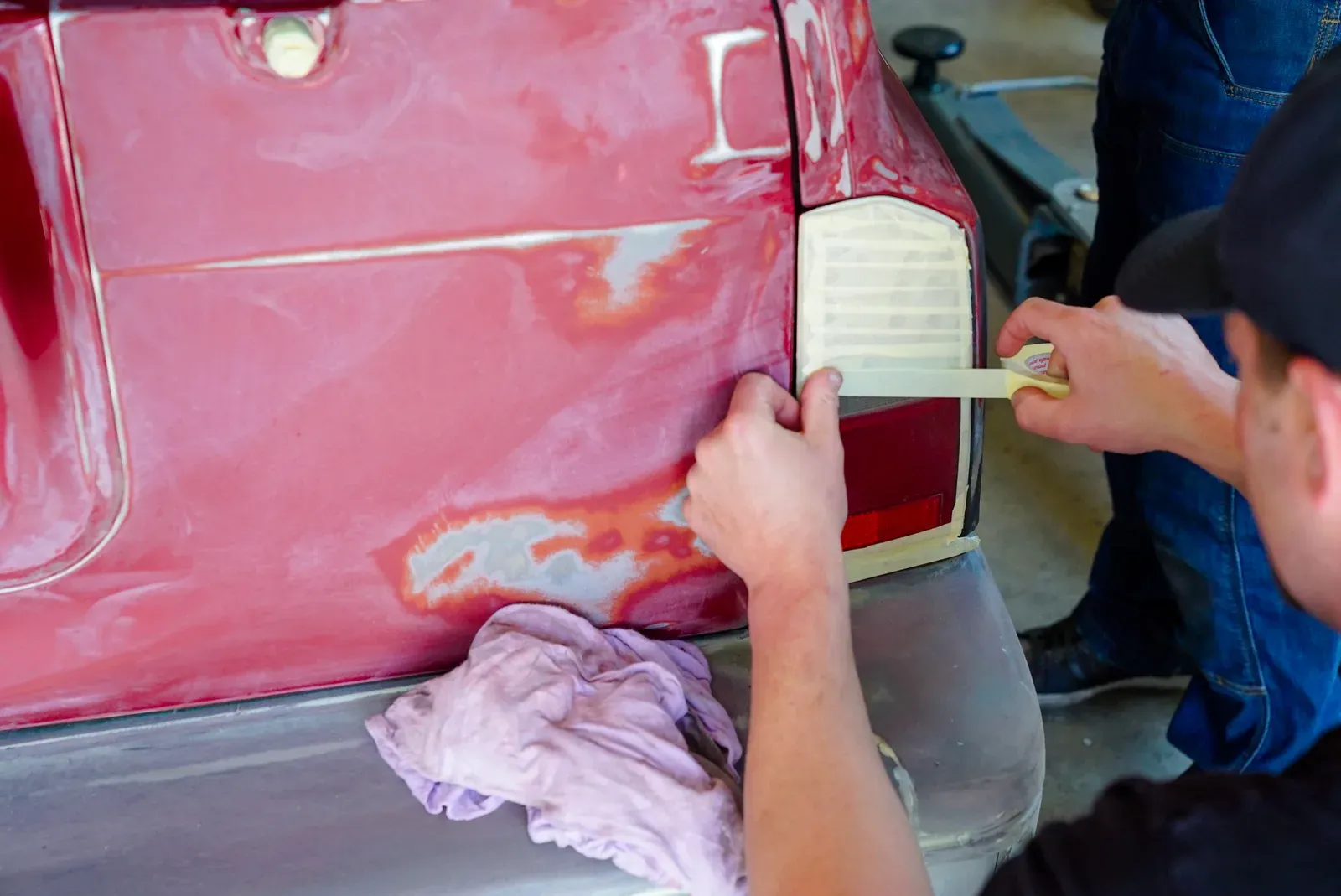
Masking around parts instead of removing them
Pulling moldings, handles, badges, lamps, and glass seals takes real time, and reinstalling them takes more. The budget shortcut is to tape around everything and spray. It works, up to a point — but tape creates edges, and edges are where paint ends in a visible line instead of disappearing under a part the way the factory did it.
Masked-in-place rubber and trim also collect overspray at the boundary, and paint that bridges from metal onto a flexible seal cracks along that bridge as the seal moves. Run a fingernail along the door moldings of a cheaply painted car and you can usually feel the story.
Removal has a second benefit nobody sees: what comes off gets inspected. Pulling a molding reveals the rust line hiding under it; dropping a bumper cover exposes the cracked tab that tape would have concealed. Masking preserves the surprise for whoever owns the car next. That inspection value never appears as a line on an estimate, but you’re buying it all the same.
Prep decides the lifespan
Before good paint goes on, chips get feathered out, bare metal gets primed, the surface gets block-sanded flat, and everything gets cleaned to a degree that feels obsessive to watch. Adhesion is built in those steps. Compressed prep means the new finish is only holding on as well as whatever was underneath it — including the old failing clearcoat it may have been sprayed over.
This is the part of a paint job you cannot inspect at pickup, because fresh gloss hides it completely. It reveals itself on a delay: lifting around rock chips, peeling at panel edges, dull patches where the old surface bled through. When people say a cheap paint job “didn’t last,” prep is almost always the chapter they’re describing.
Cleaning deserves its own sentence. Silicone from years of spray waxes and dressings is invisible on a panel and ruinous under paint, where it makes the finish crawl and crater. Proper prep includes chemical degreasing before and after sanding; hurried prep trusts to luck. You can’t see the difference at the counter — you see it in the surface.
Materials: single-stage vs. basecoat and clearcoat
Budget packages often start with single-stage paint — color and gloss in one layer — while collision refinishing uses a basecoat for color under a dedicated clearcoat for depth and protection. Single-stage has legitimate uses, especially on work vehicles, but it generally gives up gloss retention and resistance to sun and weather compared with a clearcoated system.
Economy tiers also exist within each category, and upgrade menus are how budget painters bridge the gap — better material, better protection, more money. There’s nothing dishonest about the menu. Just know that the headline price usually describes the bottom rung, and read what the tier you’re buying actually includes. If a painter can tell you exactly which system and tier your quote covers without checking, that fluency itself is a good sign.
The tells, on delivery day and later
If you want to see where hours were saved, look at the places hours would have gone.
- Overspray on rubber seals, wheel wells, exhaust tips, or inside door jambs.
- Tape lines where color stops at a molding or a jamb instead of wrapping an edge.
- Texture that differs from the factory finish — too smooth, too dimpled, or wavy in raking light.
- Dirt nibs sealed into the clearcoat from spraying outside a filtered booth.
- Later: fading, peeling at chips and edges, and gloss that drops off within a few seasons.
How to buy paint work without overpaying
You don’t need to be a painter to shop well — you need three answers in writing. What comes off the car before spraying? What prep happens to the surface, and what gets primed? What material system is used, and what does the warranty say about peeling and defects?
Any shop should answer those without flinching. Ours are on record: parts come off, prep is full, the system is basecoat-clearcoat sprayed in a downdraft booth, and the paint warranty is lifetime for as long as you own the vehicle, in writing. When a cheaper quote answers differently, you’ll finally be comparing products instead of prices.
And when a low bid survives those questions honestly, take it seriously — some cars deserve exactly that product, as our production-paint comparison argues at length. The goal of this page isn’t to upsell you; it’s to make sure the price you pay and the product you get were chosen on purpose.