Why the factory paint code is only the starting point
Every vehicle carries a paint code on a label in the door jamb or under the hood, and every shop starts there. The trouble is that a code describes the color the vehicle wore leaving the plant, not the color it wears today. Assembly plants mix within a tolerance, so two cars with identical codes can come off the line slightly apart, and years of Minnesota sun and road salt move the finish further still.
Spraying straight from the code onto a faded hood produces a panel that is technically correct and visibly wrong. The fix is to measure the vehicle instead of trusting the sticker. A reading taken off a cleaned section of your own paint describes what the surface is now, and the formula gets tinted toward that rather than toward a number printed years ago. On a car that has spent ten Minnesota summers outdoors, the gap between those two starting points is visible from the sidewalk.
The reading, the formula, and the spray-out card
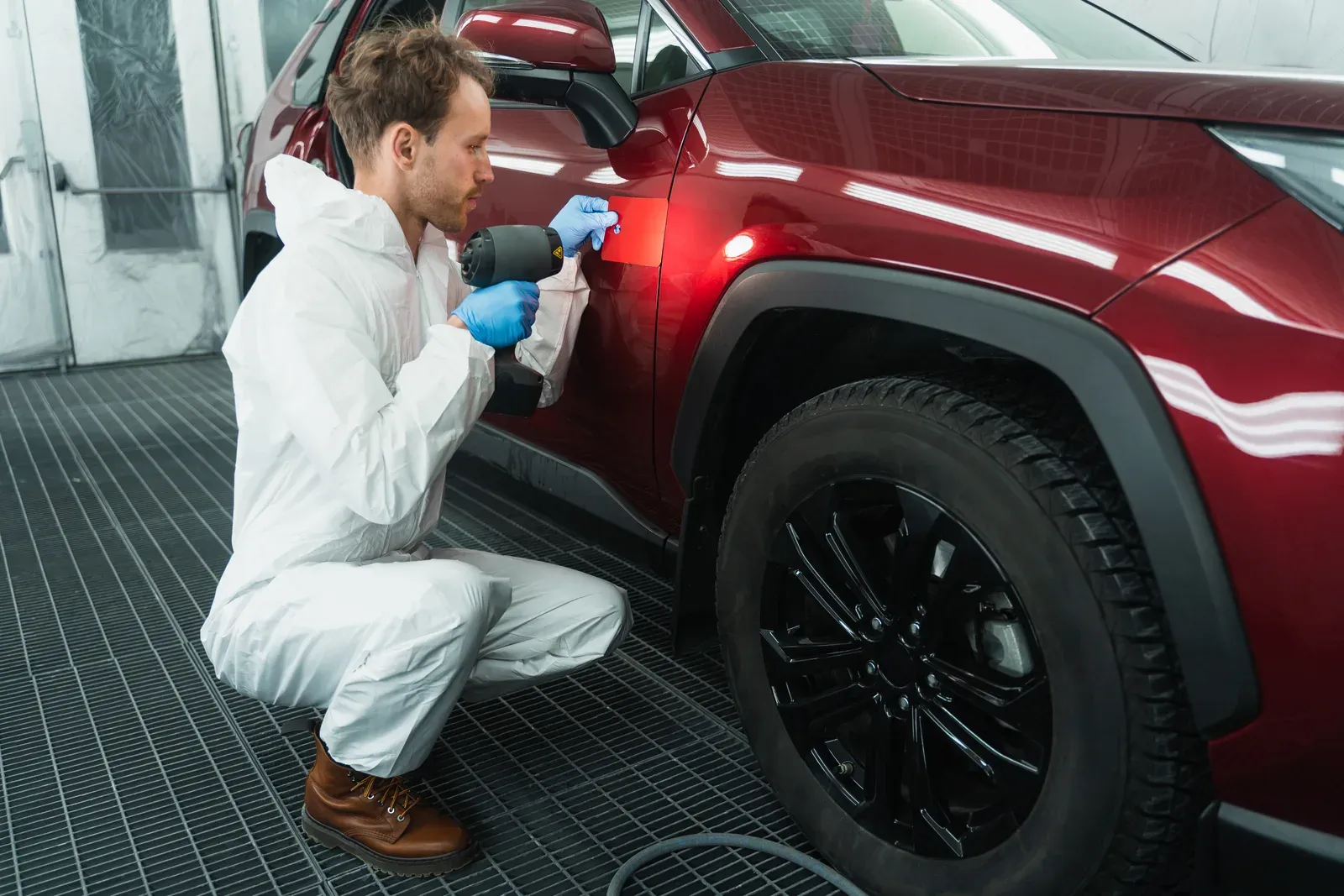
The reading is taken on a cleaned and lightly polished area near the repair, because oxidation on the surface skews the result. Matching software compares that reading against the manufacturer variant formulas for your code and returns the closest ones — often several for a single color. A painter still chooses between them. The software narrows the field; it does not make the call. Which variant is right depends on how the finish has aged and what the panel next to it looks like, and that judgment gets made by eye, at the car.
Then a test card is sprayed with the chosen formula, cured the way the car will be cured, and held against the panel. Color that agrees under shop lights can separate in daylight, so the card gets checked in more than one light source. If it is off, the formula is tinted and a new card goes up. The vehicle is not painted until the card disappears against the paint.
- Paint code pulled from your VIN and the door-jamb label
- Color read directly off a cleaned area of your own panel
- Software returns the closest factory variants; a painter picks one
- Test card sprayed, cured, and compared under multiple light sources
- Formula tinted and re-sprayed until the card vanishes against the car
Blending is what makes the match invisible
Even a perfect mix will show if new paint stops at a panel gap, because the eye finds the hard line between old and new. Blending removes it: the color is faded out into the neighboring panels and the clearcoat is carried across the whole area, so there is no edge for light to catch as it travels down the side of the car. The transition happens gradually, across enough surface that the eye reads the whole flank as one continuous piece.
Metallics, pearls, and tri-coat whites make blending mandatory rather than optional. Metallic flake orients according to how it was laid down, which means one formula can read lighter or darker depending on gun angle and distance. Blending spreads that difference across enough surface that it stops being visible. It costs more time and more material, and it is why the compliment in our reviews is almost always about the match.