First, make sure it’s really a mismatch
Look at the panel outdoors, in daylight, from a few steps back — then again up close and at an angle. Shop lighting flatters some colors and betrays others, and a repair that looked seamless under fluorescent tubes can separate in afternoon sun. You’re checking three separate things: the color itself, the texture of the surface, and how the finish behaves as you move around the car. Metallic and pearl colors in particular can agree perfectly head-on and drift apart when viewed at a shallow angle.
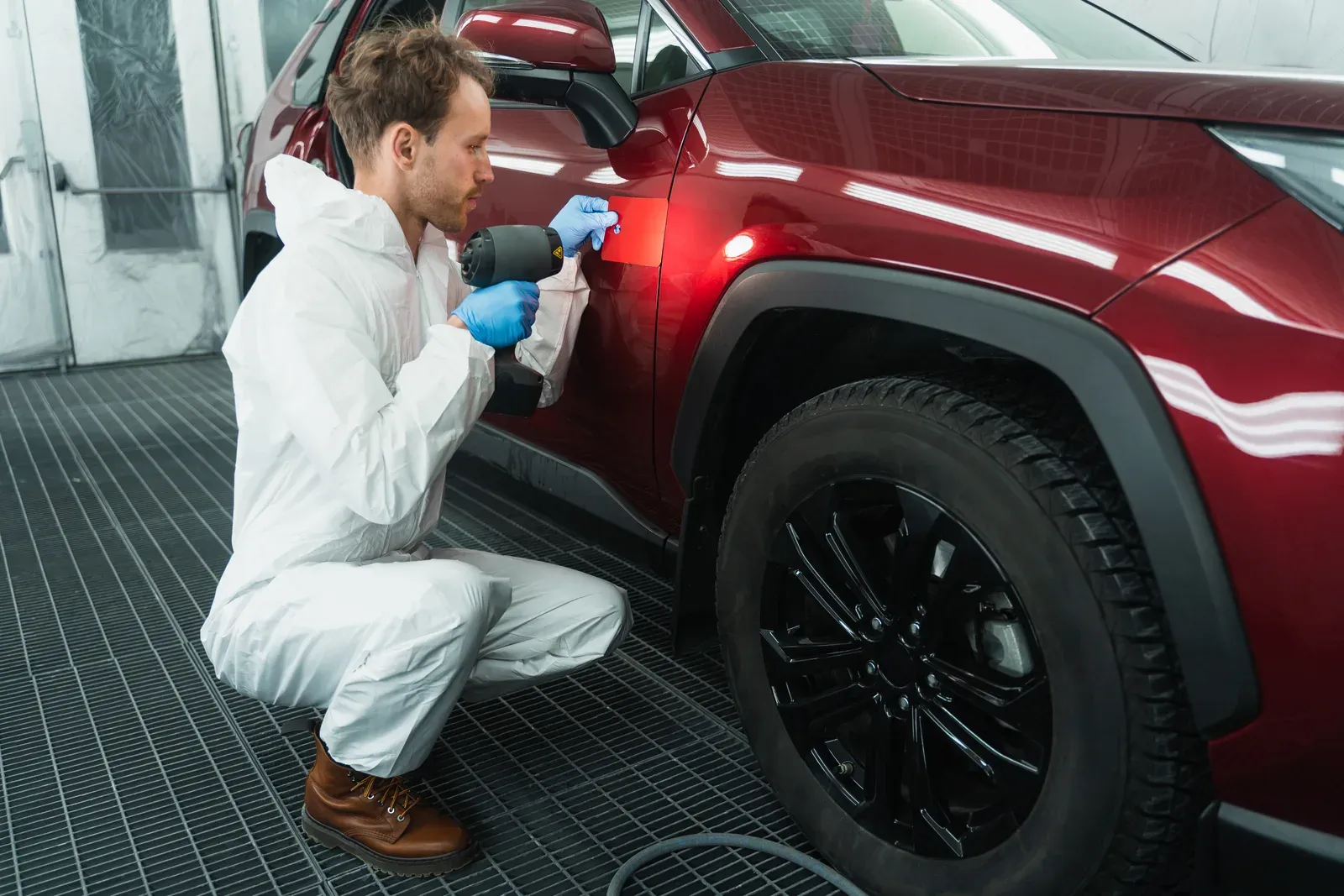
It also helps to separate a color problem from a gloss problem. A freshly polished repair sitting beside older, unwaxed paint can read as wrong even when the color underneath is right. Wash the whole side of the car and look again. If the difference survives daylight, distance, and a clean surface, you’re not imagining it — something in the process fell short. How matching is supposed to work, from the reading taken off your panel to the sprayed test card, is covered on our color matching page, so we won’t repeat it here.
If we painted it: bring it back
Our answer is simple. A visible mismatch gets redone, and it doesn’t cost you anything. Every refinish we deliver is covered by a lifetime paint warranty, in writing, for as long as you own the vehicle — and a color that doesn’t match is precisely the kind of problem it exists for. You don’t need to build a case, escalate, or negotiate. Call the shop, or send photos if that’s easier, and we’ll look at the car together in daylight.
A redo is not a touch-up. The color is measured again off your car, a fresh test card goes up, and the panel is refinished and blended into its neighbors until the transition disappears. We would rather spend that time than have a car driving around Savage wearing our name on a two-tone door. The warranty is printed on your paperwork so this conversation never has to feel awkward — it isn’t a favor, it’s the deal.
One more thing worth saying plainly: bringing a car back does not put you at the end of a line behind paying work. A warranty redo gets scheduled like any other job, you get a written timeline for it, and the painter who can best see what went sideways the first time is the one correcting it.
Catch it at pickup if you can — but there’s no deadline
The easiest moment to raise a match concern is before you drive away. Do the walk-around outside the building rather than in the bay, take your time on the repaired side, and say something about anything that bothers you. A concern raised at delivery gets handled while the car is already here and the formula is still on file.
That said, our warranty has no expiration date and no reporting window. Some problems only reveal themselves later — a color that held up in July light but separates against low winter sun, or a shift that becomes obvious after the first proper wash and wax. Noticing it months later instead of at pickup changes nothing about how we handle it.
If you want to make that check easy on yourself, photograph the repaired area in the lot before leaving — straight on, at an angle, and from across a parking space, with the neighboring panels in frame. Those pictures become your baseline. If anything about the color starts bothering you next month, you’ll be comparing against a record instead of a memory, and the conversation with any shop — ours included — starts from evidence rather than impressions. Good shops welcome that habit; it protects both sides.
If another shop painted it
Start with the shop that did the work. Put the concern in writing, attach photos taken in daylight, and keep a copy. Most reputable shops warranty their refinishing and will redo a bad match, but you want the request documented and their answer documented too. Ask two specific questions: will the redo include measuring the color again rather than re-spraying the original mix, and will it include blending into the adjacent panels? A redo that repeats the first process usually repeats the first result.
If the repair went through an insurance claim, you can also ask the insurance company for a reinspection. Workmanship is the shop’s responsibility, but the insurance company has an interest in the repair being done correctly, and a reinspection puts the problem on record. And if the original shop won’t stand behind the work, a second opinion costs you nothing here — estimates are free, we’ll tell you honestly whether the finish is within normal range or genuinely off, and we’ll put what a correct redo involves in writing.
What “fixed” should look like
The standard is simple: a stranger shouldn’t be able to find the repair. Not close, not hard to notice — gone. That is achievable on nearly every factory color when the paint is measured off the car, proven on a card, and blended across the transition, which is why we refuse to treat a mismatch as something to be managed down or lived with.
A small number of situations genuinely test the limit — heavily faded single-stage paint, or repaints layered over earlier repaints — and in those cases an honest shop tells you what’s achievable before spraying, not after. If a shop’s response to your concern is that this is as close as it gets, the right follow-up is: was it blended, and can I see the test card? The answers tell you whether the limit was the color or the process.