
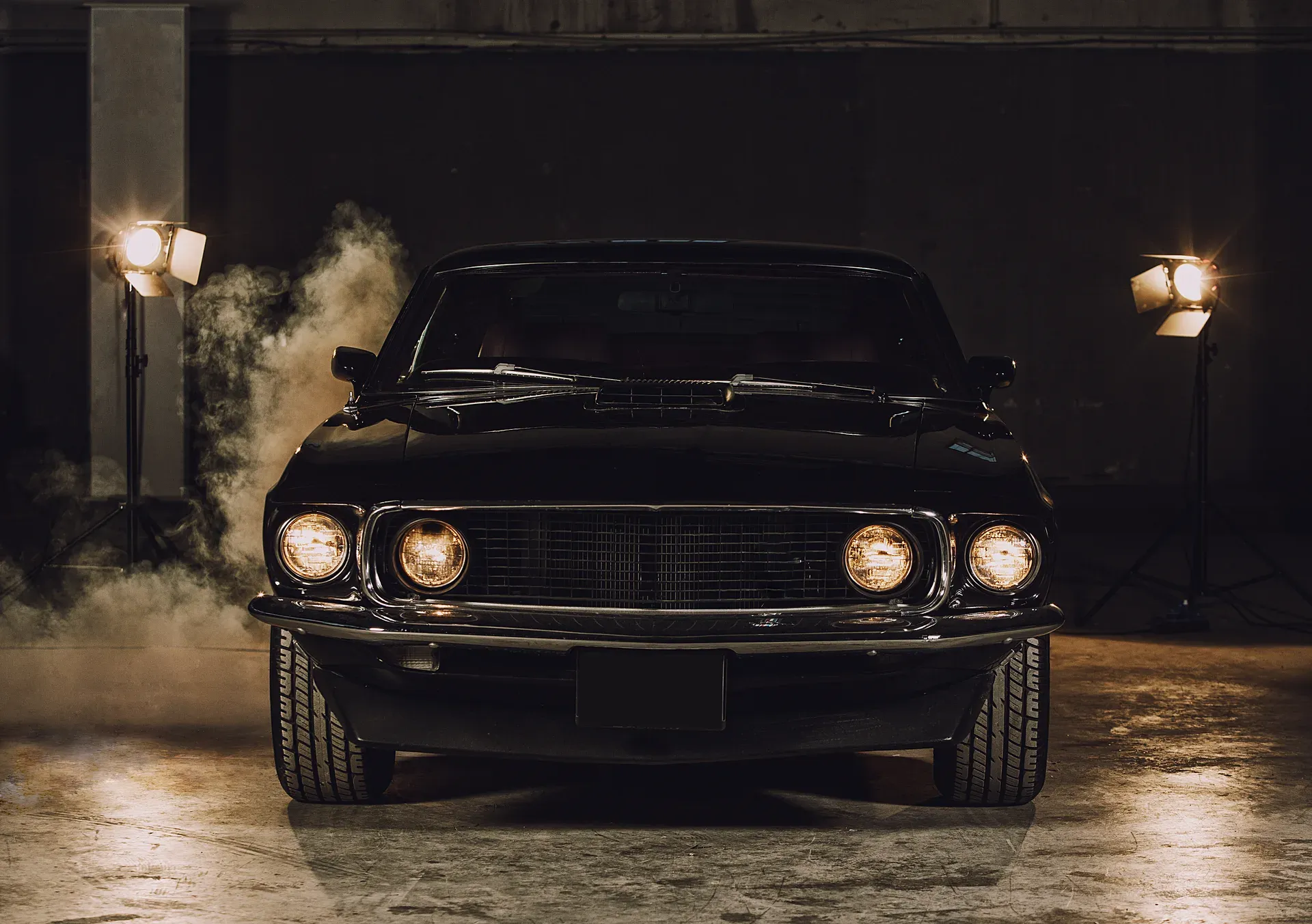
Two trades that look alike from the outside
A collision shop and a restoration shop both shape metal and spray paint, which is roughly where the resemblance ends. Collision work starts with a fundamentally sound car and returns it to pre-accident condition — days and weeks, insurance claims, factory dimensions to measure against. Restoration starts with a car that may be decades past sound and rebuilds it — fabricating patch panels, media blasting shells to bare metal, rotisserie access to every seam, timelines measured in seasons and budgets that grow with every discovery.
Shops that pretend to be both usually shortchange one. The economics don’t overlap: a collision shop’s booth and bays are scheduled in days, while a restoration project occupies space and hours open-endedly. When a collision shop takes on a full restoration “on the side,” that’s the project that stalls in the corner. We’d rather tell you which job yours is on day one.
Pricing expectations split along the same line. Collision work is estimated against defined damage and finishes on a schedule; restoration is discovered as the car comes apart, which is why reputable restorers talk in phases and hourly rates rather than one tidy figure. Neither model is wrong — they’re different businesses — but a quote that pretends a restoration can be priced like a fender repair deserves your suspicion.
The classic work we do take on
If your classic is a driver and something happened to it — a fender caught on the garage, a hit in a parking lot, sun-tired paint on a solid panel — that’s body work, and classics are welcome here for it. Metal repair on solid panels, refinishing in a downdraft booth, and color work matched with our computerized system all translate directly. Older single-stage colors can be matched into modern base-and-clear systems, and we spray test cards against your actual paint rather than trusting a decades-old code.
We treat the differences with respect: panels shaped from heavier-gauge steel than modern cars, trim that must come off carefully because replacements are scarce, and masking decisions made around brightwork that can’t be reordered from a catalog. Insurance work on classics happens too — collector policies exist precisely because these cars get hit like any others — and we document the repair the same way.
Chrome and stainless trim drives more decisions than people expect. Bumpers, spears and window surrounds on older cars often can’t be replaced from stock, so removal and reinstallation is handled as if every clip were the last one in existence — and where a piece is pitted or bent, straightening and polishing by a brightwork specialist can join the plan. We’ll tell you which pieces are safe to work around and which must come off before paint touches the panel.
The work we honestly refer out
Rust-through floor pans, rockers gone to lace, structural fabrication, full frame-off rebuilds — that’s restoration, and we refer it out, the same way we’re straightforward about rust on modern cars: we repair corrosion caught before it perforates, and we don’t pretend a collision shop is a fabrication shop. Cutting out and hand-forming structure for a car whose replacement panels stopped being made decades ago is a specialist’s craft with its own equipment and its own economics.
The referral isn’t a brush-off; it’s the difference between your project finishing and your project stalling. A restoration specialist has the rotisserie, the English wheel, the blasting workflow and — critically — a business model built around long projects. Put your car where the workflow fits it, and everybody ends up happier, including the car.
How to vet a restoration shop
Since we send people down this road, here’s what to check before committing a car and a serious budget to anyone. The goal is evidence of finished projects and honest process, not showroom charm.
- Ask to see completed cars — finished, delivered projects, not just glamorous works-in-progress
- Talk to past customers whose projects are done, and ask how estimates compared to final bills
- Get a written scope: what’s included, what’s hourly, and how discoveries get approved before work continues
- Ask how progress is documented — regular photos and itemized invoices are a healthy sign
- Visit the shop and look at the oldest project there; ask how long it’s been in progress and why
- Expect honest timelines; restoration takes as long as it takes, and anyone promising fast is guessing
Protecting a classic while you own it
A word on insurance: standard policies value cars on ordinary depreciation, which treats a classic badly. Agreed-value collector policies fix the car’s insured worth up front, which changes every conversation after a loss. Whichever coverage you carry, photograph the car thoroughly now — panels, trim, interior, engine bay — because proving condition after damage is much harder than documenting it before.
Minnesota adds its own advice: keep the classic off salted roads, and when it sleeps through winter, store it somewhere dry and ventilated rather than under a tarp that traps moisture against the paint. Condensation working into seams does quiet damage that surfaces as bubbling years later. That’s cheap prevention for a car you care about — and it keeps our future work on it cosmetic instead of structural.
And bring it to us without hesitation when body work is what it needs. The estimate is free, the assessment is honest about which trade your car requires, and if the answer is a restoration specialist, we’ll say so plainly. Owner-operated since 2010 means the person telling you is the person whose name is on the work.