The correct order: film off, repair, paint, cure, film on
Vinyl wrap and paint protection film are surface layers over the car’s real skin, and repair has to respect that layering. The film over the damaged area comes off first, so the metal and paint work can be done on the actual panel to the actual standard. After refinishing, the fresh paint needs to cure fully before any film goes back over it — newly sprayed finishes release solvents as they harden, and film applied too soon can bubble, imprint or bond badly.
The tempting shortcut is obvious and wrong: stretch new vinyl over the dent and call it hidden. Film conforms to the surface beneath it, so the flaw telegraphs through, and if the paint is broken underneath, you’ve sealed a rust starter into a dark, damp pocket — in Minnesota, of all places. Damage on a wrapped car is still body damage first and a film job second.
What happens to the wrap itself
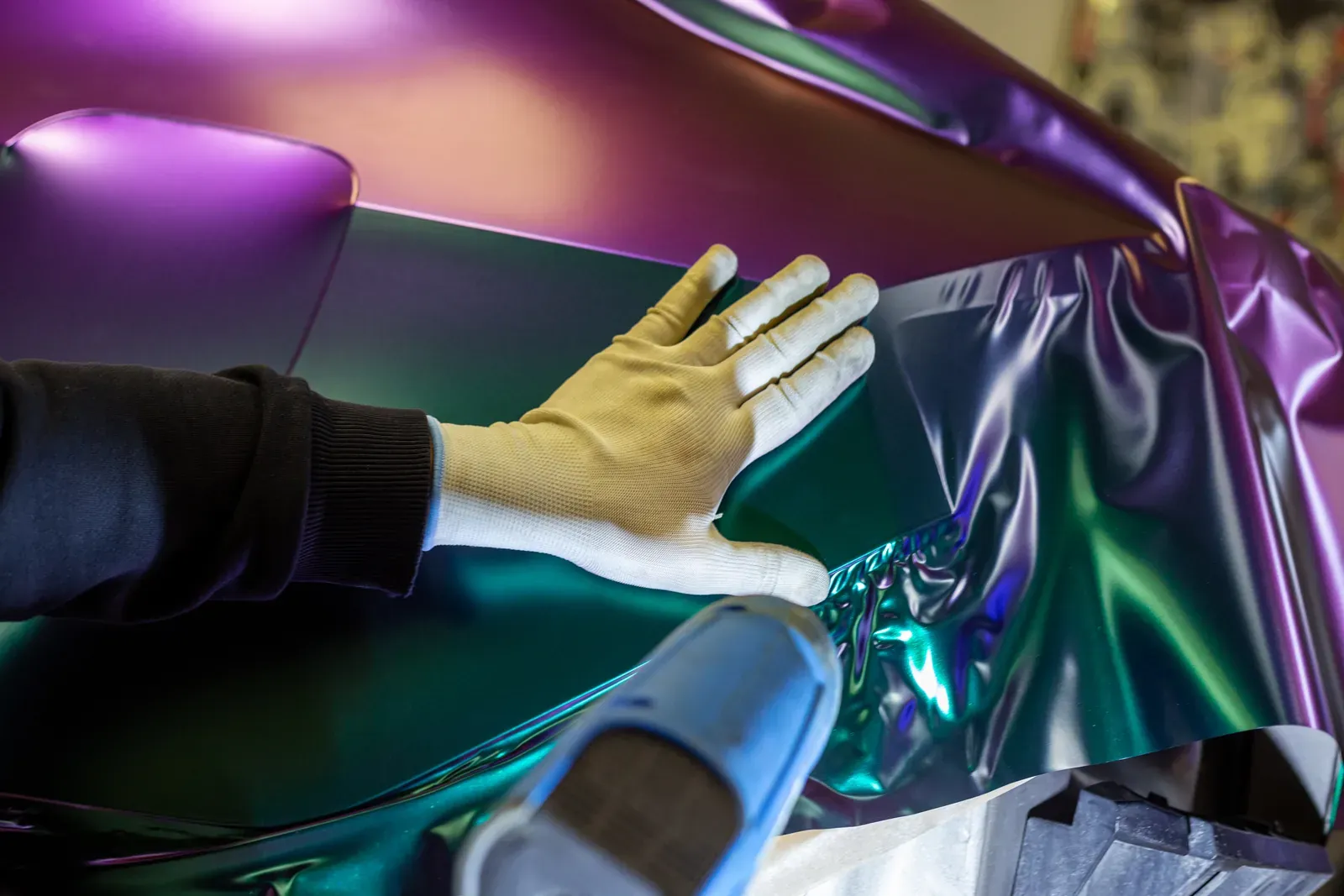
Vinyl doesn’t repair; it replaces. A torn or damaged wrap section can’t be invisibly patched the way paint can be blended, so the affected panels get re-wrapped edge to edge, with seams landing where the original installation put them. On a recent wrap from a documented roll, that’s routine for a good installer.
Age is the complication. Vinyl weathers in the sun the way paint does, so a fresh section of the same nominal color can sit noticeably brighter against a wrap that’s lived outside for years — and film colors get discontinued, which can make matching an older wrap genuinely difficult. Sometimes the honest answer from your installer will be re-wrapping a larger area, or the whole side, to keep the car looking uniform. Better to hear that before the repair than after.
A color-change wrap raises one more question: whether to go back to vinyl at all. If the wrap was nearing retirement anyway, repairing the panel and then respraying the car in the wrap’s color — or returning to the original paint — can make more sense than re-wrapping a section of film that will soon be replaced entirely. Decide before the repair starts, because the answer changes what finish we aim for underneath.
PPF took the hit? Sometimes that’s the whole story
Paint protection film is sacrificial by design, and sometimes it simply wins: a scrape that shredded the film turns out to have left the paint underneath untouched. In that happy case there’s no body work at all — the damaged film is removed, the paint is inspected and confirmed sound, and new film goes on. It’s the outcome PPF owners paid for.
The inspection is the step that shouldn’t be skipped. Film can hide what it failed to stop — a dent without broken paint, a crack in the clear coat, a scuff that penetrated — and the only way to know is to strip the damaged section and look at bare paint in good light. If there is damage beneath, the sequence from the top of this guide applies: repair, refinish, cure, then re-film.
Owners sometimes ask whether film scuffs can simply be polished out. Light marks in PPF sometimes recover — many films are engineered to relax minor swirls with heat — but gouges, tears and lifted edges don’t, and polishing vinyl wrap risks burning through its surface. When film is visibly damaged, replacing that section is the honest recommendation.
Two specialists, one car: how the coordination works
Body shops and film installers are different trades, and your car needs them in the right order rather than one pretending to be the other. We handle the metal, structure and refinishing; your wrap or PPF shop handles removal and re-application of film. What makes it seamless is communication — we tell the installer exactly which panels were refinished and when they were sprayed, so film scheduling respects the cure and surface prep is done knowingly on repainted surfaces.
Full disclosure to the installer matters more than people realize. Film adhesion behaves differently on a refinished panel than on factory paint, and installers adjust technique when they know the history. Handing them that information in writing — panels, dates, materials — is part of finishing the repair properly. If you don’t have an installer, we’re happy to coordinate timing with whoever you choose.
If the wrapped vehicle is a business asset — a branded delivery car, a promotional rig — layer the fleet playbook on top of this one: photo estimate first, parts and film ordered in parallel, and the paint and vinyl appointments scheduled back to back. The vehicle returns to the road in its full livery rather than spending an extra week working in primer-panel anonymity.
Insurance, wraps and proving what the car is worth
A wrap or PPF installation is real money invested in the vehicle, and when damage is part of a covered claim, the film work belongs on the claim alongside the metal and paint. The practical foundation is documentation: keep your installation receipts, and photograph the wrapped car while it’s undamaged. An adjuster can see torn vinyl; proving what the intact installation was worth is much easier with a paper trail.
When we write the repair estimate on a wrapped vehicle, we document the film damage photographically along with everything else, and your installer quotes the re-application. Send photos of the damage — film and all — and you’ll have our written estimate within the hour, with the repair sequence mapped out so the wrap goes back on a panel that’s actually ready for it.