What federal safety guidance actually says
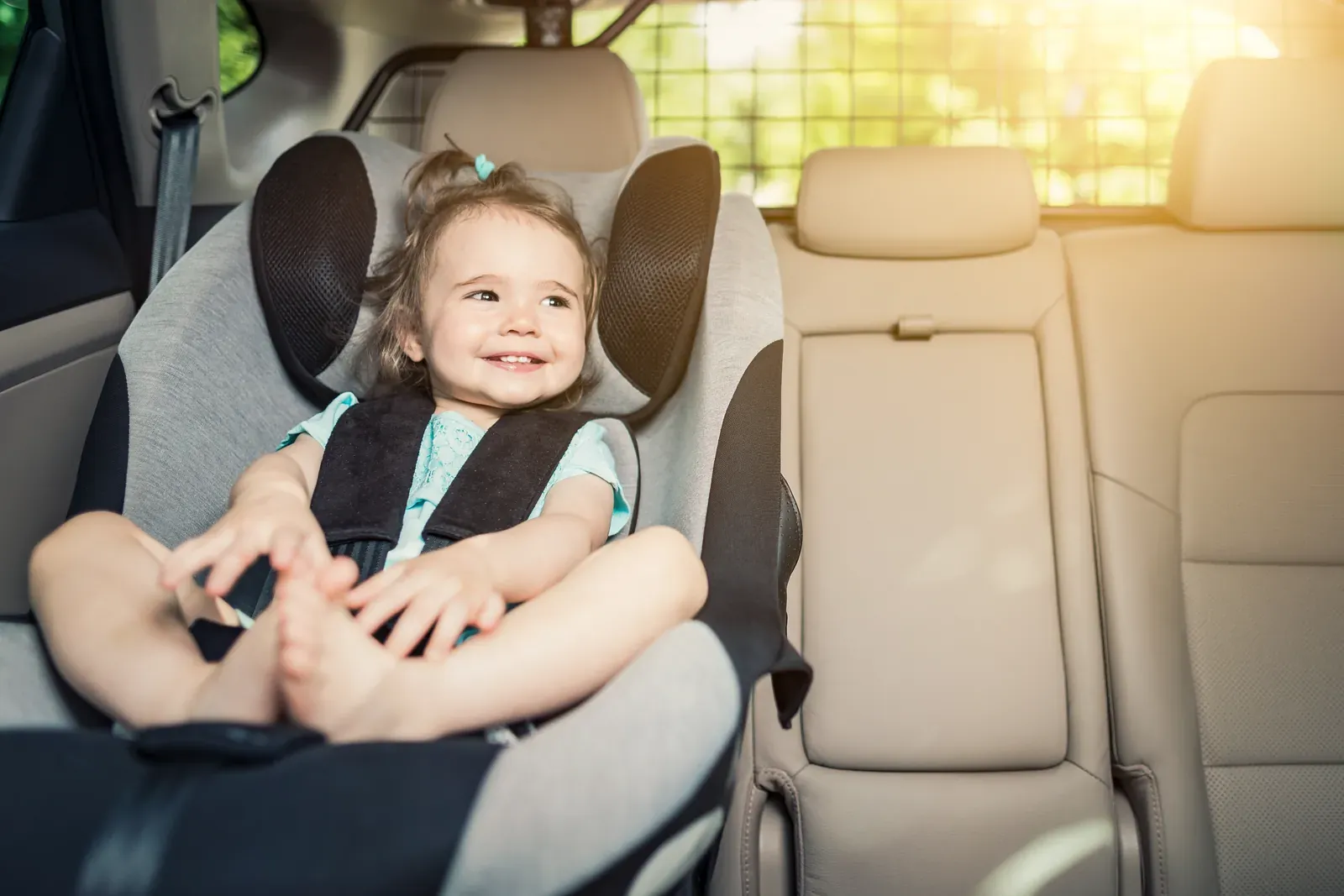
The National Highway Traffic Safety Administration — NHTSA, the federal agency that sets car-seat safety standards — advises replacing child car seats after a moderate or severe crash. Not inspecting them, not watching them for problems, not deciding they seem fine: replacing them. The guidance exists because a seat’s protective structure can be compromised by crash forces without leaving any visible sign at all.
One more layer sits above the federal guidance: your seat’s own manual. Some manufacturers instruct replacement after any crash whatsoever, regardless of severity, and the manufacturer’s instruction governs their seat. When the manual and general guidance differ, follow the stricter one. When you cannot find the manual, the manufacturer’s website or customer line will give you their policy in minutes.
The guidance applies to the whole family of child restraints — rear-facing infant seats, convertibles, combination seats, and belt-positioning boosters alike. A booster seems like just a plastic step, but it positions the belt that does the protecting, and its structure matters the same way. If several kinds of seats rode through the crash, the replacement question covers every one of them.
What counts as a minor crash
NHTSA’s guidance does carve out genuinely minor crashes, where replacement may not be necessary — but the bar sits higher than most parents assume, and every single condition on the list has to be true at once, not just most of them.
Miss any one of these and the crash is not minor by the federal definition — the seats should be replaced. Notice what is absent from the list: how the seat looks. Appearance is not a criterion, because appearance is not evidence.
- The vehicle could be driven away from the crash
- The door nearest the car seat was undamaged
- Nobody in the vehicle was injured
- No airbags deployed
- The car seat itself shows no visible damage
Why a seat that looks fine may not be
A car seat works the way a bike helmet works: it manages crash energy by absorbing it, and absorbing it costs the material something. Stressed plastic can develop fractures too fine to see, webbing and stitching can stretch past their rated strength, and harness hardware can deform in ways your hands cannot detect. The seat spent its protection on the crash it already had.
That is an acceptable trade — it did its job. The problem is asking it to do that job twice. A second crash finds the weakened structure, and there is no way to test your way to confidence in a crashed seat. This is also why safety advocates say never to buy a used seat with an unknown history: you cannot see what it has been through, and looking is not checking.
Getting the replacement paid for
Here is the part many parents never hear: insurance companies commonly cover replacement car seats as part of the crash claim, the same way they cover the damaged bumper. The seats were occupant-protection equipment in the vehicle during a covered event. But coverage rarely arrives unprompted — you ask, or it does not happen.
Mention every car seat in the vehicle when you report the crash, whether or not a child was riding at the time. Photograph the seats installed, keep the originals until the claim settles unless told otherwise, and save the receipts for the replacements. If an adjuster pushes back, point to the federal guidance and your seat manufacturer’s replacement policy, in writing.
Retiring the old seat safely
A crashed seat set out whole by the curb looks like a free car seat to somebody passing by, and that somebody has no way of knowing its history. Retire it so it cannot be reused: cut the harness straps, remove or slash the padding, write on the shell that it was in a crash and must not be used, and put it out in a way that makes its condition unmistakable.
Some retailers run trade-in events that recycle old seats, and some recycling programs accept them — worth a quick search before it goes in the bin. What matters is that the seat’s story ends with you, not with a stranger’s child riding in equipment that already spent its protection.
Resist the urge to keep it as a spare for grandma’s car, either. A crashed seat in the garage has a way of drifting back into service the day the good one is in the other vehicle. Once the decision to replace is made, make it irreversible the same afternoon.
While you are installing the new one
Replacement is the rare chance to reset everything about the seat, so spend the extra minutes on it. Register the new seat with the manufacturer — registration is how recall notices actually reach you — and check the installation basics: tight at the belt path, correct recline for the child’s age, harness at the right height, chest clip at armpit level. Trained child passenger safety technicians offer free installation checks across the Twin Cities; a search for a car seat check near you will surface them.
And while your car is with us for the repair itself, tell us about the seats. We photograph vehicle interiors during teardown anyway, and documentation of installed seats has settled more than one claim conversation. It is a small thing that costs nothing — most of child passenger safety is.