
The honest answer
Choosing your own shop does not meaningfully slow a claim, because network membership was never the main clock. Repair timelines are set by how much damage there is, how quickly parts arrive, and how many approval loops the estimate has to survive. A network shop can start the paperwork a beat sooner; a shop that documents thoroughly closes that gap and often finishes ahead, because complete files eliminate the real time-eater — back-and-forth with the insurance company.
The anxiety behind the question is understandable. The claims call can make the network sound like the express lane, and Minnesota’s steering rules exist precisely because that suggestion is so persuasive in the moment. But before trading away your choice of shop for a feeling of speed, it is worth seeing where the days on a claim actually go — because it is probably not where you think.
Where claim time actually goes
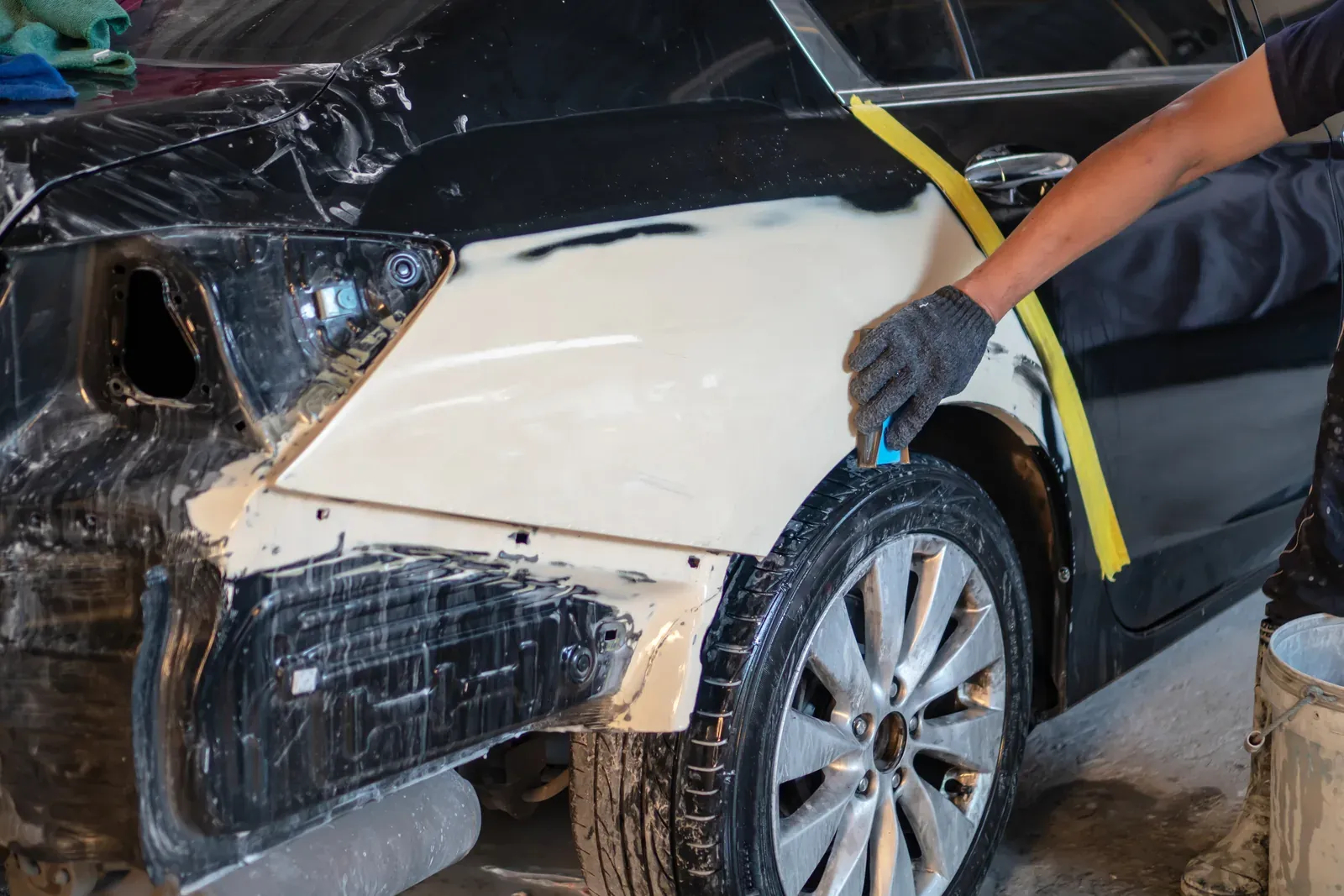
Watch a claim from inside a shop and the timeline decomposes into waits. Waiting for the first estimate to be approved. Waiting for parts to ship — and waiting again when a hidden-damage supplement adds parts nobody could see at the start. Waiting for an adjuster to review that supplement. Waiting for a slot in the paint booth. Almost none of these waits care whether the shop signed a network agreement; they care about damage scope, parts availability, and whether the paperwork was complete the first time it was sent.
That last clause is the lever. An estimate written from the outside of an assembled car nearly guarantees a mid-repair surprise, which means a mid-repair supplement, which means the car sits in pieces while approval is sought. An estimate written after teardown front-loads the discovery: everything is found, photographed, and submitted together, and the approval loop runs once instead of over and over. Teardown-first estimating is a speed strategy disguised as a thoroughness strategy.
The head start network shops really get
Fairness requires naming the genuine advantage: assignment. Inside a direct-repair program, the referral, the estimating platform, and the billing rails are pre-connected, so the opening administrative handshake is already done when the car arrives. That is a real convenience, and on a tiny cosmetic job it may be most of what there is to gain. It is also, notably, the only phase of the claim the network touches at all.
What the head start does not cover is everything after: teardown, parts, structural measuring, refinish, supplements, reassembly. Those phases run at the speed of the damage and the shop’s discipline, not the network’s. The honest comparison is not network-fast versus independent-slow; it is early-start versus fewer-surprises. On anything bigger than cosmetic damage, fewer surprises tends to win the calendar — and the bigger the hit, the more decisively it wins.
How a documenting shop keeps pace
Our routine is built around giving the insurance company nothing to ask twice about. Photography starts before the car is unloaded. The damaged area comes apart before the estimate is finalized, so the file the adjuster reviews already includes whatever the bumper was hiding. Supplements go in with photographs and part numbers attached. Parts are ordered the moment their lines are approved, so shipping time overlaps with paperwork time instead of following it.
The pace shows up before the car even arrives: send photos and a free written estimate returns within the hour, which means the claim conversation can start immediately rather than after a scheduling dance. From there one person carries your file, and updates come to you instead of the other way around. Our insurance claim handling page shows the whole workflow if you want to see it laid out.
Rental cars and the pressure of the meter
Rental coverage is where speed anxiety usually lives — every repair day can feel like a rental benefit burning down. The terms of that benefit come from your policy and do not change with your choice of shop; no network membership adds rental days and no independent shop subtracts them. What a shop can influence is friction: coordinating the rental pickup with drop-off, sequencing parts so the car is never sitting disassembled waiting on a known item, and keeping the claim file so clean that approval stalls are rare.
If a stall happens anyway, documentation becomes your advocate. A file showing the supplement went in complete, with photos, on a known date, makes it very hard to blame waiting time on your choice of shop — and very easy to have a productive conversation with the adjuster about the clock. The shield against the it-will-take-longer warning is not arguing; it is recording.
What you can do to keep it moving
The customer holds more of the schedule than most people think. A handful of small moves compresses the quiet gaps at the front and back of a claim, and none of them requires expertise — just promptness.
None of this is busywork; each item removes a specific stall. Early photos start the estimate before the car ever arrives. Signed authorizations let teardown begin the moment it does. Fast replies keep approval loops from parking your file in someone’s queue. Small keys — but they open the doors the calendar actually hides behind.
- Open the claim right away and get the claim number to your shop immediately
- Send damage photos to the shop before the tow or drop-off, so the estimate starts early
- Sign the repair authorization and direction-of-pay at drop-off, not after
- Answer approval calls and texts quickly — silence is the one delay nobody can fix
- Agree on an update cadence at drop-off so you are never chasing status