Who inspects the car, and against what
Lease-end inspections are usually done by a third-party inspection company hired by the leasing company, or by dealership staff at drop-off. Either way, the inspector is not grading your character — they are working a checklist against the wear standard printed in your lease packet, often with a simple gauge for dent size and scratch length.
That is genuinely good news. A checklist can be read in advance, which means the inspection is a test you can study for. Everything they will look at is knowable before they look at it.
Expect the visit itself to be quick and procedural. The inspector photographs the car, measures anything questionable, and files a condition report that becomes the basis for any charges — there is rarely an argument worth having at the car, because the person holding the gauge does not set the prices. Your influence happens earlier, by controlling what there is to find.
It helps equally to know what the inspection is not: a mechanical evaluation, a negotiation, or anything personal. The inspector has no stake in finding damage and no authority to waive it. Treating the visit as data collection — with all decisions made beforehand — is the accurate frame.
What reliably gets flagged
Across leasing companies, the flag list is remarkably consistent. The credit-card test is the famous one: dents or dings larger than a card, or several clustered on one panel, typically count as excess wear. Scratches matter once they go through the color rather than just marking the clear.
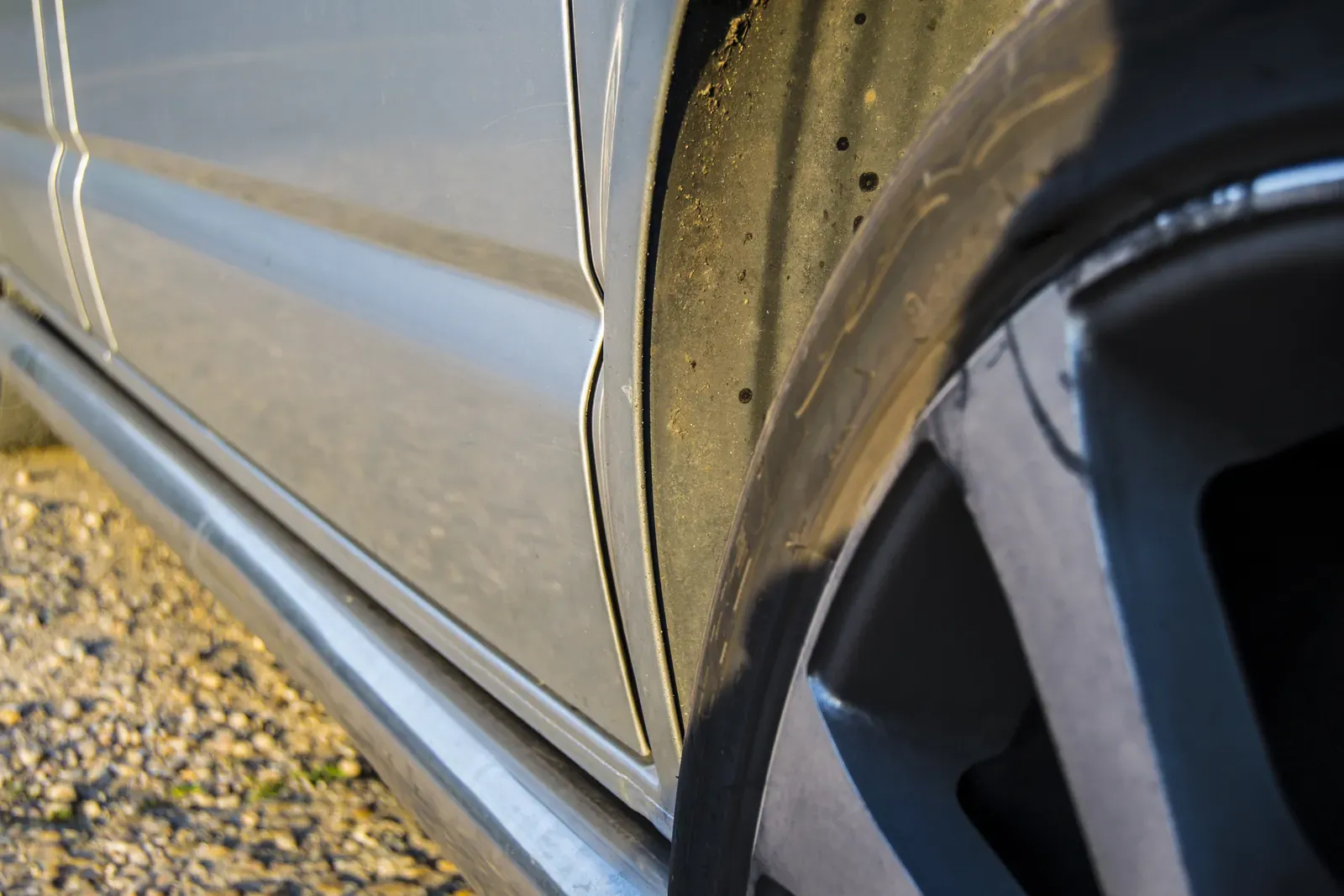
Bumper corners and wheels are the other repeat offenders, because parking does its damage low and at the extremities. Glass rounds out the list — a starred or cracked windshield is one of the most commonly billed items at turn-in.
Prior repairs are their own category. Inspectors are trained to catch mismatched color, overspray on trim, and panels that read differently from their neighbors — the fingerprints of cheap work done somewhere along the way. Quality repair passes as original; bargain repair becomes a chargeable finding, which is worth remembering when choosing who fixes a leased car.
- Dents larger than a credit card, or multiples on a single panel
- Scratches through the color coat, gouges, and scraped paint
- Bumper corner gouges, cracks, and heavy scuffs
- Curb rash and wheel damage beyond the allowance
- Cracked, starred, or chipped glass in the driver’s view
- Mismatched paint or visible evidence of a poor prior repair
What they usually let slide
The wear standard exists to permit normal use, and inspectors apply it that way. Dings smaller than the gauge, faint scratches that have not broken the color, stone chips in proportion to the mileage, and light scuffing on bumper covers generally pass without a line item.
This is worth internalizing before you spend anything: over-repairing a lease return is a real and common mistake. If the standard forgives it, fixing it buys you nothing at all. Repair decisions on a leased car should come straight from the wear standard, not from pride in the car.
The gauge logic explains most of the leniency. Inspection companies need consistent, defensible results across thousands of cars and many inspectors, so standards are written to be measurable — larger than the card, longer than the allowance, through the color or not. Anything that requires taste to judge tends to be forgiven, because taste does not survive an appeal.
One caution inside the good news: forgiven is not the same as invisible. If you hope to buy the car at lease end and later resell it, the small flaws the inspector waves through may still matter to your future buyer. The standard answers the leasing company’s question — what do you owe — not the market’s.
The driveway self-inspection
Run your own inspection well before the real one, on a clean car in daylight or open shade — dirt hides exactly the kind of damage inspectors are paid to find. Bring a bank card as your gauge and your phone as your notebook.
Crouch at each corner and sight down the length of the body, where dents reveal themselves in the reflections. Work panel by panel, test anything questionable against the card, then circle the wheels, check the glass, and photograph everything you find. The photos become your repair list and, later, your proof of condition.
Repeat the circuit at a different time of day if you can. Dents hide from flat light and reveal themselves when the sun rakes across a panel, which is how a car that looked fine at noon shows a door ding at sunset.
Give the interior and the glass the same pass while you are out there. Tears, burns, and stains beyond normal wear get flagged inside, stars and cracks get flagged on glass, and the spare key and manuals are cheaper to locate in a kitchen drawer now than to see billed at replacement rates later.
When something is over the line
Anything past the standard is cheaper to deal with on your terms than on the leasing company’s charge sheet. You choose the shop, you see the price in writing before committing, and the item never appears at inspection because it no longer exists.
Send us the photos from your walk-around and we will tell you — in writing, within the hour, free — what actually needs repair and what the standard will forgive anyway. We will happily tell you when the answer is nothing; a lease return is the last place you should be spending money you do not have to.
Sequence the whole project simply: self-inspect early, pre-inspect if your leasing company offers it, repair only what is genuinely over the line, photograph the car at drop-off. Each step exists to keep the next one small. Returns run this way tend to end with nothing owed — not because the car was babied, but because nothing was left to discover on the one day discovery costs money.