
Why buyers show up with paint meters now
Paint thickness meters used to be a dealer tool; now they are cheap enough that careful private buyers carry one in a jacket pocket. The meter measures the film sitting on the metal, and refinished panels read thicker than factory because new material went on over what was there.
Understand what the buyer is really doing with it: hunting for undisclosed accident damage. The anxiety was never about paint. It is about what the paint might be covering — and that distinction is exactly the ground where an honest seller wins.
A meter reading is also the cheapest confidence trick in car shopping: it produces a number, and numbers feel like verdicts. Sellers who understand what the number can and cannot say hold the stronger position, because they can explain the reading before it gets misread. That is all this guide really teaches — being the person at the sale who understands the tool.
A repainted panel is not a confession
Panels get refinished for reasons that never touched anything structural. A key dragged down a door in a parking lot. Hail worked over a hood. Clear coat let go after years of sun. A previous owner fixed a scratched fender properly instead of living with it. Every one of those cars will read repainted on a meter, and not one of them was in a crash.
What actually matters to value is the pair of questions behind the reading: why was it painted, and how well. A refinish done to fix cosmetic damage, executed properly, is maintenance — the automotive equivalent of a roof repair on a house. It only becomes a problem when it is discovered instead of disclosed.
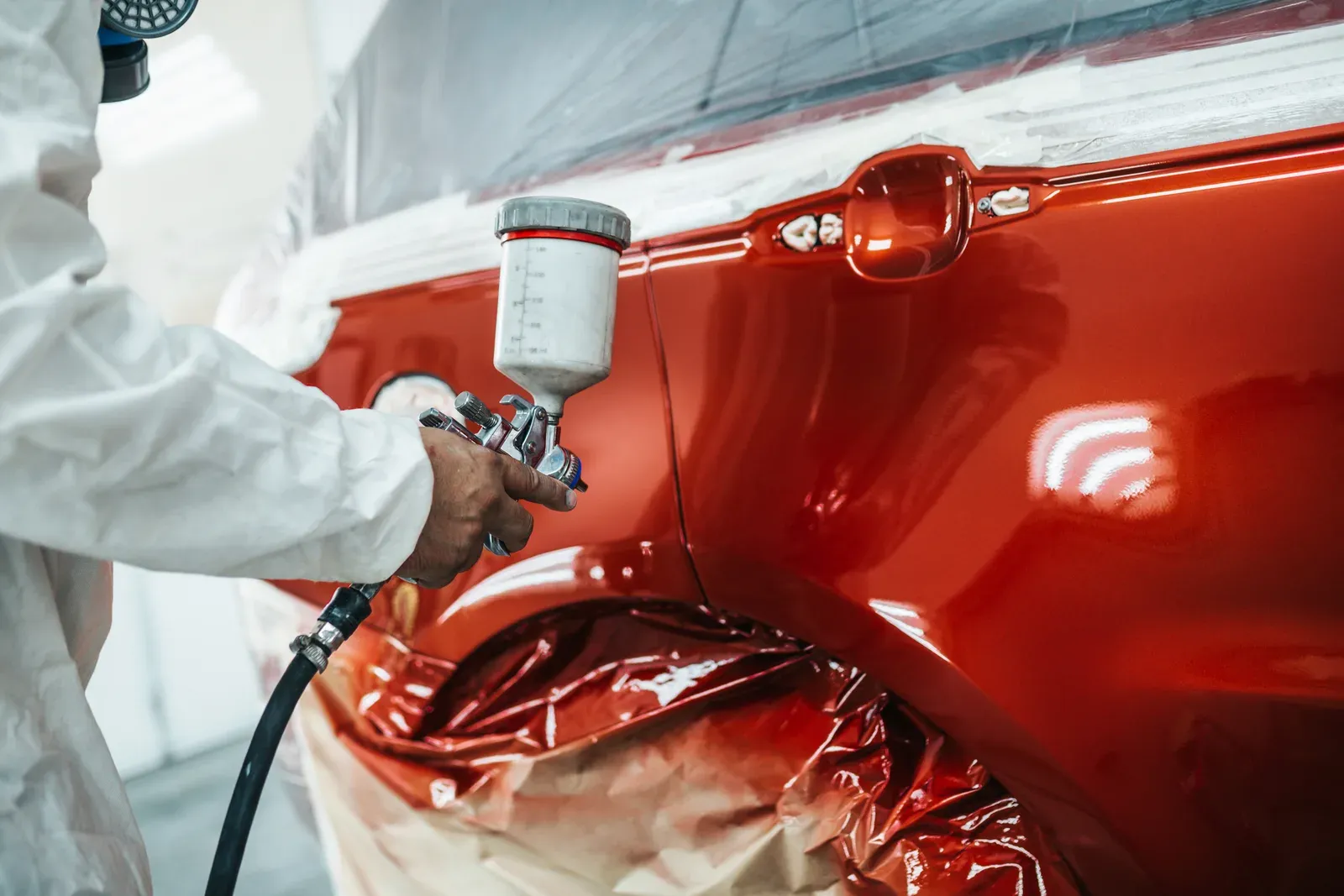
Our booth sees the innocent version weekly: doors keyed in parking lots, hoods peppered by hail, bumper covers scuffed on ramps. Refinished panels leave here on cars that have never been hit by anything but weather and bad luck, and the market’s reflex to equate paint work with crash history is, most of the time, simply wrong.
Age calibrates the conversation. On a newer car a repainted panel invites more questions, because there has been less life in which innocent damage could occur; on a car with many seasons behind it, refinished paint is close to expected. The newer the car, the more the reason and the receipt matter.
What the meter shows on good work versus bad
Quality refinishing has a recognizable signature. Readings step up on the repaired panel and taper across the neighboring ones, because good shops blend color into adjacent panels rather than stopping at an edge — we cover why in our paint-matching explainer, linked below. To an informed buyer, that taper reads as professional work.
Cheap work has a signature too: hard jumps at panel edges where paint stopped at a tape line, and wildly high spots where filler was piled instead of metal being straightened. If a buyer’s meter finds that on your car, the problem is not the repaint — it is the quality of it, and no framing rescues bad work.
Filler deserves a fair word while we are here. Modest filler over straightened metal is legitimate repair technique, not scandal — the readings that should raise eyebrows are the towering ones suggesting metal was never straightened at all. Buyers who learn that nuance stop panicking at every elevated number, and sellers who know it can explain their car calmly.
If you want to pre-empt the whole exchange, meter your own car before listing it. Knowing which panels read thick — and saying so before the buyer’s gadget comes out — converts their inspection into a confirmation of your story. There is no better look for a seller than predicting the reading.
Disclosure framing that actually works
Say it before they find it, and say it specifically: the left fender was repainted after a parking-lot scratch, here is the shop’s invoice, and the paint carries a written warranty. Named panel, named reason, named shop. Delivered that way, a repaint stops being a discovery and becomes evidence the car was cared for.
The reverse plays out badly every time. A buyer whose meter catches an undisclosed repaint does not just discount the panel — they re-price the whole car, because now every other answer you gave is suspect. The repaint was never the threat to your sale. The surprise was.
Paperwork does the heavy lifting, which is worth planning for at repair time rather than sale time. An invoice naming the panel and the work, plus warranty terms in writing, costs nothing to keep and is impossible to reconstruct convincingly years later. A shop that offers neither is telling you something about the repair itself.
Should you repaint before selling? Sometimes — and sometimes no
Refinishing before a sale earns its cost when specific visible damage is dragging an otherwise clean car down: a scraped bumper, a keyed door, clear coat failing on a hood. Fix the flaw, keep the invoice, disclose it cheerfully, and the listing improves more than the paint cost.
Skip the all-over respray on a tired car chasing a price it cannot reach — and know that fresh full-body paint right before a sale makes meter-carrying buyers more suspicious, not less, since it can hide anything. When we refinish a panel here, it goes through computerized color matching and leaves with a written lifetime paint warranty, which is precisely the paperwork that turns a repaint from a question mark into a selling point.
The decision rule, condensed: paint to fix a specific, visible, value-dragging flaw, and never paint to manufacture an impression. Buyers reward the first with trust and punish the second with their meters — and the entire difference between the two is one honest sentence and one sheet of paper.