
Why does winter make dents and cracks worse?
Quick answer
Because water gets into the break, freezes, and expands. Any dent or crack that broke the paint film lets moisture reach bare metal and work under the surrounding paint, where repeated freeze-thaw cycles lift more film each time. Cold also makes plastic brittle, so small cracks in bumper covers spread, and road salt is waiting in every one of those openings.
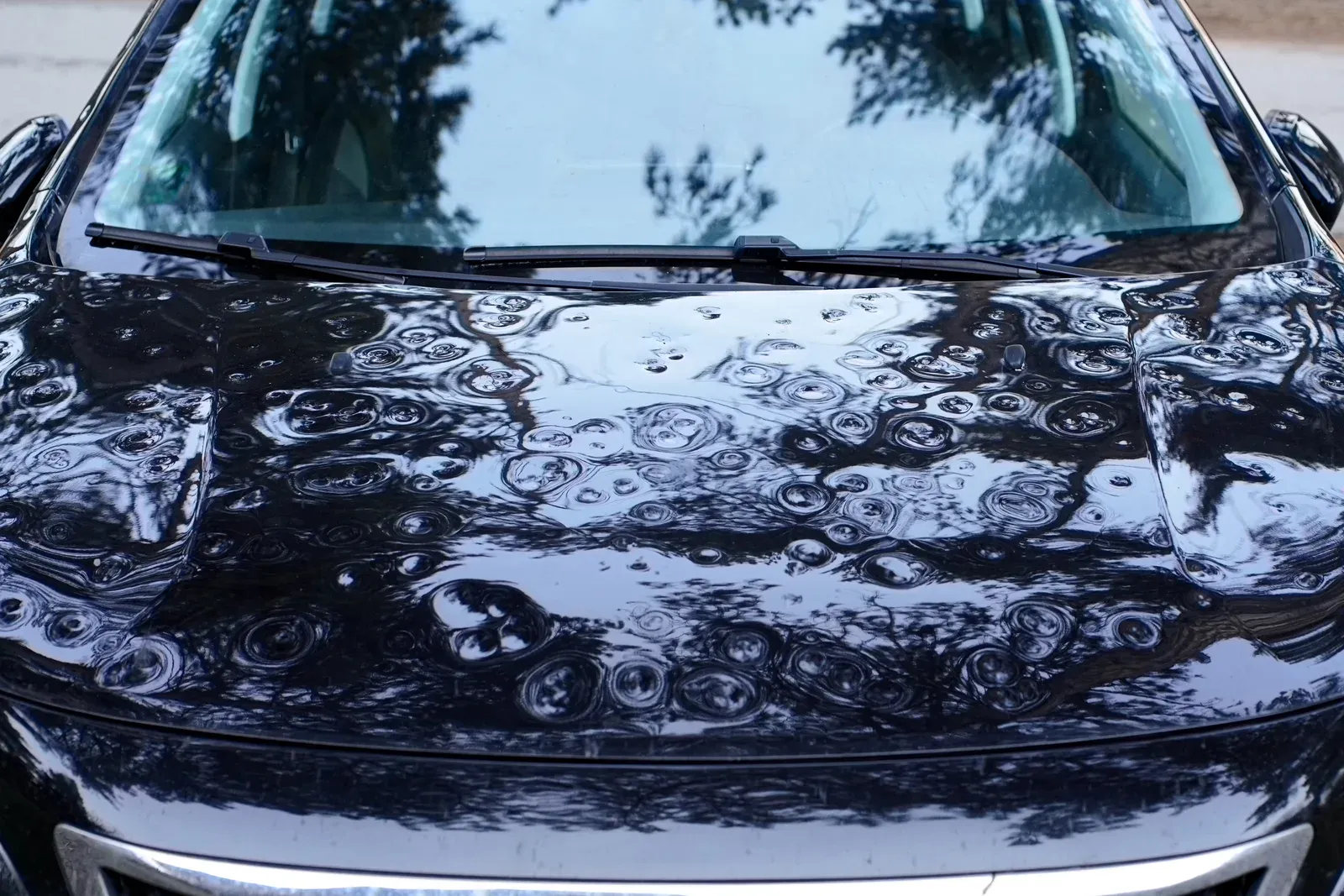
Freeze-thaw is a mechanical force, not a metaphor
Water expands by roughly nine percent when it freezes, and it does so with enough force to split rock. In a car, that force is applied at exactly the weakest point — the edge of a chip, the bottom of a crease, or the seam behind a dented panel.
Here is the cycle. Meltwater and brine wick under the lifted edge of the paint around a dent. Overnight it freezes and expands, prying the paint edge up a little further. It thaws the next afternoon and more water gets into the slightly larger opening. Minnesota runs that cycle dozens of times a winter.
The visible result in spring is a chip that has become a flaking patch, or a crease where the paint has cracked along its whole length. Nothing hit the car again. The damage simply had a winter to work.
The same force works inside closed sections. Water that collects in a door bottom or a rocker with a plugged drain hole freezes there, and it expands against seams and spot welds rather than against open air.
Rust does its own expanding
Once bare metal is exposed, corrosion adds a second expansion force. Iron oxide takes up substantially more volume than the steel it replaces, so rust growing under a paint edge physically pushes the paint off from underneath.
That is why a rust spot appears as a raised bubble before it ever becomes a hole. By the time the surface breaks, the corrosion underneath is significantly larger than what you can see.
Salt is the accelerant. Chloride keeps the surface conductive and hygroscopic, so the reaction runs all winter rather than pausing whenever things dry out.
The two forces compound. Freeze-thaw opens the paint edge, corrosion widens the exposed area, and the wider area collects more water for the next freeze. Nothing about the process is self-limiting.
It is also why spring reveals damage people do not remember getting. The dent happened in November; what appeared in April is the four months that followed it.
- Water expands about nine percent when it freezes
- Iron oxide occupies more volume than the steel it replaces
- Both forces push outward, from under the paint
- Chloride keeps the surface wet and conductive between cycles
- The metro cycles through freezing dozens of times a season
Cold makes plastic and adhesive brittle
Bumper covers, grilles, trim, and headlamp housings are thermoplastics, and their impact resistance drops sharply as temperature falls. A parking lot tap that would flex and rebound in July can crack a cover outright at ten below, and the same is true of backing into a hardened snowbank that would have been soft powder a week earlier.
An existing crack is worse. Cold concentrates stress at the crack tip, and every door slam, speed bump, and cold-start flex extends it a little. A hairline crack in November is often a split cover by March — and a cover that could have been plastic welded becomes one that gets replaced.
Adhesives and clips get brittle too. Emblem tape lets go, molding clips snap, and weatherstrip that has stiffened tears instead of flexing — which is how a small trim issue turns into a wind noise and water leak complaint.
Frozen doors are their own version of this. Pulling hard on a door that is iced shut tears weatherstrip, bends the handle mechanism, and occasionally pulls the handle itself off — a small winter repair that started as impatience.
What gets worse over a Minnesota winter
If any of these are on your car right now, they are actively deteriorating rather than holding steady:
- Rock chips and scratches that reached primer or bare metal
- Dents where the paint cracked, especially along a crease
- Any existing rust bubble at a wheel arch, rocker, or door bottom
- Cracks in a bumper cover, even hairline ones
- Failing or lifting clear coat, which lets water reach the base coat
- Damaged or missing seam sealer from a previous repair
- A windshield chip, which cold and defroster heat will spread into a crack
- Loose or lifted trim and moldings, which let water reach places it should not
- A door or rocker drain hole packed with debris, so water freezes inside the panel
The practical conclusion
The same repair costs less in the fall than it does in the spring, and that is not a sales line — it is what the damage does over four months of freeze-thaw and brine.
A chip sealed in October is a small job. The same chip in April can be a rust repair with metal work, corrosion protection, and a blended refinish. A hairline crack in a bumper cover can be repaired; a split cover gets replaced.
The pattern holds across every kind of damage. Winter does not create new problems so much as it takes the ones you already have and finishes them, and it works on the small ones just as reliably as the large ones.
So if something on the car is on a list of things to get to eventually, the useful question is whether the paint film is broken. If it is, it belongs on the list of things to do now.
Cold weather does not stop us from doing the work. Repairs happen indoors, and refinishing happens in a heated downdraft booth, so a January repair carries the same lifetime paint warranty as a June one. Send photos and you will have a written estimate within 24 hours.
