
Is it worth fixing paint damage before spring?
Quick answer
If the paint film is broken, yes — do it now. Exposed primer or metal is where corrosion starts, and every additional week in road salt makes the eventual repair bigger. Waiting is only reasonable for damage that has not broken through the clear coat. Spring is also when every metro shop fills with hail and pothole work at once.
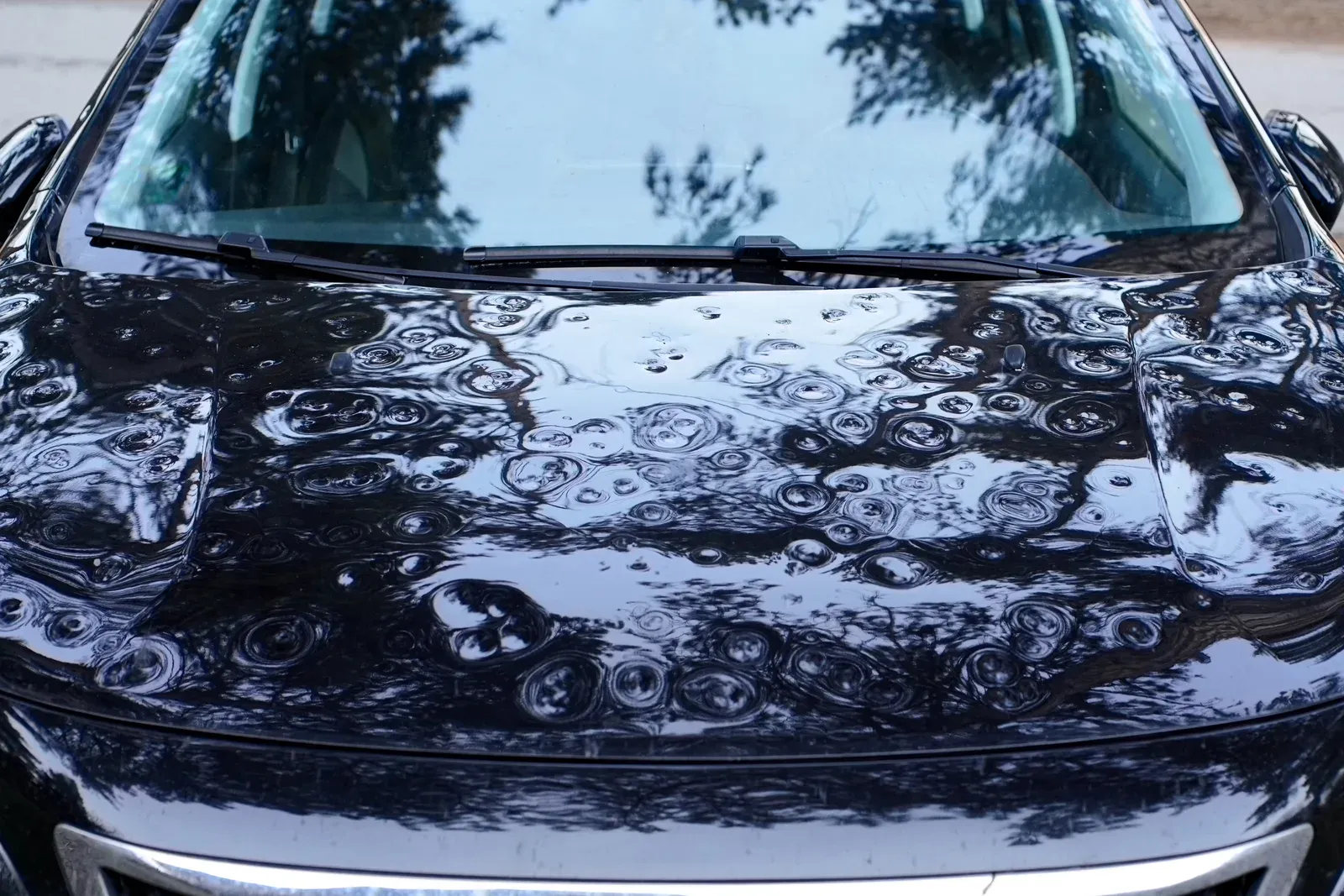
The test: is the paint film broken
Everything depends on whether the barrier is intact. Paint is not decoration — it is the only thing between steel and a chloride solution, and it either seals or it does not.
Damage that broke through to gray or white primer, or to bright metal, should be addressed now. Primer is porous and does not hold moisture out for long, and bare metal is already corroding as you read this.
Damage that only marred the clear coat — a light scuff that still shows full color, a scratch you cannot catch a fingernail in — is genuinely cosmetic and can wait for a more convenient time. The clear is doing its job; it just looks bad doing it.
A dent with completely intact paint is in the same category. The metal moved, but the seal is unbroken, so there is no corrosion clock running.
Two quick ways to check. Run a fingernail across the damage — if it catches in the groove, the film is likely broken. And look at it in bright light from a low angle, where a chip that reached primer shows a distinctly different color at the bottom.
- Bare metal or rust visible — urgent
- Gray or white primer visible — this season
- Cracked or lifting paint at the edge of a dent — this season
- Color intact, only the clear coat marked — cosmetic, can wait
- A dent with fully intact paint — cosmetic, can wait
Why waiting costs more than it saves
Rust does not pause. Once salt reaches bare metal, corrosion creeps outward under the surrounding paint, and freeze-thaw cycling pries that paint edge up a little further every night. Neither process cares whether you have gotten around to booking an appointment.
The result is that a repair changes category over one winter. Sealing and refinishing a chipped area is a small job. Cutting out perforated metal, welding in new, rebuilding corrosion protection, and blending a refinish is a different job entirely.
There is also the quiet cost. A car with a rust repair in its history and visible corrosion at the wheel arches loses real money at trade-in, and unlike an accident record, this one was avoidable.
Insurance rarely helps here either. Chips and corrosion accumulate over time rather than happening in one covered event, so this is almost always out-of-pocket work — which is another reason to do it while it is still small enough to be cheap.
Spring is the worst time to need a body shop
Three waves land at once when the weather turns. Pothole damage peaks as freeze-thaw tears up the roads. Hail season starts in late spring and fills every shop in the south metro within days of a significant storm. And people who have been putting off winter damage all finally call in the same month.
That means longer waits for an appointment, longer waits for parts, and more time in a rental. Booking in late winter puts you ahead of all of it, and it means your car gets worked on rather than parked in a queue behind storm cars.
If you are planning to sell or trade the vehicle, the timing argument is stronger still. Paint and body work should be finished before the car is listed or appraised, not negotiated against.
Booking ahead also gives parts time to arrive. When the estimate is written and the parts are ordered in advance, the car goes into the shop on a day when everything it needs is already on the shelf, which is the single biggest factor in how long you are without it.
What to get done now, in order
If you are prioritizing, this is the order that actually protects the car:
- Anything showing bare metal or rust — this is the only truly urgent category
- Chips and scratches through to primer, especially on the hood and lower panels
- Cracked or lifting paint around a dent or crease
- Cracks in bumper covers, before cold spreads them
- Failing clear coat on the roof, hood, or trunk lid, before it delaminates further
- Loose trim or a lifted molding that lets water behind it
- Purely cosmetic scuffs and dents with intact paint — these can genuinely wait
Cold weather is not a reason to postpone
Body and paint work happens indoors. Refinishing happens in a heated downdraft booth where the panel is brought to temperature and the finish is baked to full cure, so the weather outside has no effect on the result or the warranty.
The only real winter difference is that a very cold vehicle needs time to warm all the way through before prep and spraying, which we build into the schedule.
There is one genuine reason to wait, and it is worth naming. If the car is going to spend the rest of the winter collecting more damage — a tight garage, a rough commute, a parking situation that keeps producing dings — it can make sense to seal the urgent spots now and do the cosmetic work once, in one visit, when the season ends. That is a scheduling decision, not a reason to leave bare metal exposed.
Send photos and you will have a written estimate within 24 hours, free — including an honest note on which items should be done now and which can wait until you want to spend the money.