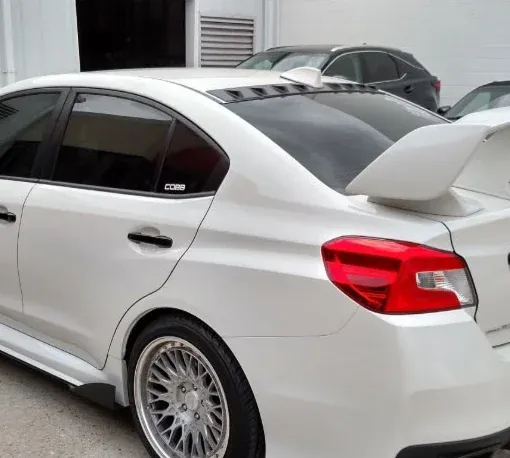
The point where a quarter panel stops being repairable
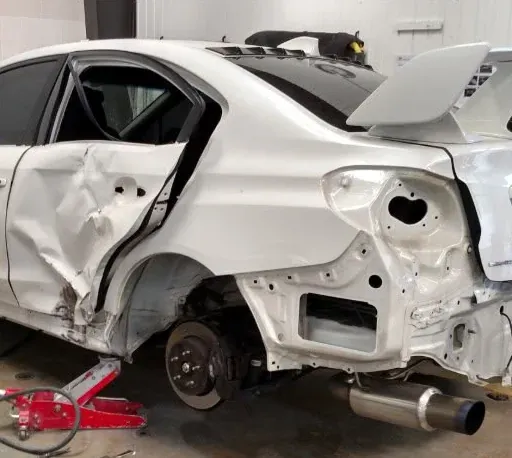
The photograph shows this WRX mid-repair, with the quarter panel already cut away and the inner wheelhouse and rear structure standing bare. That is what the decision looks like once it has been made. Before it, the panel was folded inward through the door opening and along the arch, with the metal torn at the highest-stressed point rather than simply dented inward.
A quarter panel is not a bolt-on part. It is welded to the roof, the rocker, and the rear body, so replacing one means cutting a structural piece out of the car and putting a new one back with the same joins the factory used. Shops replace one when the metal is torn or stretched past recovery, or when the labor to work it back exceeds what a new panel costs — and not before.
How a replacement quarter panel goes on
Cut lines are chosen where the manufacturer’s procedure allows them, usually at or near factory seams and away from structural reinforcements. The old panel comes off by drilling the spot welds rather than grinding through them, which preserves the flanges the new panel needs to land on. Everything underneath is inspected and straightened at that stage, since it will be hidden for the rest of the car’s life.
The new panel is then fitted, clamped, and welded by the method the manufacturer specifies for each seam. Seam sealer is applied in the same pattern the factory used, and cavity wax goes into the closed sections that were opened up. Skipping those last two steps is invisible on delivery day and shows as rust bubbles along the arch after a few Minnesota winters of road salt.
- Old quarter cut at approved seams, spot welds drilled rather than ground away
- Inner wheelhouse and rear structure inspected and straightened while exposed
- Replacement panel clamped, fitted, and measured before any welding started
- Welds made by the method specified for each seam, then dressed flush
- Seam sealer reapplied in the factory pattern; cavity wax into closed sections
- Flank refinished in the booth and blended forward into the doors
Living with a replaced quarter panel
Done properly, a replaced quarter is stronger than a heavily filled one and indistinguishable from the outside. Check the arch lip for an even radius, the door gap for a constant width from top to bottom, and the seam sealer inside the trunk and under the trim for a factory-looking bead rather than a smear. On a car with a rear wing, check that the wing sits level against both quarter panels.
The one thing a quarter panel replacement will not do is stay off the record. It is significant structural work and it belongs in the repair documentation, which is where an honest shop puts it. What matters to the next owner is the quality of the joins and the corrosion protection, and both of those are things you can point at rather than promise. Ask for photographs of the panel before it went on, too. Any shop that did the job properly took them, because the welds, the sealer, and the inner structure are the parts of the work nobody can see once the car is painted and back together.