EyeSight is a stereo camera, and stereo cameras are unforgiving
Subaru’s EyeSight system uses two color cameras mounted at the top of the windshield, one on each side of the mirror. It judges distance by comparing what those two cameras see, which is why the separation and the angle between them has to be exactly what Subaru set. Replace the windshield, disturb the camera bracket, or take the assembly off for any reason, and the system has to be recalibrated before adaptive cruise or pre-collision braking can be trusted.
Subaru publishes the calibration procedure, including the targets, the distances and the conditions the space has to meet, and that is what gets followed. Every Subaru is scanned before teardown and after reassembly so the module history is documented, and the car does not leave until EyeSight arms normally rather than throwing a temporarily-unavailable message on the first cold morning. In Minnesota that message turns up often enough after glass work that owners blame the weather, when the cause is usually a camera nobody calibrated.
Rear radar, bumper covers and the things that block them
Blind spot detection and rear cross-traffic alert on an Outback, Forester or Ascent work through radar units mounted behind the rear bumper cover at the corners. The cover is designed to be transparent to that radar, which makes what goes on top of it consequential: heavy paint film build, an aftermarket cover with a different plastic and thickness, or a thick protective wrap can all soften the return the sensor gets.
It is a quiet failure — the light simply stops coming on for a car that is genuinely in your blind spot. So rear bumper work on a Subaru means genuine parts where a sensor is involved, film build controlled during refinish, sensor brackets reinstalled to their original positions, and a function check on both sides before the vehicle is handed over. We would rather spend ten minutes proving a sensor works than have you discover it does not while merging onto I-35W.
- EyeSight recalibrated to Subaru’s published procedure after windshield or camera work
- Genuine Subaru bumper covers specified where radar sensors sit behind them
- Paint film build kept controlled over sensor areas during refinish
- Blind spot and cross-traffic alert function-checked on both sides before delivery
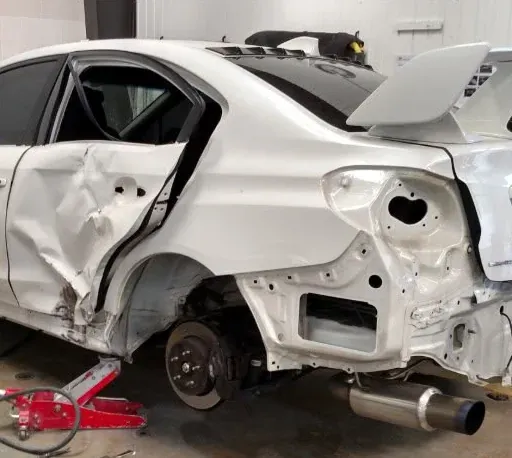
Symmetrical all-wheel drive changes what a side hit costs
Every Subaru except the BRZ drives all four wheels through a symmetrical driveline laid out along the vehicle’s centerline. That layout is excellent in February on Highway 13 and it means a side or corner impact can load the drivetrain in ways a front-drive car would not, so suspension geometry, driveshaft angles and subframe position are checked as part of the structural inspection rather than after the fact.
The Subaru Global Platform also uses considerably more hot-stamped steel and structural adhesive than the cars it replaced, so quarter panels, rockers and rails have defined replacement and sectioning points rather than open ones. We measure on the laser system first, follow the published joints, and re-measure after the pull so the alignment shop is not chasing a structure that was never brought back to specification. The readings go in the file either way, which is what makes the repair defensible years after the fact.