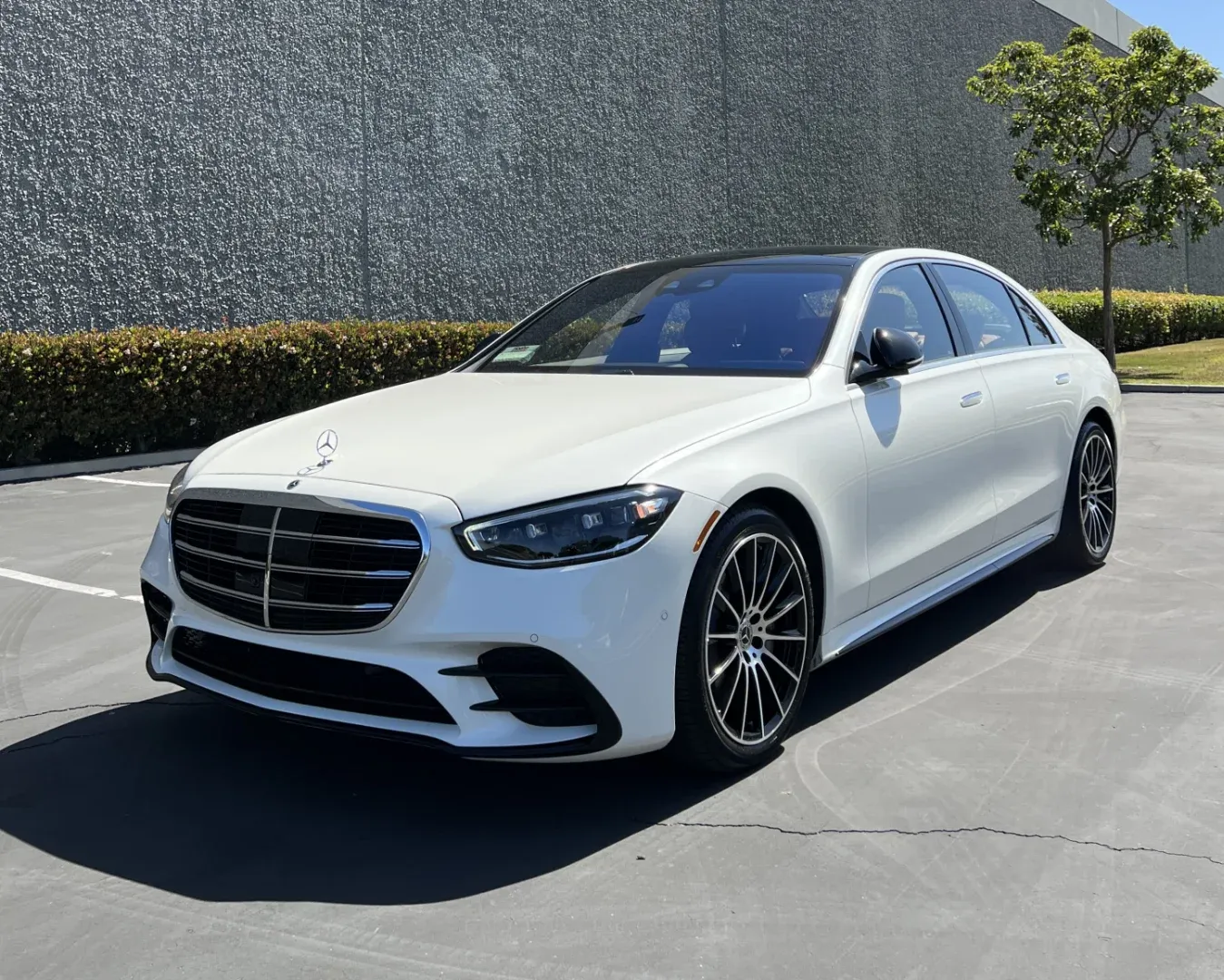
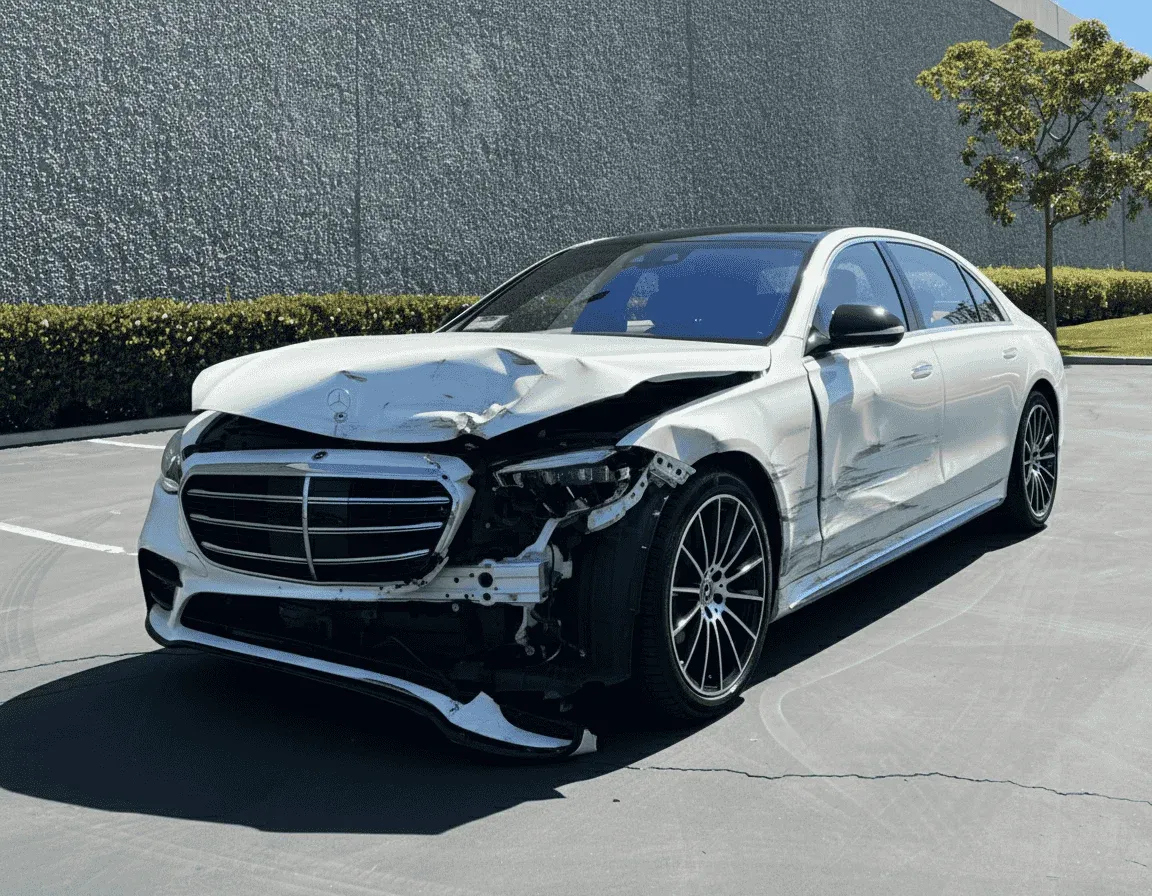
A full corner and a full flank
Two repairs arrived on one car. At the front, the corner was gone: hood buckled back from its leading edge, fender torn from its mounts, headlamp assembly broken out, and the bumper cover hanging clear of the structure. Along the side, the impact had carried into the front and rear doors, leaving long creases and stretched metal from the mirror back past the rear wheel arch.
A flagship sedan raises the stakes on both halves of that job. There is aluminum in the panels, driver-assistance hardware in the front clip and along the flanks, and a factory finish with a depth that leaves a mediocre refinish nowhere to hide. Every one of those things has a manufacturer procedure attached to it, and the procedure is what the repair plan follows rather than whatever would be quickest.
Three days, and what made them possible
This car was back with its owner three days after it came in. Turnaround like that is not speed applied to the repair itself — the metalwork, the primer, and the paint all take the time they take. It comes from removing the waiting: a complete teardown estimate on day one so no supplement stalls the job, parts identified and ordered immediately, and the booth scheduled around the car rather than the car queued for the booth.
The sequence was conventional even though the calendar was not. Structure measured and corrected, panels replaced or worked back, everything test-fitted and gapped before color, then refinished across the corner and both doors so the blend outruns the damage. Nothing was skipped to hit the date; the date came from not losing days to the parts desk and the adjuster. That matters more on a repair of this scope than on a bumper job, because the longer a stripped car sits waiting on an approval or a part, the more chances there are for something to be missed, moved, or damaged on the shop floor.
- Full teardown and photographed damage report before the estimate was finalized
- Structure laser-measured against factory specification, documented both ways
- Parts ordered on day one rather than after an approval round trip
- Panels test-fitted and gapped in primer before the car entered the booth
- Corner and both doors refinished as one blend in the downdraft booth
- Driver-assistance hardware and lighting verified before the car was released
Judging work on a car at this level
On a flagship the tolerances that matter are small and public. The shutline where the hood meets the fender should be dead parallel, the doors should close with the same weight and sound they had before, and the character line down the flank should carry from headlamp to taillamp without a step. A repaired S-Class showing any of those flaws does not read as repaired — it reads as cheap.
The paint is the other half of it. A finish this deep exposes texture mismatches that would pass unnoticed on a work truck, so the refinish has to match the factory orange peel as well as the color, and it has to be checked outdoors. This one was, and the refinish work carries our lifetime warranty for as long as the car stays with its owner.