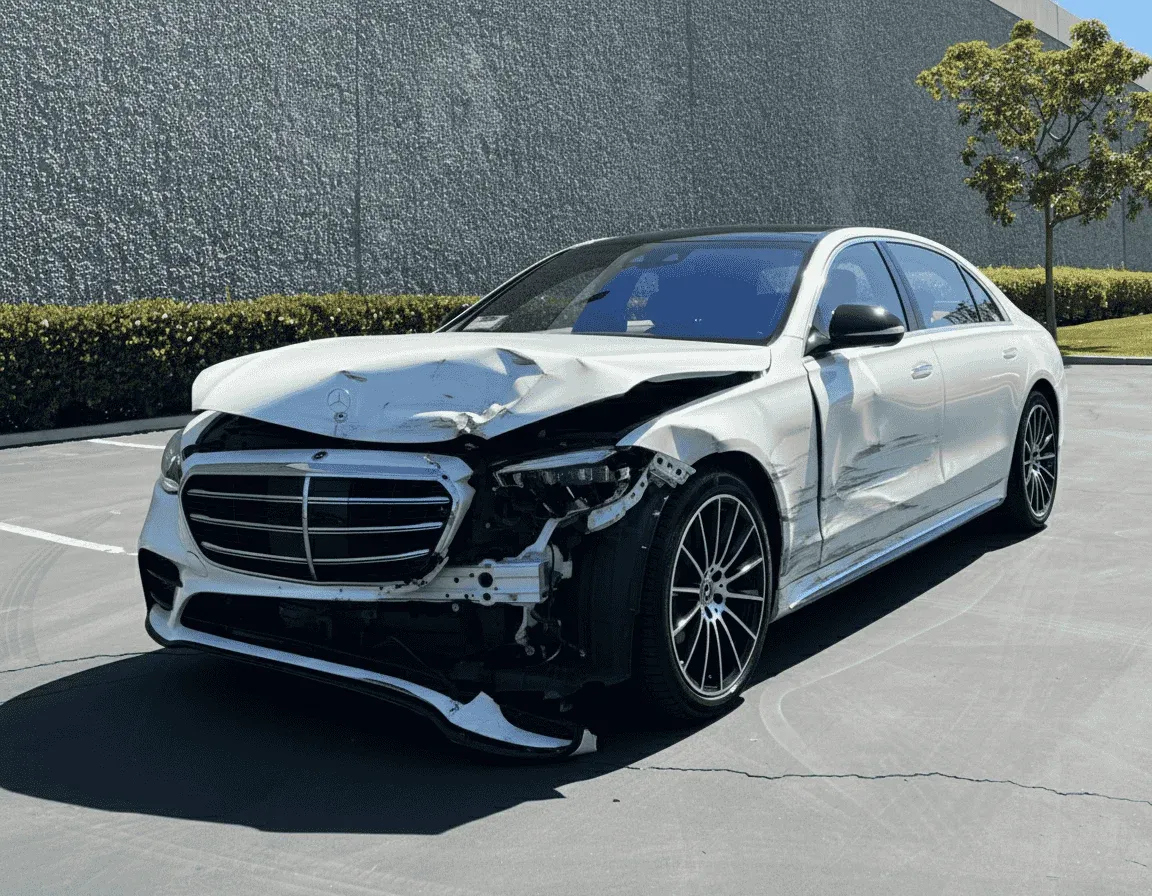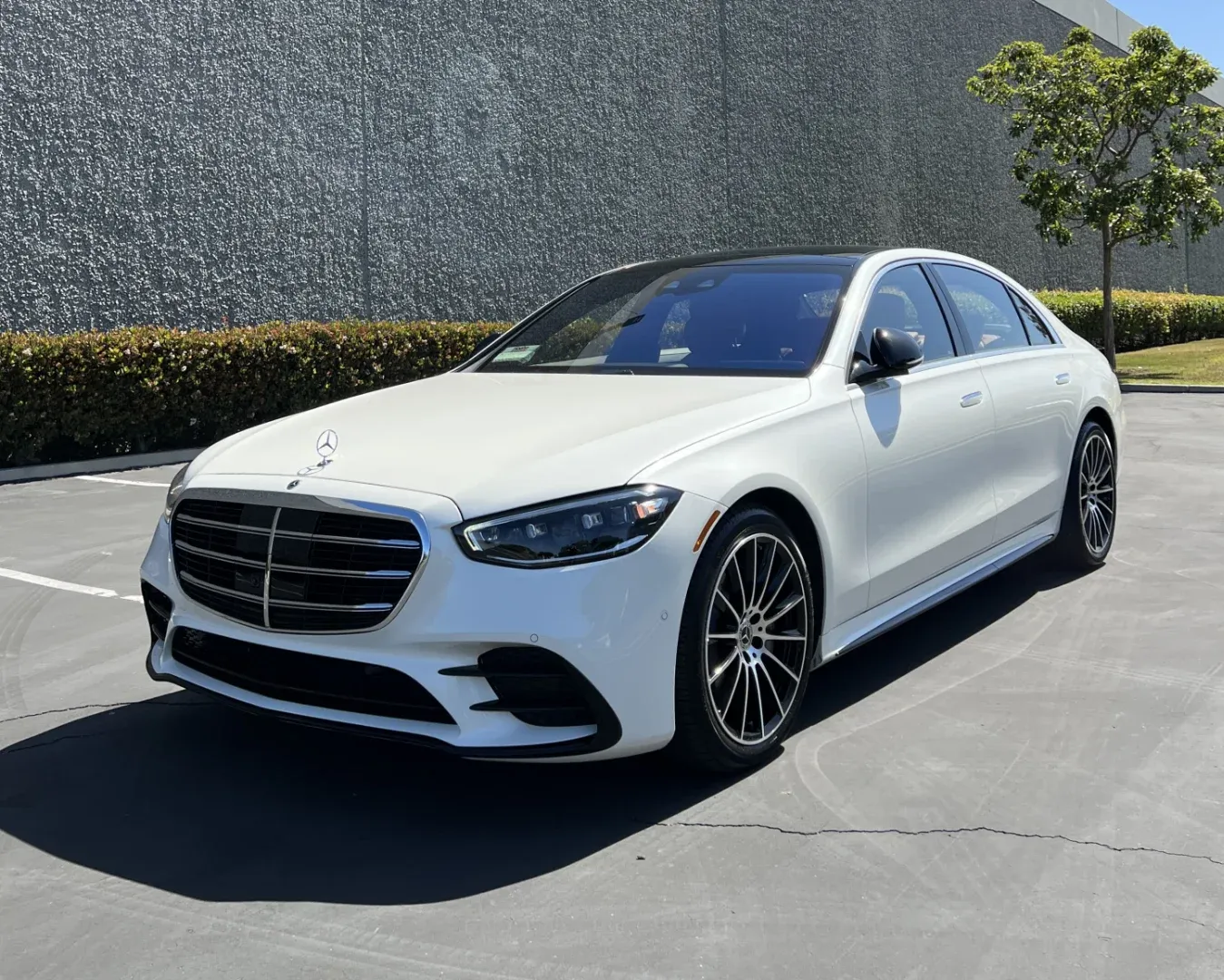
Aluminum is everywhere on a modern Mercedes
Mercedes-Benz has been moving aluminum into its bodies for years, and on the S-Class it reaches a large share of the shell — doors, hood, fenders, roof and structural members. The C-Class, E-Class and the SUVs use it selectively for closures and front-end parts. Aluminum joins by riveting, bonding and specialized welding rather than by a standard spot welder, and it will not take heat to relax a crease the way steel does.
It also demands separation from steel work, because steel particles left on bare aluminum start galvanic corrosion that shows up under the paint later. Aluminum panels get their own tooling and abrasives here, and the joint types, adhesives and fastener specifications come from the procedure Mercedes-Benz publishes for that body rather than from whatever is on the shelf. Getting that wrong does not show at delivery. It shows as corrosion under a fender two winters later, by which point nobody remembers who repaired the car.
The three-pointed star is a radar window
On Mercedes-Benz models with distance assist and active brake assist, the long-range radar sits behind the front grille panel and reads out through the emblem area, which is built to let radar pass rather than to be decorative metal. The multipurpose camera behind the windshield handles lane keeping and traffic sign recognition. Both get disturbed by the same front hit that cracks a fascia, and neither announces the problem politely.
Every Mercedes-Benz here is scanned before teardown and again after reassembly, genuine parts are specified for the grille, emblem and fascia where the sensor reads through, and any calibration the manufacturer publishes for the work performed is completed before the car is released. Mild-hybrid models with a 48-volt system get that circuit isolated before work begins in its vicinity. Forty-eight volts will not stop a heart, but it will arc across a dropped tool and destroy components that are not inexpensive to replace.
- Aluminum panels worked with tooling kept clear of steel contamination
- Genuine grille, emblem and fascia parts specified in the radar path
- Multipurpose camera calibrated to procedure after windshield work
- 48-volt and high-voltage circuits isolated before adjacent structural work
Matte designo finishes and the color work on a Benz
Mercedes-Benz offers magno matte finishes through its designo program, and they follow the same rule as every other factory matte: no polishing, no compounding, no buffing out a defect. The flat appearance is a property of the clearcoat surface, and any attempt to correct it locally leaves a shiny patch that cannot be undone. A damaged matte panel gets refinished with the matte system or it does not get fixed properly.
The gloss colors are their own exercise. Obsidian Black and the darker metallics show every imperfection in a repaired panel, so the bodywork has to be right before the primer goes on, and the color has to be blended into adjacent panels rather than stopped at a gap. We spray a card, check it in two lights, adjust, then shoot the car in the downdraft booth. On a dark car the blend is what sells the repair, every single time.