Damage that reached past the fender
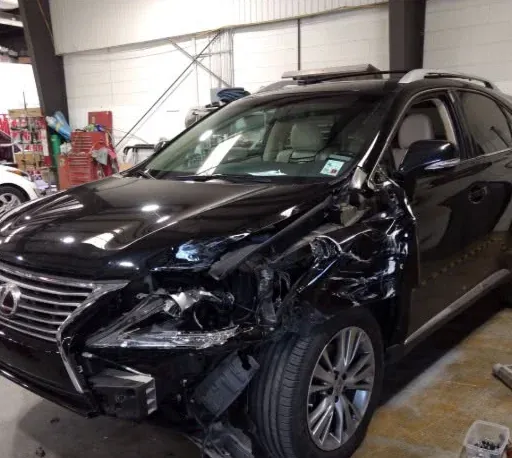
The giveaway on this RX is how far back the damage runs. A crushed bumper cover and a broken lamp are ordinary; a fender torn along its full length, with the crease arriving at the door edge, means the impact still had energy left after the crush structure had done its job. Everything from the front bumper to the leading edge of the door had to be treated as suspect until proven otherwise.
Luxury crossovers hide more behind the front clip than their size suggests: adaptive lighting, radar and camera hardware, washer systems, and cooling for a larger engine, all mounted to brackets that bend long before the panels do. Pulling the clip apart and photographing every mount was the only way to write a number that would still be the number three weeks later. Nothing frustrates an owner more than a repair that keeps growing, and almost every case of that starts with an estimate written from the outside of a car nobody had taken apart yet.
Rebuilding the corner
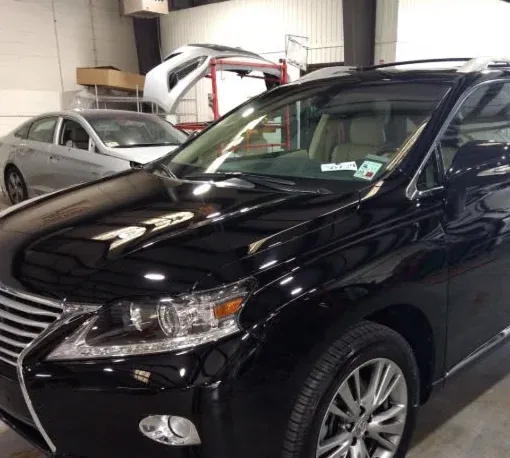
Repair on a vehicle like this is a series of decisions about what can be saved. Sheet metal that has stretched cannot be shrunk back to a factory surface with filler and optimism, so the fender was replaced. The hood was evaluated on its own terms rather than replaced automatically, because the crease and the condition of the mounting hardware tell you whether a panel still holds its shape at the hinges.
Black is the least forgiving color in a paint shop. It magnifies every ripple, every speck of dust, and every mismatch in the metallic flake, which is why a black corner repair is blended further out than the same repair in silver. This one was sprayed in our downdraft booth with the color mixed by paint code and confirmed on a card before the gun went anywhere near the car.
- Front clip removed and every bracket, mount, and lamp housing photographed
- Structure measured against factory specification before the parts list was written
- Fender replaced; hood assessed on its own merits rather than by default
- Lighting and front-facing sensor hardware refitted to factory position
- Black refinish blended out into the door to defeat the metallic flake
- Panel gaps set against the undamaged side and checked in daylight
What separates a good luxury repair from an adequate one
On a vehicle of this class the giveaways are small: a fender standing a hair proud of the door, a headlamp sitting a millimeter low, an orange-peel texture in the clear coat that does not match the factory finish beside it. None of those things affect how the car drives. All of them are why people can tell a car has been repaired from twenty feet away.
The fix is not a secret — it is time. Test-fitting panels before paint, blending further than strictly necessary, and taking the car outside to check color in daylight are all steps that can be skipped without anyone noticing until the customer sees the vehicle in the sun. We do not skip them, and the refinish work is warranted for as long as the owner keeps the vehicle. None of it costs the customer extra; it is simply what the job takes.