A hood that buckled and a front end opened up
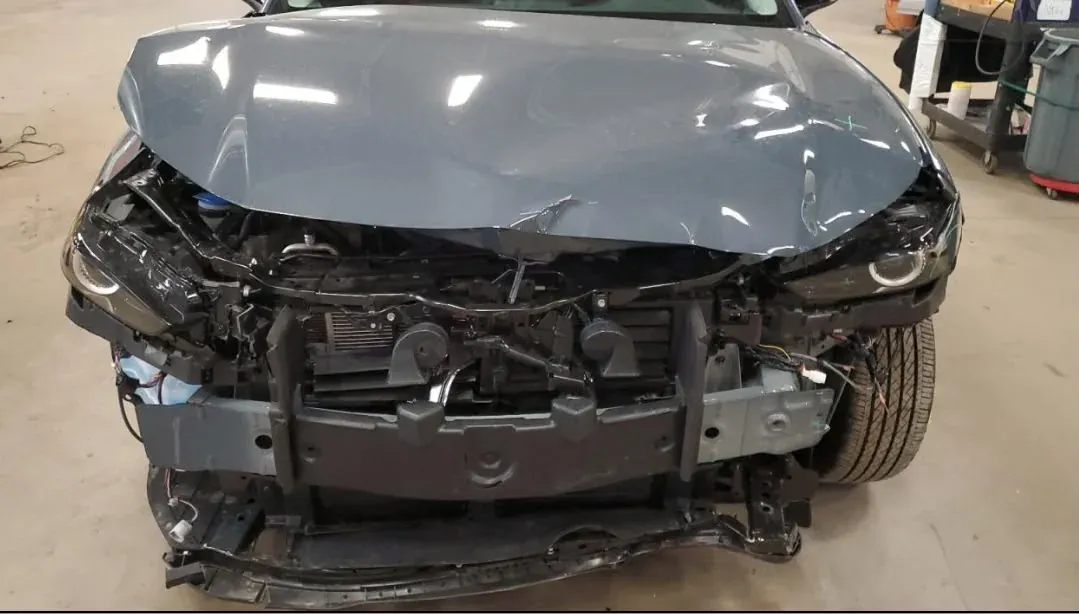
The clearest sign of how hard this CX-30 was hit is the hood. It folded in a long crease across the middle and lifted at the rear edge, which is exactly what a modern hood is designed to do — buckle upward rather than spear toward the windshield. Behind it, the bumper cover, grille, and headlight surrounds had already been pulled off, leaving the reinforcement bar and radiator support exposed for inspection.
Stripping the front to bare structure is not showmanship. Small crossovers pack cooling, sensors, and crash structure into a very tight nose, so a hit that only scuffs the cover can still shear the brackets holding everything in line. With the front open, every bracket, absorber, and mounting tab can be checked, photographed, and written into the estimate before a single part is ordered. It also settles the questions that shape the whole repair plan: whether the reinforcement bar took the hit the way it was designed to, and whether anything behind it moved.
Bringing the nose back to factory dimensions
A front end goes back together from the inside out. The radiator support and reinforcement bar set the positions everything else hangs from, so those are corrected or replaced first and confirmed by measurement. Only then do the fenders, hood, headlights, and cover get hung, adjusted, and adjusted again until the gaps read the same on both sides. Fitting visible panels before the structure underneath is right is how crooked front ends happen.
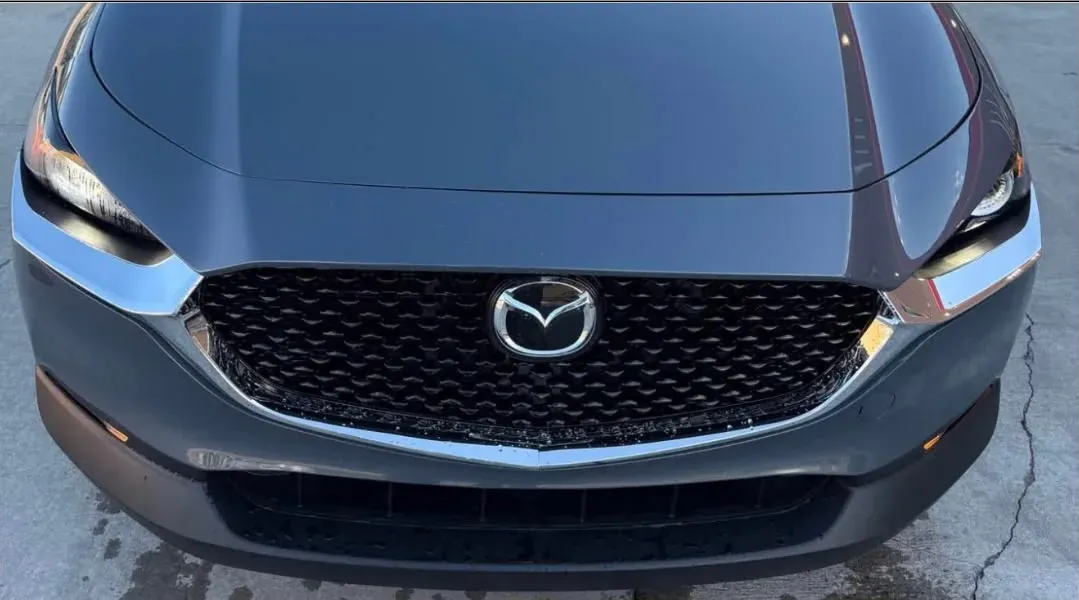
Mazda paints its cars in deep, saturated colors that punish a lazy match, and a hood is the worst panel to get wrong because it lies flat under open sky. This one was refinished with color mixed from the vehicle’s paint code, sprayed in a downdraft booth, and blended out into the fenders so the transition falls in the middle of a panel rather than on a hard edge.
- Damage photographed with the front end open, before the estimate was finalized
- Radiator support and bumper reinforcement checked against factory measurements
- Replacement parts test-fitted before refinishing, not after
- Hood, fenders, and headlights aligned until gaps matched side to side
- Paint-code color verified on a sprayout card, then blended into adjacent panels
- Cooling system, lighting, and driver-assistance hardware checked on reassembly
Judging a front-end repair on a small crossover
The tell on a car this size is the shutline where the hood meets the fenders. There is very little sheet metal between the headlights and the windshield, so any structural error shows up as a gap that tapers instead of running parallel. Open and close the hood a few times: it should drop onto its latch without being pressed, and sit flush with the fender tops rather than proud of them.
The second check is the headlights. Replacement lamps that are not fully seated leave an uneven line against the cover and, more importantly, point light in the wrong place. After reassembly the lamps are aimed and the front-facing hardware verified, because a nose that looks right but sees wrong is not a finished repair. The refinish work carries our lifetime warranty for as long as this CX-30 stays with its owner.