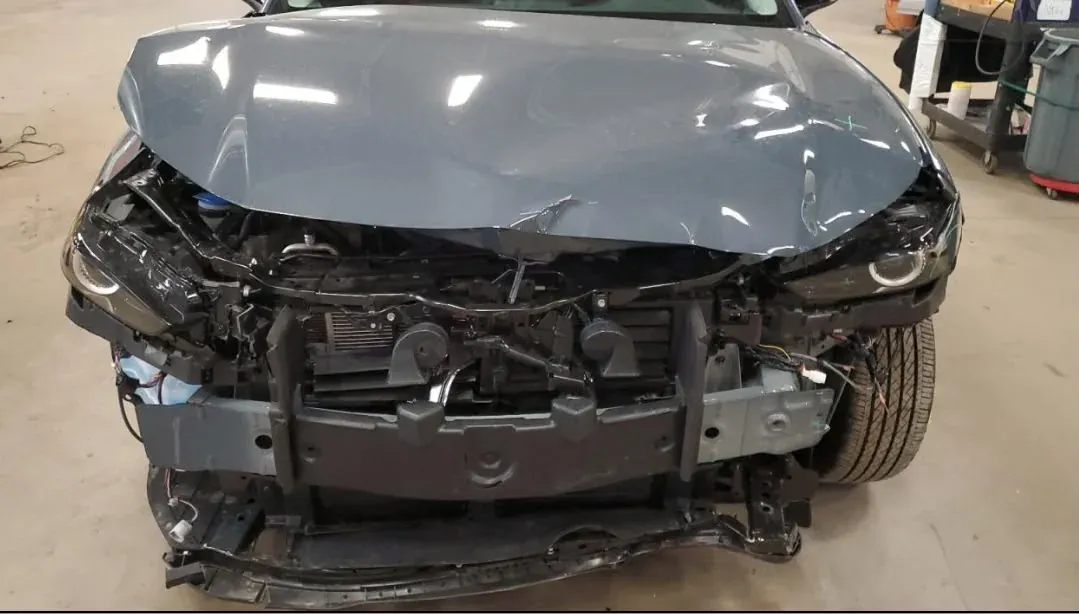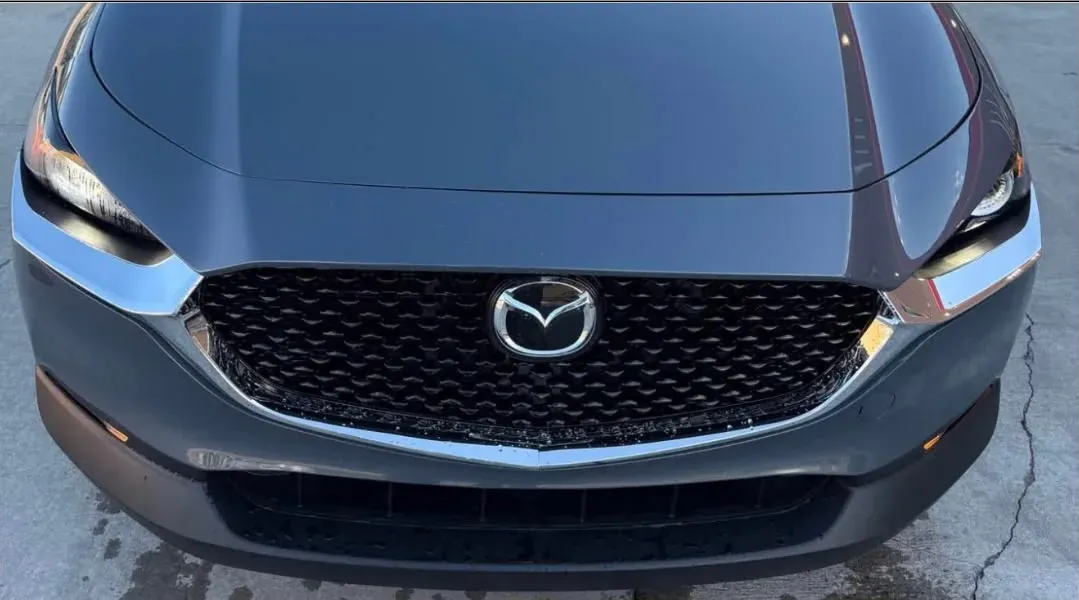
Soul Red Crystal is the hardest color in the lineup
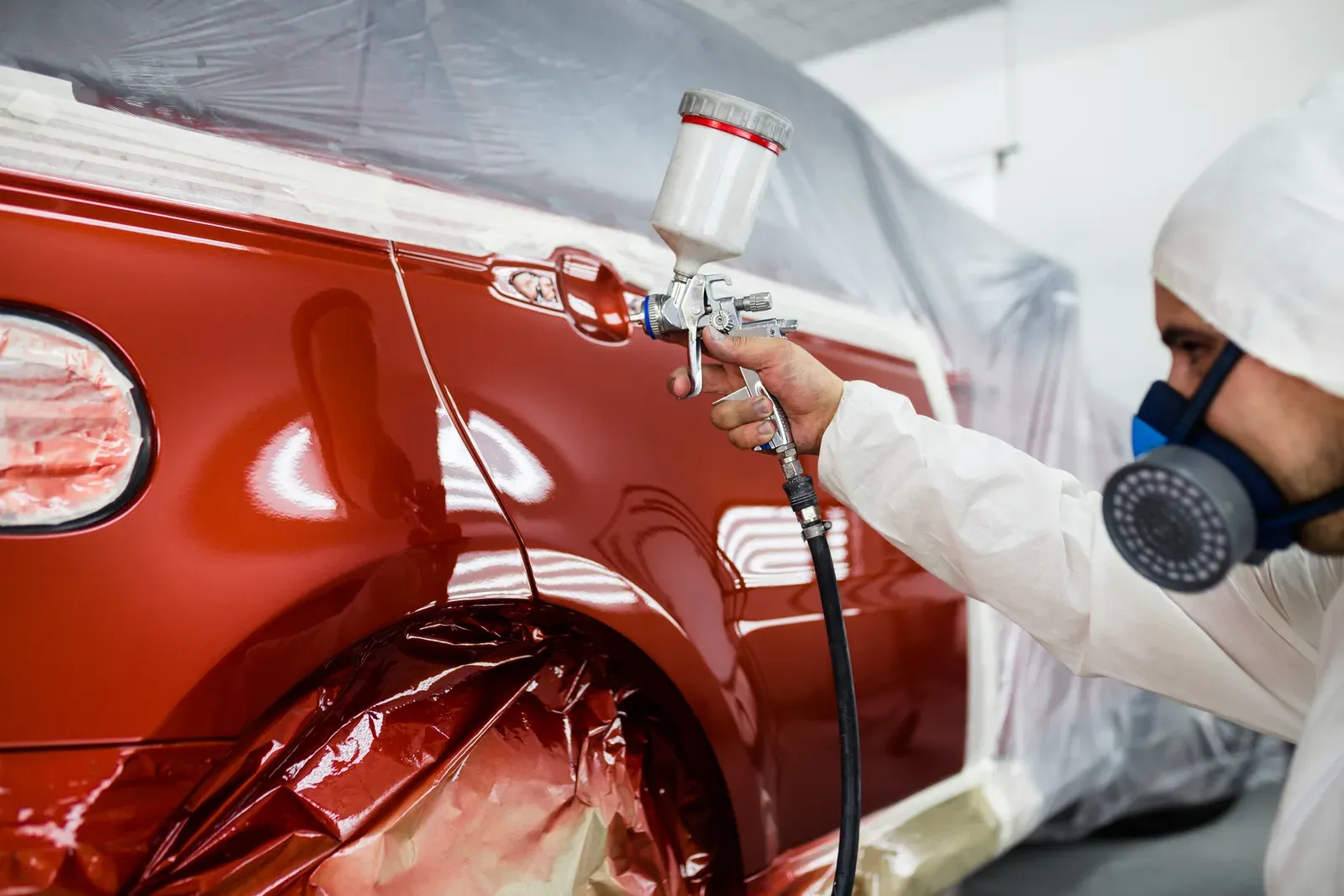
Mazda developed Soul Red Crystal under its Takuminuri process, and it is not an ordinary metallic. The color is built in layers: a reflective layer carrying high-brightness aluminum flake, a light-absorbing layer that deepens the shadows, and a translucent red over the top. The final appearance depends on how much of that translucent layer goes on, which means the same paint code can finish two visibly different shades in two different hands.
Machine Gray Metallic uses the same layered approach for a different effect. Neither color can be matched from a code and sprayed with confidence. Every Mazda refinish here starts with a spray-out card built the way the car will be built — same gun, same distance, same pass count — checked against your panel under booth light and outdoors, adjusted, and only then committed to the vehicle. It adds time to the job, and it is the difference between a repair you cannot find and one you notice every time you walk up to the car.
Skyactiv-Vehicle Architecture and where it can be cut
Mazda’s current bodies are built around a continuous ring structure that ties the floor, pillars and roof into connected load paths, using a high proportion of high-strength and hot-stamped steel to do it. Those hot-stamped members are the reason the cabin holds its shape, and they are also the reason a shop cannot heat or straighten them — the strength is a product of the factory forming process and does not come back.
So a CX-5 or Mazda3 with structural damage gets measured on the laser system against Mazda’s dimensions before anyone decides anything. Where the procedure allows a pull, we pull and re-measure. Where it specifies replacement at a defined joint, that is what goes on the estimate. The before and after readings are documented and supplied to your insurance company along with the photographs from teardown. Mazda publishes those dimensions for every body it builds, so there is no reason for anybody to be estimating structural damage from memory.
i-Activsense sensors after front and rear work
Mazda’s i-Activsense package puts a forward sensing camera high on the windshield, a radar unit at the front of the vehicle behind the grille area, and radar sensors at the rear bumper corners for blind spot monitoring and rear cross-traffic alert. Smart brake support, radar cruise control and lane keep assist all read from that set, and all of it sits in exactly the places a collision tends to land.
That is why the bumper covers, grille and emblem are treated as functional parts on a Mazda rather than as trim. Genuine parts are specified where a sensor reads through them, brackets go back to their original positions rather than close enough, calibrations Mazda publishes for the work are completed, and the vehicle is scanned before teardown and after reassembly with both reports kept on file.
- Spray-out card built and approved before any Soul Red or Machine Gray panel is sprayed
- Laser measurement against Mazda dimensions before and after structural work
- Genuine parts specified for grilles and bumper covers with sensors behind them
- Pre-repair and post-repair scans documented on every Mazda