Corner hits load one side of the car
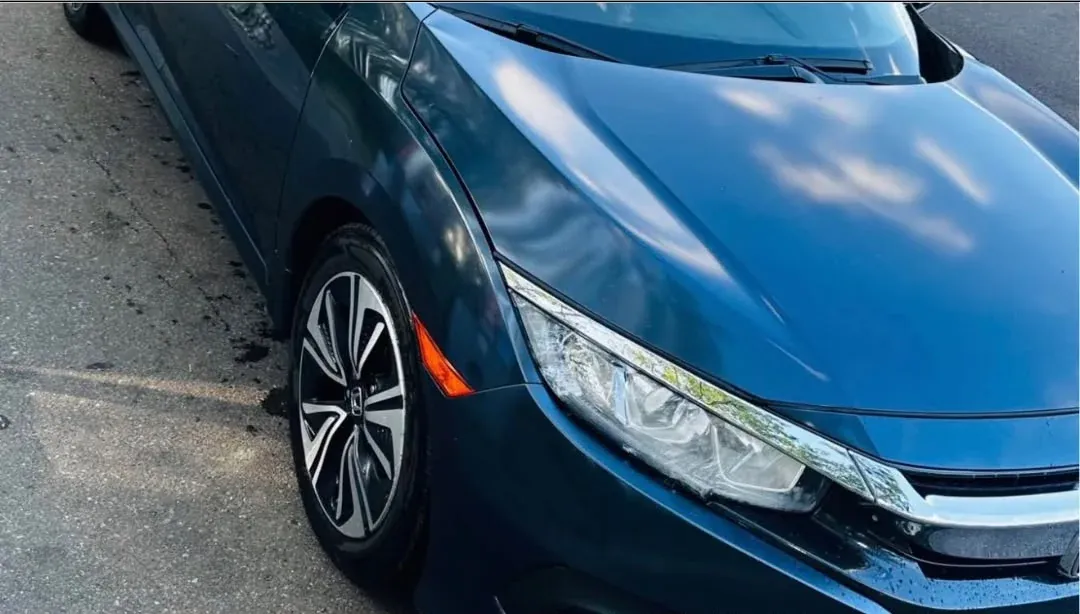
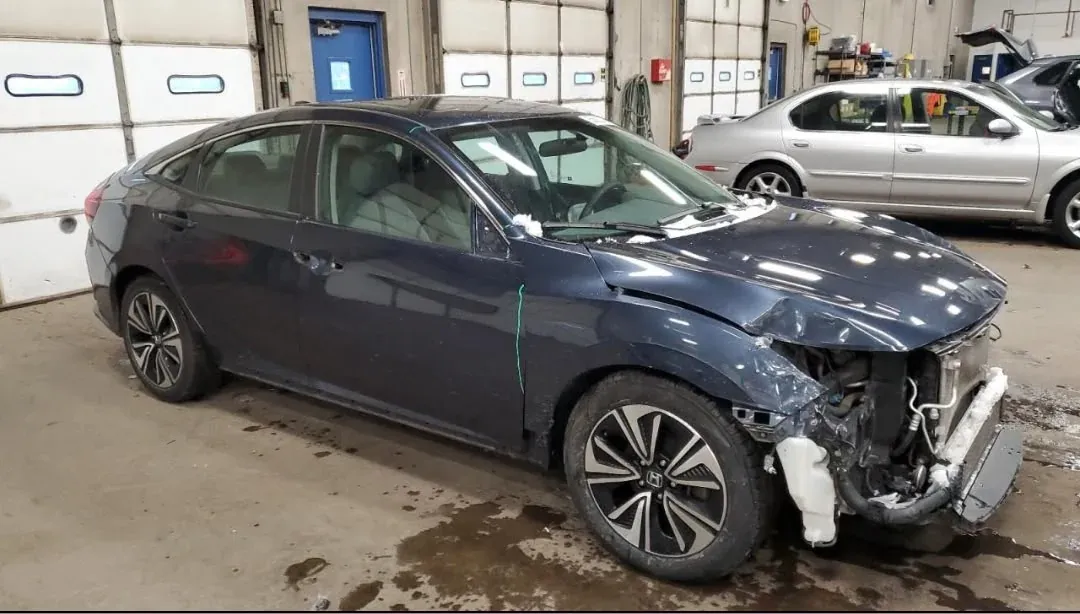
A square front impact spreads its energy across both rails. A corner impact does not — it drives everything into one side, which is why the far side of this Civic looks untouched while the struck corner is folded back toward the wheel. The fender had split, the hood had lifted and creased at its corner, and the headlight opening was empty with the mounting tabs sheared off.
Damage that stops at the corner also tends to travel. Energy that cannot dissipate across the front of the car pushes rearward along one rail and into the apron and strut tower area, so the parts of the repair nobody photographs are the ones that decide whether the car tracks straight afterward. Measurement rather than appearance settles that question, and it is the first thing done once the wreckage comes off.
Putting a torn front corner back together
The repair started with removal rather than replacement: everything loose, broken, or hanging came off so the structure behind it could be seen and measured. Only after the front end had been checked against factory specification was the parts list written, because on a corner hit the difference between a bolt-on repair and a structural one is often a few millimeters that no camera will ever show you.
Alignment work then happened before refinishing. The replacement fender, hood, and lamp were hung and adjusted on bare and primed panels, gaps set against the undamaged side of the car, and only then were parts pulled for paint. Working in that order costs a little time and saves the chipped edges and mismatched gaps that come from adjusting finished panels afterward. It also gives one last chance to catch a structural problem: if a panel will not sit right no matter how it is adjusted, the answer is behind it, and the car goes back onto the measuring system rather than onto the paint schedule.
- Broken fender, lamp, and cover removed to expose the strut tower and apron
- Front structure laser-measured before and after any pulling
- Crushed bolt-on parts replaced, with the good side used as the gap reference
- Panels test-fitted in primer, then refinished off the vehicle where it made sense
- Color mixed from the paint code and blended into the front door
- Headlamp aimed, driver-assistance hardware checked, and the car road-tested
Checking a corner repair before you drive away
Corner repairs are judged from the front of the car, standing in the middle of the bumper and looking along each side in turn. The two sides should mirror each other: the same gap at the hood, the same standoff at the fender, the same height at the headlamp. Anything that reads narrower or tighter on the repaired side is worth asking about while the car is still on our floor rather than a year later.
The second test is a drive. A car repaired properly after a corner hit tracks straight with a level wheel, does not pull under braking, and does not wander at highway speed. Ours go out for a road test before the keys change hands, and anything that is not right goes back in rather than out the door. The refinish work is warranted for life on top of that.