
Damage that runs, not damage that stops
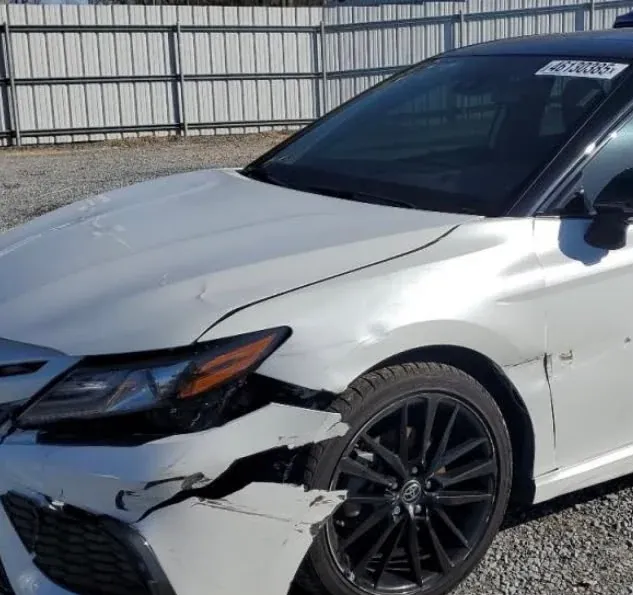
Two kinds of front damage arrive at a body shop. The first stops where it started — a cover, a lamp, a fender. The second keeps going, and this Camry is the second kind: the impact caught the corner, then swept back along the fender, across the wheel arch, and onto the door as a long scrape and crease. Every panel it touched has to be judged separately.
Sweeping damage is deceptive because the deepest problem is usually not the ugliest panel. The torn cover looks worse and costs less than the fender crushed into the arch, which may have pushed the inner structure and moved the wheel opening. Where the crease crosses a body line, the metal has been stretched rather than dented, and stretched metal is what decides whether a panel gets repaired or replaced.
Working corner damage that carries down the side
The order here was corner first, side second. Nothing along the door is worth touching until the front corner is back where the factory put it, because the panel gaps down the side are measured from it. Once the corner had been rebuilt and the wheel arch confirmed square against the other side of the car, the crease across the door could be worked flat and the whole flank prepared as one surface.
White is the color that catches out shops refinishing panel by panel. A door sprayed on its own next to a factory fender reads slightly warm or slightly cool depending on the light, so the only reliable approach is to blend across every panel the eye takes in at once. That is more masking, more material, and more booth time, and it is the reason the repair does not announce itself.
- Each affected panel assessed on its own — torn, stretched, or merely dented
- Front corner rebuilt and squared before any work started on the door
- Wheel arch opening checked against the undamaged side of the car
- Stretched metal worked back rather than filled to hide the low spot
- Cover and lamp fitted and adjusted before refinishing began
- Corner, fender, and door blended as one continuous refinish
Where multi-panel repairs give themselves away
Crouch at the front wheel and look down the length of the car. The body line running from the headlamp to the taillamp should be one uninterrupted crease with no kink where it crosses a panel gap, and the reflection of the sky should travel smoothly rather than stepping at each door. Kinks and steps mean panels were straightened individually and never checked against each other. The same look tells you whether the arch openings match. A front wheel arch is easy to leave a few millimeters out after a corner repair, and the eye reads that as a car sitting oddly long before it works out why.
The other check is texture. Factory paint has a fine, even orange peel, and refinish work that has not been matched to it feels glassier or coarser under raking light, particularly in white. Ask to see the car outside before you accept it. This one was refinished in a downdraft booth, blended into every neighboring panel, and warranted for as long as the owner keeps it.