A truck front end fails differently
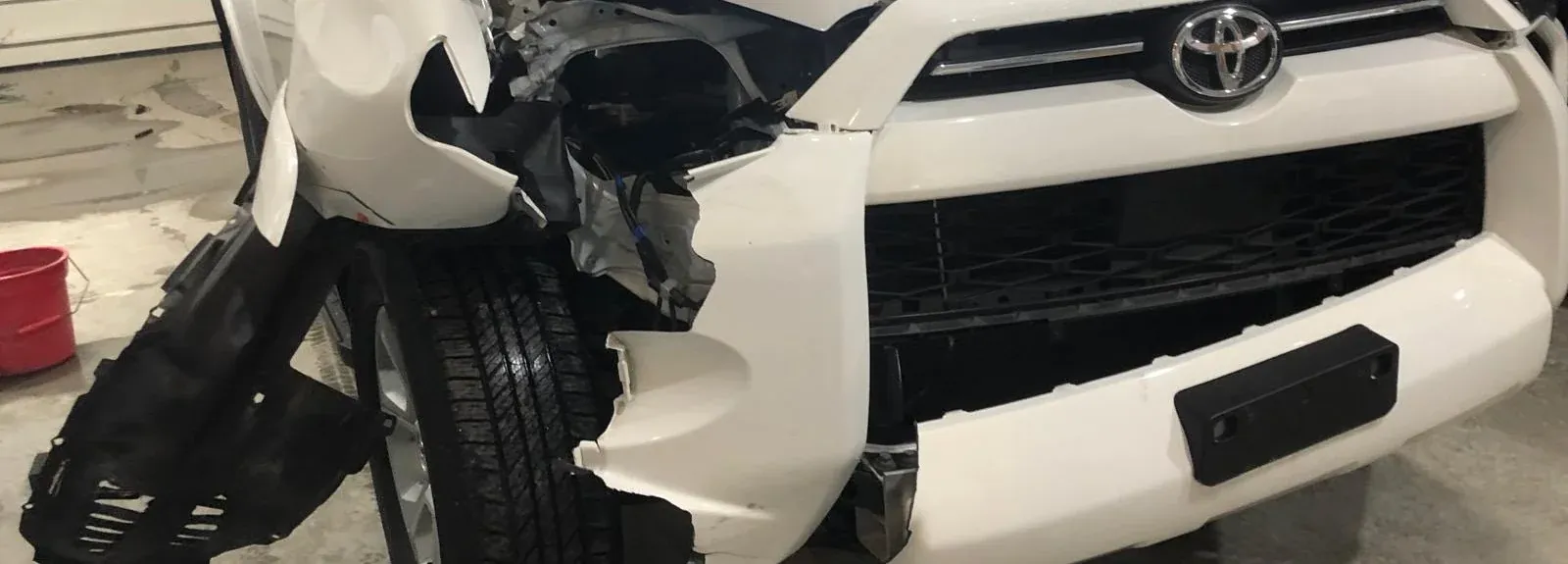
The 4Runner is body-on-frame, so a front impact is absorbed by two structures rather than one: the frame horns and crash structure underneath, and the body panels and cover bolted above them. On this truck the cover split at the corner, the fender edge broke away, and the inner liner tore out of its clips while the frame section carried the load beneath. Reading which structure took what is the first job.
That distinction changes the estimate completely. If the frame is untouched, a front corner like this is a parts-and-fitment repair with careful refinishing. If the frame moved, no amount of new plastic will make the truck sit right, and the job becomes a measured structural repair before a single panel is hung. Nobody can tell which of the two it is from a photograph of the outside. Measuring answers it in a few minutes, and that answer decides everything downstream: the parts list, the labor, and how long the truck is with us.
The work on this front end
Everything forward of the wheel came off, including the liner and the splash shielding, so the mounting brackets and the frame horns behind them could be inspected directly. Trucks collect a decade of road salt in exactly these cavities, and a bracket that looks bent is sometimes a bracket that has rotted — a distinction worth making before parts are ordered on somebody else’s assumption.
Fitment on a large cover is its own discipline. A 4Runner front bumper spans the full width of the truck, so an error at one mounting point shows up as a sagging or proud corner at the other end. The cover was hung, adjusted against the fenders and grille, and the gaps checked with the truck sitting on the ground rather than on a lift, because a body-on-frame vehicle reads differently under its own weight.
- Cover, liner, and splash shielding removed for a direct look at the frame horns
- Mounting brackets and crash structure inspected for damage and for corrosion
- Frame checked against specification before any panel was fitted
- Broken fender edge and split cover replaced rather than patched
- Cover hung and adjusted with the truck sitting on its own suspension
- White refinished in the downdraft booth and blended into the adjacent panels
What a finished truck front end should look like
Sight along the front of the truck from one corner. The bumper cover should sit the same distance from the fender on both sides and the same height off the ground, and the grille should sit square in its opening with no daylight at one edge. Then push gently on the cover at the corner: it should feel anchored rather than springy, because springy is what a missing or broken bracket feels like.
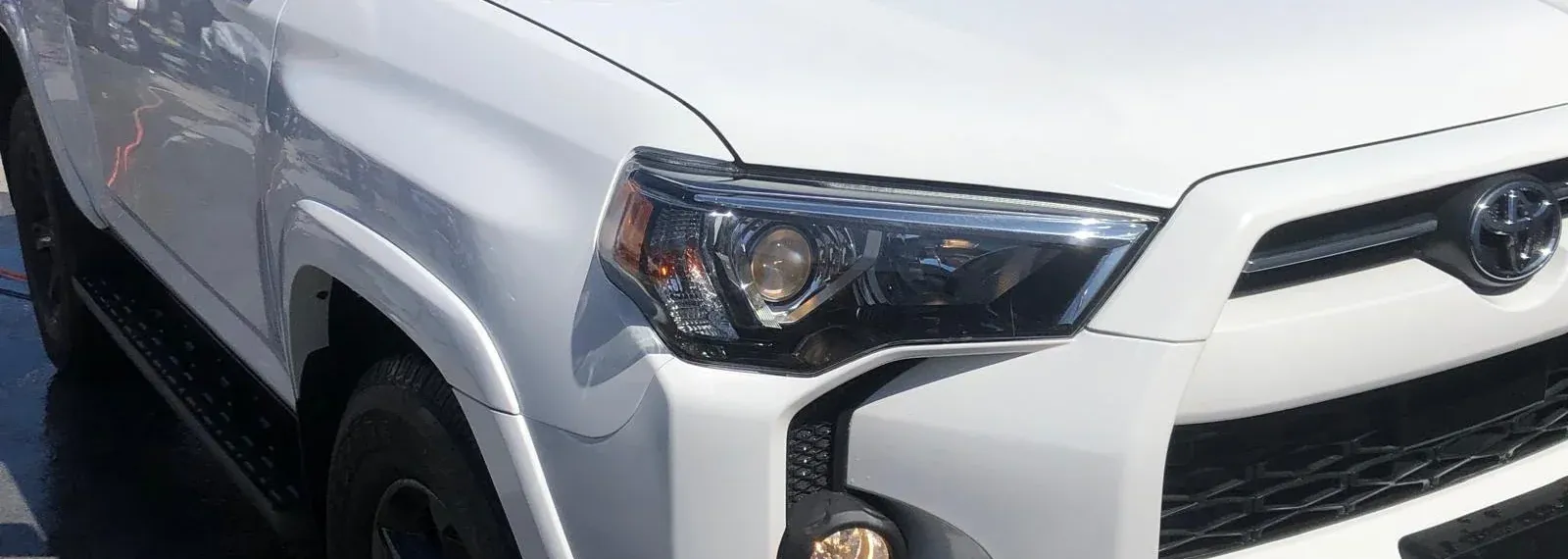
White is easier than black to match on a single panel and harder to blend across several, because a white that is a shade warm or cool announces itself immediately against the panel beside it. Color came from the paint code, went through a sprayout check, and was blended out rather than cut off at a panel edge. The refinish carries our lifetime warranty on this truck as it does on every vehicle we paint.