Small-looking damage on a rear corner
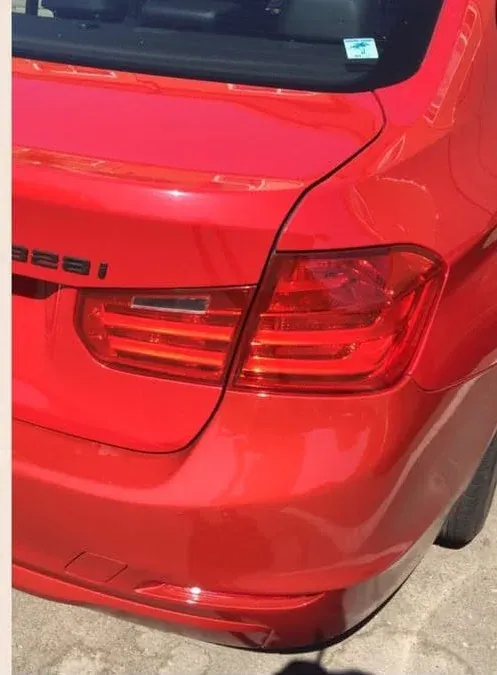
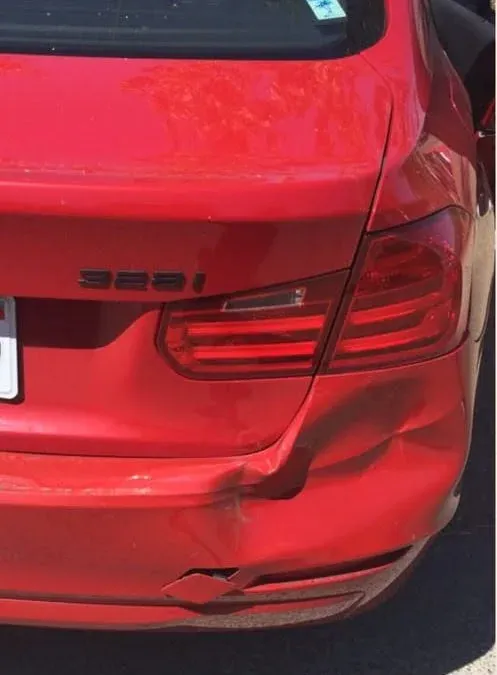
The damage on this 328i covers about the area of a dinner plate, which is exactly the size that tempts people to leave it alone. The cover was pushed in below the lamp, creased across the corner, and the paint had broken along the ridge of the deformation. Once paint is broken on a plastic cover the panel is no longer sealed, and Minnesota road salt does the rest of the work.
The other reason not to leave it is what sits behind the cover. A rear corner houses the impact absorber, the reinforcement bar, and on most cars of this generation the parking sensors and their wiring. A knock hard enough to crease the outside can crack an absorber or push a sensor out of its bracket without leaving any sign until the system starts giving false readings. A cover is also the cheapest thing on the car to take off, which makes guessing about what sits behind it a strange way to write an estimate.
Repair or replace the cover
Bumper covers are thermoplastic and genuinely repairable. Cracks can be welded, deformed areas can be reshaped with heat, and a well-executed plastic repair is permanent. The limits are structural: a cover split through at a mounting tab, distorted around the sensor openings, or stretched so far that its shape will not return gets replaced, because a repair there would look right and fail at the first knock.
That decision is made with the cover off the car and the damage visible from both sides, which is also the only way to check the absorber and reinforcement behind it. Removing a cover takes half an hour and it is the difference between an honest repair and a cosmetic one. Whichever way the decision goes, the cover is refinished off the vehicle so color goes on evenly across the whole panel.
- Cover removed and inspected from the back as well as the front
- Impact absorber, reinforcement bar, and sensor mounts checked behind the cover
- Deformation reshaped and the panel assessed for repair or replacement
- Adhesion promoter and flexible material used for refinishing plastic
- Red mixed from the paint code and blended up into the quarter panel
- Parking sensors refitted to their brackets and verified on reassembly
Red is the hard part
Reds fade faster than almost any other color and the pigment shifts as it ages, so a factory red on a car with some years on it is rarely the same red that comes out of the mixing system for that code. The fix is to spray a test card, hold it against the panel in daylight, and adjust the mix until the two agree — then blend into the quarter panel rather than stopping at the seam.
A bumper repair also has to match texture, not just color. Cover plastic is refinished with flexible material and sprayed to the same fine orange peel as the metal beside it, so the two do not read differently under low sun. Ours are done in a downdraft booth and warranted for as long as the owner keeps the car, which is the only warranty worth much on refinish work.