
How do I protect my car from hail in Minnesota?
Quick answer
Covered parking is the only genuine protection — a garage, a carport, or an enclosed ramp. Everything else is damage reduction: storm alerts on your phone so you have warning, thick blankets or a purpose-made hail cover if you are caught out, and comprehensive insurance coverage, which pays for hail with no fault assigned and generally no rate surcharge.
Warning time is the thing you are actually managing
Severe thunderstorm warnings in the metro typically arrive with enough lead time to move a vehicle a few blocks, and warnings that mention hail size are the ones to act on. That window is short, so the decision has to be made in advance, not during the storm.
Set up alerts that will actually reach you — a weather app with push notifications for severe thunderstorm warnings, and wireless emergency alerts left enabled on your phone. In the metro, storms usually track from the west and southwest, so watching radar gives you a rough sense of timing.
Then decide beforehand where the car goes. Know the closest parking ramp to your office and to home. During a hail event, hesitating over where to park is what costs you the roof.
If the garage is full of everything except the car, that is worth fixing before storm season rather than during it. The most common hail story in the south metro is a garage that had no room in it.
What actually protects a car, ranked honestly
The list is short and the order matters:
- A garage or enclosed parking ramp — complete protection, and the only complete option
- A carport or covered structure — very good, though wind-driven hail can still reach the sides
- A purpose-made hail blanket or padded car cover — meaningful reduction if it is on before the wind picks up
- Thick moving blankets or comforters weighted at the edges — improvised, but real padding is real padding
- Floor mats on the roof, hood, and trunk lid — better than nothing for the panels that get hit hardest
- Parking on the lee side of a building — helps against wind-driven hail coming in at an angle
What does not work, and what makes it worse
A thin fabric car cover does essentially nothing against hail. It has no padding, and in storm wind it flogs against the paint and can leave its own damage.
A plastic tarp is worse. It becomes a sail, and either it leaves or it takes your mirrors and antenna with it.
Do not park under a tree. Trees do not stop hail, and the same storms bring wind that brings branches down. A branch strike is a much larger repair than hail dents.
And the one that matters most: do not go outside to move or cover a car while hail is falling. Hail large enough to dent steel is large enough to cause serious injury. A dented roof is an insurance claim. You are not.
If you are driving when hail starts, the safest move is usually to get under a gas station canopy, an overpass shoulder where it is legal and safe to stop, or a parking ramp. If none of that is available, pull off the road, angle the vehicle so hail hits the windshield rather than the side glass, and wait it out inside.
After the storm: document it properly
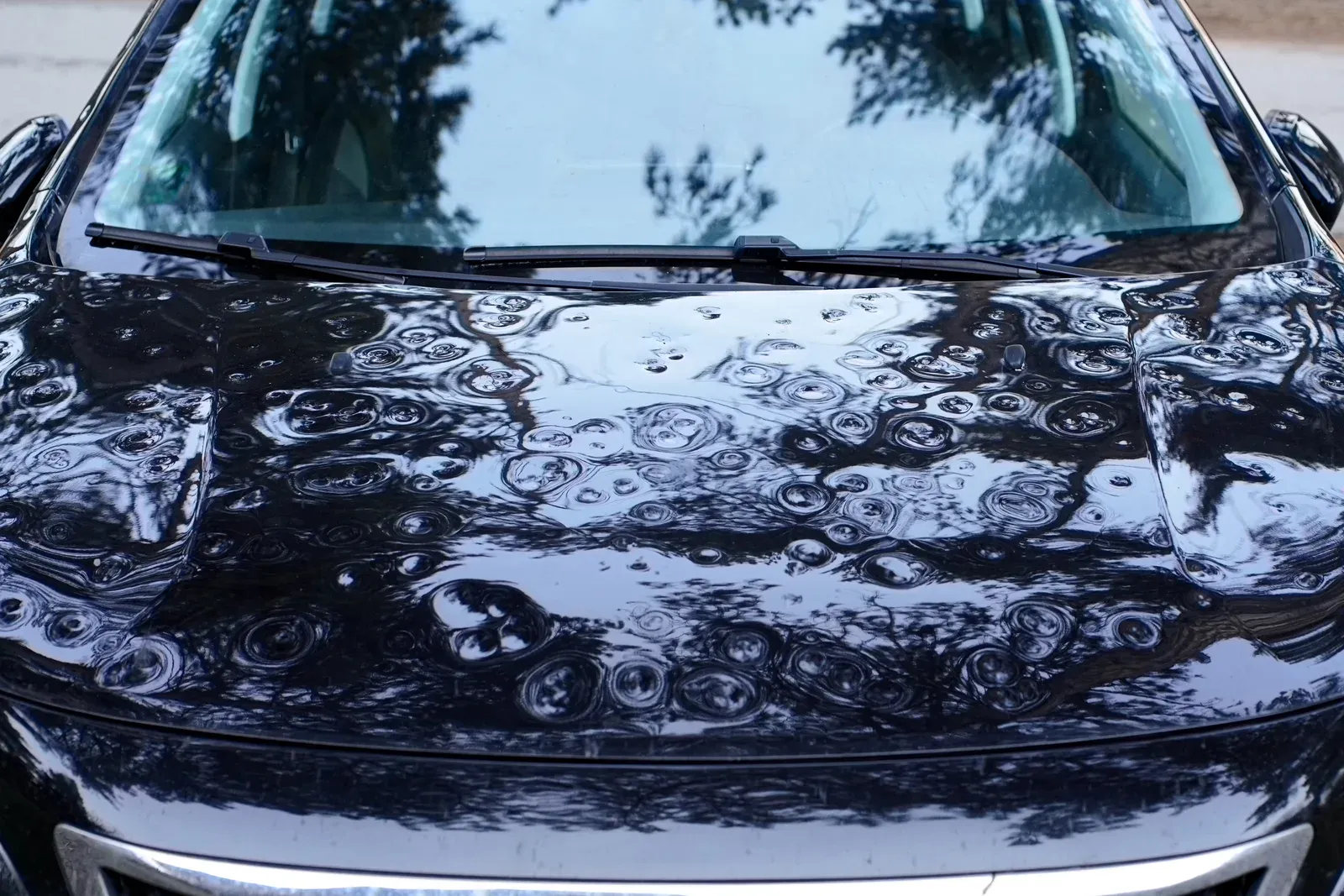
Hail damage is genuinely hard to see. Wait for indirect light or use a bright flashlight held nearly parallel to the panel, which makes shallow dents throw shadows. Sight down the length of the roof, hood, and trunk lid at a low angle.
Photograph what you find with something in frame for scale, and shoot the horizontal panels first — roofs and hoods take the most hits. Check glass, sunroof, mirror caps, and plastic trim as well, and look at the top surfaces of the wheel arches.
Then get photos to a shop early, even before the adjuster appointment. After a significant metro storm, every shop in the south metro fills within days, and getting in line early is worth more than anything else you can do.
What to check, panel by panel:
- Roof, hood, and trunk lid — always the worst hit
- The tops of the fenders and the shoulders of the quarter panels
- Windshield, rear glass, sunroof, and side glass for chips or cracks
- Mirror caps, roof rails, and antenna
- Headlamp and tail lamp lenses for cracks
- Plastic trim and the top edge of the bumper covers
- Any spot where the paint cracked rather than just dented
Insurance is the real protection
Hail falls under comprehensive coverage. There is no at-fault driver, so filing generally does not trigger a rate surcharge the way an at-fault collision claim can. Your cost is the comprehensive deductible.
If you park outside year-round in the metro, carrying comprehensive coverage is the practical hail strategy. Check your declarations page for the comprehensive deductible before the season rather than during a claim.
Most hail damage is repaired with paintless dent repair, where each dent is worked out from behind the panel and your factory paint is never touched. That matters for value, and it is why hail repair usually preserves a car better than any other kind of collision work.
Hail season in the metro runs from late spring through early fall, which is worth knowing when you decide where the car sleeps. The habit of parking in the garage rather than the driveway during those months is free, and it is more effective than anything you can buy.
One more reason not to skip a repair: insurance companies can deduct previously unrepaired hail damage from a future hail settlement, and dealers discount hail-damaged trades hard. We coordinate directly with insurance catastrophe teams after major storms.