
What should I do if my car is damaged in a snowstorm?
Quick answer
Make sure everyone is safe and out of traffic, then document everything before the snow is cleared or moved. Which coverage pays depends on how it happened: sliding into something is a collision claim, falling ice or a tree limb is comprehensive, and a plow or another driver hitting you is their liability. Then get the salt off the damage and have it inspected.
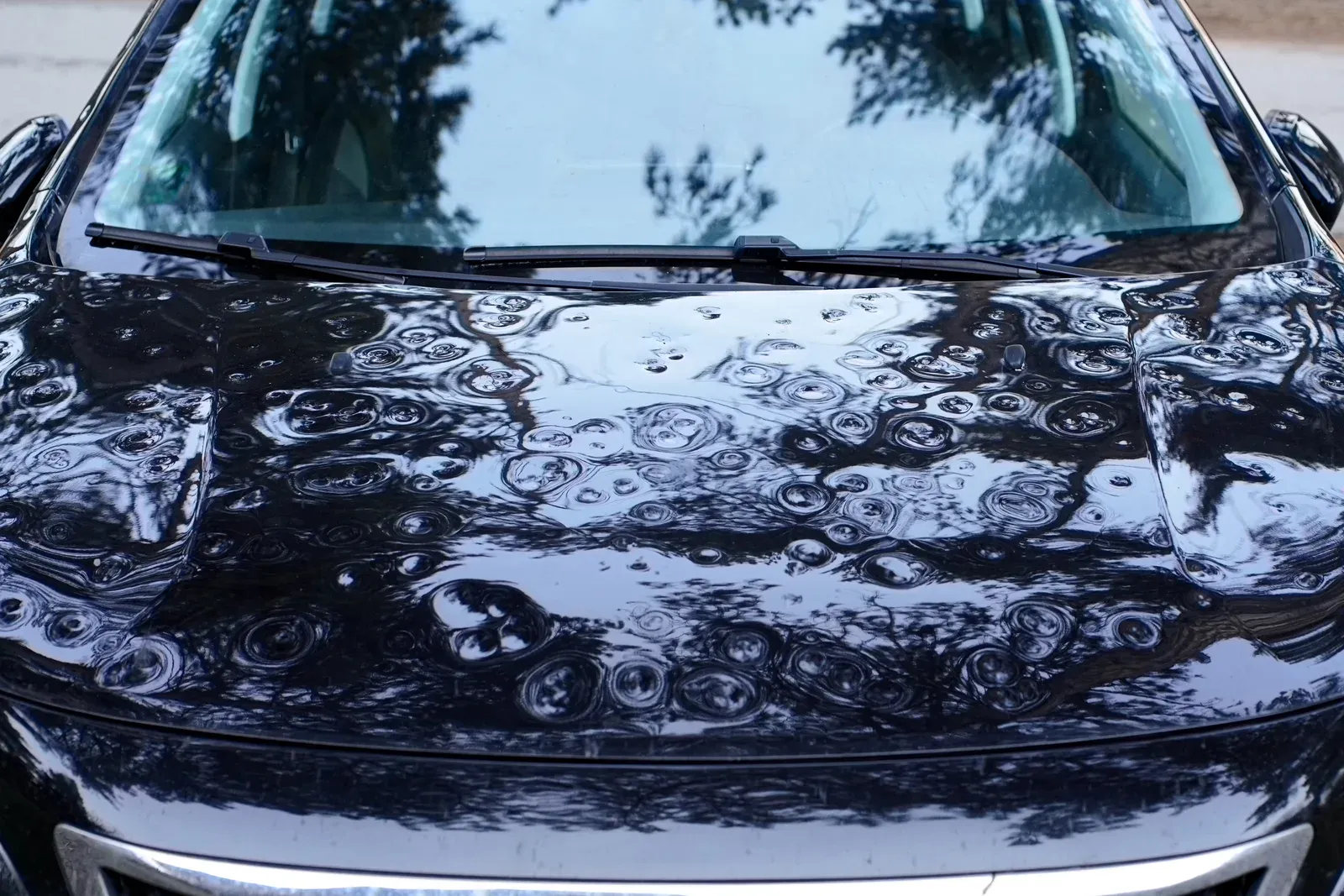
First: safety, then documentation
If you slid off the road or were hit, check everyone for injuries and get out of the travel lane if the vehicle moves. Hazards on. In a whiteout, staying in a buckled seat belt inside the vehicle is usually safer than standing outside it — Minnesota winter crashes are frequently followed by secondary crashes.
Call 911 if anyone is hurt, if the vehicle is blocking traffic, or if another vehicle is involved. A report matters more in winter than usual, because fault in low-visibility and icy conditions gets disputed later, and a police report fixes the conditions in the record.
Photograph before anything is moved or plowed. Wide shots showing the road surface and conditions, close-ups of the damage, the position of the vehicles, and anything relevant like an unmarked snowbank, a hidden curb, or ice under fresh snow.
Weather evidence disappears fast in Minnesota. A road that was sheet ice at 7 a.m. can be wet pavement by noon, and by then the only record of what the conditions actually were is the photos you took. Time-stamped pictures from your phone are worth more later than any description.
Which coverage pays, by scenario
Winter produces damage in several different ways, and they route to different coverages:
- You slid into a guardrail, curb, snowbank, or another vehicle — your collision coverage, subject to your deductible
- Another driver slid into you — their liability coverage, and you owe no deductible
- A plow struck your parked car — the operator’s liability if the operator is identified, though municipal claims are often denied; otherwise your collision coverage
- A plow buried your parked car and pushed it into something — usually collision
- Ice or snow slid off a roof onto the car, or a tree limb came down — comprehensive, no fault assigned
- Snow load collapsed a carport onto the vehicle — comprehensive
- You hit an unmarked object hidden under snow — collision
- Someone hit you and left — uninsured motorist or collision, depending on your policy
Report it even if the damage looks minor
Snowbank and curb impacts look like nothing and are frequently not nothing. Snow compacts into something close to concrete under a plow, and hitting a hardened snowbank at even moderate speed can bend a control arm, damage a wheel, or move suspension mounting points.
Comprehensive and collision claims both benefit from being opened while the event is fresh and the weather is documented. Minnesota is a no-fault state for injury coverage through PIP, but vehicle damage still follows fault — so if someone else caused it, their insurance company pays and you owe no deductible.
Whichever way it goes, you choose the repair shop. Minnesota Statute § 72A.201 makes it illegal for an insurance company to require or pressure you toward a particular shop.
The damage you cannot see from outside
Winter impacts concentrate at the bottom of the vehicle, which is where the expensive parts live and where nothing is visible from a walk-around. Check for these symptoms in the days after:
- A steering wheel that is no longer centered when driving straight
- The car pulling to one side on a flat road
- A new vibration that appears at a specific speed — usually a bent wheel
- A clunk or knock over bumps, pointing to suspension or a broken mount
- A driver-assist warning, or adaptive cruise and lane keeping behaving oddly
- A door, hood, or liftgate that no longer closes the way it did
- Coolant, oil, or washer fluid on the ground where you park
Do not let salt sit in fresh damage
Any impact that broke paint has exposed bare metal, and in the middle of a Minnesota winter that metal is sitting in brine. Corrosion starts immediately and spreads under the surrounding paint where you cannot see it.
Wash the vehicle as soon as you reasonably can, including the underbody, and get the damaged area looked at rather than waiting for spring. If the repair cannot happen right away, at minimum have the exposed metal sealed.
This is the practical reason winter damage should not wait. It is not that the repair gets harder — it is that a two-panel repair in January can become a rust repair in May.
Cold does not stop the work either. Body and paint work happens indoors, and refinishing happens in a heated downdraft booth where the panel is brought up to temperature and the finish is baked to full cure, so a January repair carries the same lifetime paint warranty as a June one.
How to get it moving from here
If the car is not drivable, call us at (651) 460-9996 and we will arrange the tow. If it is drivable, send photos — a full corner shot, a close-up, and a wide shot of the whole vehicle — and a written estimate comes back within 24 hours, free.
We can open the claim with you on the phone, meet the adjuster at our shop, and handle supplements directly, so the only decision you have to make is when to bring it in. We accept every insurance company.
One last thing worth saying plainly: do not drive a car with a broken headlamp, a missing mirror, or a hood that will not latch through a Minnesota winter because you are waiting for a convenient week. Those are the parts you need most in the dark and the snow.
