How should I care for new paint after a repair?
Quick answer
Treat fresh paint gently for about the first month while it finishes curing. Hand wash with a pH-neutral soap and a soft mitt, skip automatic brush washes and high-pressure spray at panel edges, hold off on wax, sealant, or ceramic coating until the shop tells you the film has fully outgassed, and remove bird droppings and tree sap immediately.
Cured enough to drive is not the same as fully cured
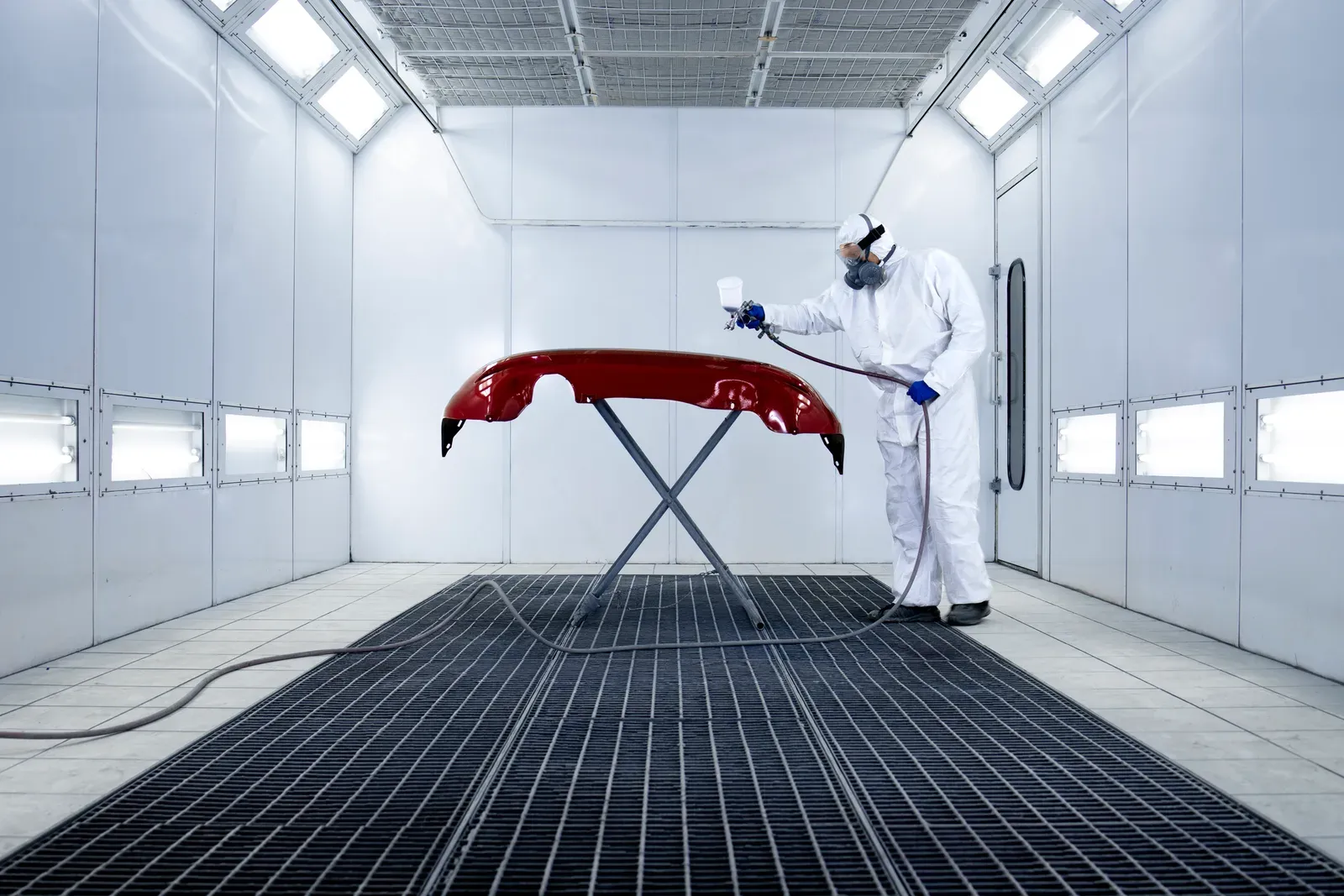
A refinished panel leaves the booth baked and hard enough to handle, reassemble, and drive. That is why you can pick the car up the same day the paint is sprayed.
Underneath, the chemistry is still finishing. A two-component urethane clear crosslinks over time, and solvents continue to migrate out of the film for weeks afterward. During that window the film is slightly softer than it will eventually be and it needs to breathe.
That is the reason behind almost every rule that follows. A softer film scratches more easily, and a film that is still releasing solvent should not be sealed under a coating that traps it — which is what causes the hazy, blotchy look people occasionally get from waxing a new repair too early.
The practical rule most refinish systems point to is about thirty days. Ask your shop for the number that applies to the specific product on your car — we give written care instructions at pickup with every paint job.
The first month: what to avoid
Almost everything on this list comes down to two ideas — do not seal the film before it has finished outgassing, and do not scratch a surface that is not at full hardness yet.
- No wax, sealant, or ceramic coating until the cure window is over — these seal the surface and trap solvent in the film
- No automatic car washes, especially brush or cloth tunnels, which are the fastest way to put swirl marks in soft clear
- No high-pressure washing aimed directly at panel edges, seams, or masked lines
- No commercial degreasers, bug and tar removers, or wheel cleaners on the fresh panel
- No parking under trees — sap and bird droppings are acidic and etch soft clear quickly
- No car cover, which traps moisture and grinds grit into the finish every time it moves
- No decals, badges, magnetic signs, or paint protection film applied to the new panel
- Avoid gravel roads where you can, and leave extra following distance behind trucks
How to wash it in the meantime
Washing is fine and encouraged — dirt left sitting is worse than washing carefully. Wait a few days after pickup, then hand wash in the shade with cool water, a pH-neutral car soap, and a clean microfiber mitt.
Use two buckets, one for soap and one to rinse the mitt, so grit does not go back onto the paint. Work from the top down, rinse thoroughly, and dry with a clean microfiber towel or let it air dry rather than using a dirty chamois.
If something lands on the paint — bird droppings, sap, bug splatter, road tar — get it off the same day with plain water and a soft cloth. Those are acidic and they etch into soft clear fast. Do not scrub or use solvents.
The short version of a safe wash:
- Wash in the shade, never on a hot panel in direct sun
- Cool water, pH-neutral car soap, clean microfiber mitt
- Two buckets — one soap, one to rinse the grit out of the mitt
- Work top down, and rinse the panel before it dries
- Dry with clean microfiber, or let it air dry
- Keep dish soap, degreasers, and household cleaners away from it
Minnesota-specific timing
If your repair finishes in late fall, the cure window overlaps with the start of salt season, and that changes the advice slightly. Rinse the car when the temperature allows rather than letting brine sit on fresh paint, but keep it to gentle hand washing or a touchless wash rather than a brush tunnel.
Once the cure window is over, get a wax or sealant on the panel before deep winter. That sacrificial layer is what keeps chloride from sitting directly against the finish, and it makes the salt film release more easily when you wash.
Cold weather itself does not harm cured paint. What harms it is salt, sand, and a stiff brush.
One more winter note: a fresh panel is a good reason to be careful with an ice scraper. Scrape the glass, not the paint, and never chip ice off a painted surface with anything hard.
After the first month
Once the film is fully cured, treat the repaired area like the rest of the car — but keep treating the whole car well, because paint life is decided by ultraviolet exposure and contamination, not by age.
Wax or seal it two or three times a year, or apply a ceramic coating for a longer-lasting sacrificial layer. Park in shade or a garage when you can. Fix rock chips while they are chips, before Minnesota salt gets into the break in the film.
If you want paint protection film on the new panel, wait until the cure window has passed and have it applied by someone who does it regularly. Film applied over paint that is still outgassing can trap solvent and leave marks in the finish underneath.
One thing you may notice in the first weeks is a very slight difference in gloss or texture between the new panel and the old paint next to it. Fresh paint settles as it cures, and a blended repair evens out. If it still bothers you after the cure window, bring it back and we will look at it.
Our paint and refinish work carries a lifetime warranty. If anything about the finish looks wrong — a spot that dulls, an edge that lifts, color that has shifted — bring it in. We would much rather look at it early than hear about it years later.