The battery pack is part of the structure, so it changes everything
On a Tesla the high-voltage pack is bolted into the floor as a load-bearing member, not carried as an accessory. That means rocker panels, floor sections and the underbody are the pack’s protection, and it means lifting the car is a specified operation rather than a matter of finding somewhere solid. Tesla defines the jack points and the pads to use at them, and a hoist arm placed anywhere else can load the pack case directly.
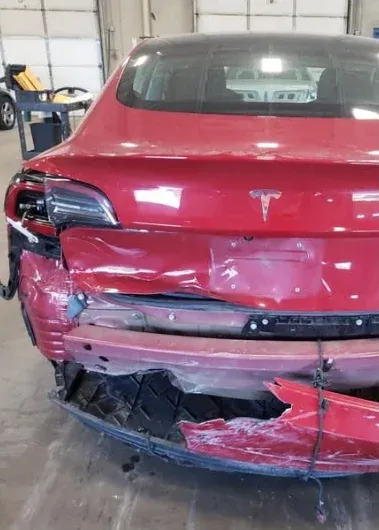
Before any welding, cutting, grinding or structural pulling, the high-voltage system is shut down and allowed to discharge for the interval Tesla specifies. The pack case, mounts, penetrations and coolant connections are then inspected wherever the impact landed. If we find deformation or seepage, you and your insurance company hear about it in writing — that is not a finding anyone should paper over with a new quarter panel. Insurance companies ask for that documentation more often on electric cars, and we would rather have it on hand than argue about it later.
Castings and aluminum: what can and cannot be pulled
Tesla builds Model 3 and Model Y bodies from a mix of steel and aluminum, and on the Model Y it moved large sections of the underbody to single-piece high-pressure aluminum die castings. A casting is not a stamping. It does not stretch back and it cannot be sectioned wherever a technician chooses; Tesla publishes what is repairable, what is replaceable and where the boundaries sit. Model S and Model X are aluminum-intensive with riveted and bonded joints.
So the honest first step is measurement and identification, not a pull. Each damaged member is identified for what it is during teardown, the published procedure is checked, and the plan comes from that. Aluminum work is kept away from steel dust and steel tooling, because contamination there causes corrosion that only appears under the paint months later. Tesla’s procedures are specific about which sections are serviceable, and on some of them the honest answer is that the part gets replaced.
- High-voltage system de-energized before any structural or heat-producing work
- Lifting only at Tesla’s specified jack points, with the correct pads
- Castings and aluminum members identified before any pull is considered
- Battery case, mounts and coolant connections inspected at the impact area
Cameras, panel gaps and Red Multi-Coat
Tesla’s driver assistance runs on cameras rather than radar on current cars — a forward cluster behind the windshield, cameras in the front fenders, units in the B-pillars and one at the rear. Body repair moves several of those mounting points, so any camera disturbed by the work has the procedure Tesla publishes for it completed, and the car is checked before it leaves rather than left for the owner to discover on the way home.
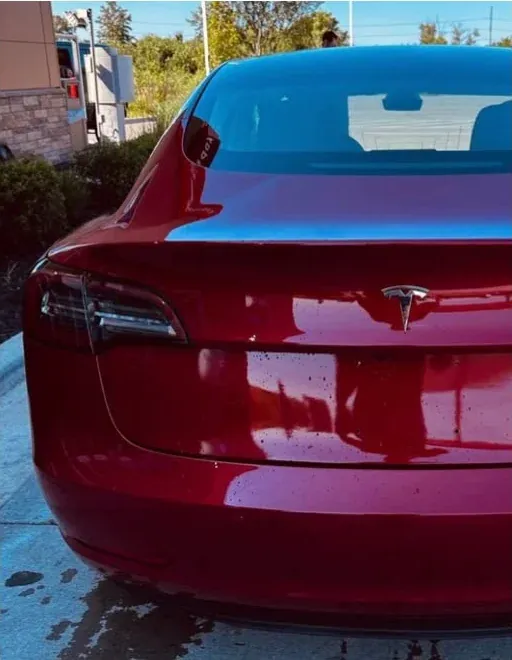
Panel fit deserves the same attention. Tesla owners notice gaps, and a repair that measures correctly but sits a millimeter proud at the door will be the first thing you see every morning. On color, Red Multi-Coat is a layered finish where the translucent red over the base sets the depth, so it gets a sprayed test card and a blend into the neighboring panels, backed by our lifetime paint warranty.