
While you are still in the ditch
The most dangerous part of a slide-off is often standing next to the road afterward. Stay belted in with hazards on, and if the car is well off the pavement you are safer inside it than out. Call for a tow rather than accepting a strap from a passing pickup — improvised pulls bend bumper beams and tear mounting points.
Before the truck arrives, check that the exhaust pipe is not packed with snow if you are running the engine for heat. Then photograph where the car sits, the angle of the slope, and what it struck on the way down — that context matters for the claim later.
- Hazards on; stay belted in while you wait
- Clear snow from the tailpipe before running the engine
- Photograph the car in the ditch and the tracks leading to it
- Ask for a flatbed if the wheels or steering do not turn freely
- Note whether it struck a culvert, sign post, or fence
How the claim works in Minnesota
A single-vehicle slide-off is a collision loss: the car left the road and struck the ground, a bank, or an object. Your collision coverage pays, minus the deductible, and there is no other driver to pursue. Comprehensive does not apply, because weather-related loss of control is not what that coverage is for.
Towing and roadside coverage often sits on the policy too, and it is easy to forget you carry it. Check your declarations page, or ask your agent, before you pay a winter recovery bill directly. Snow-emergency recoveries in the metro get expensive quickly.
What ditch damage actually involves
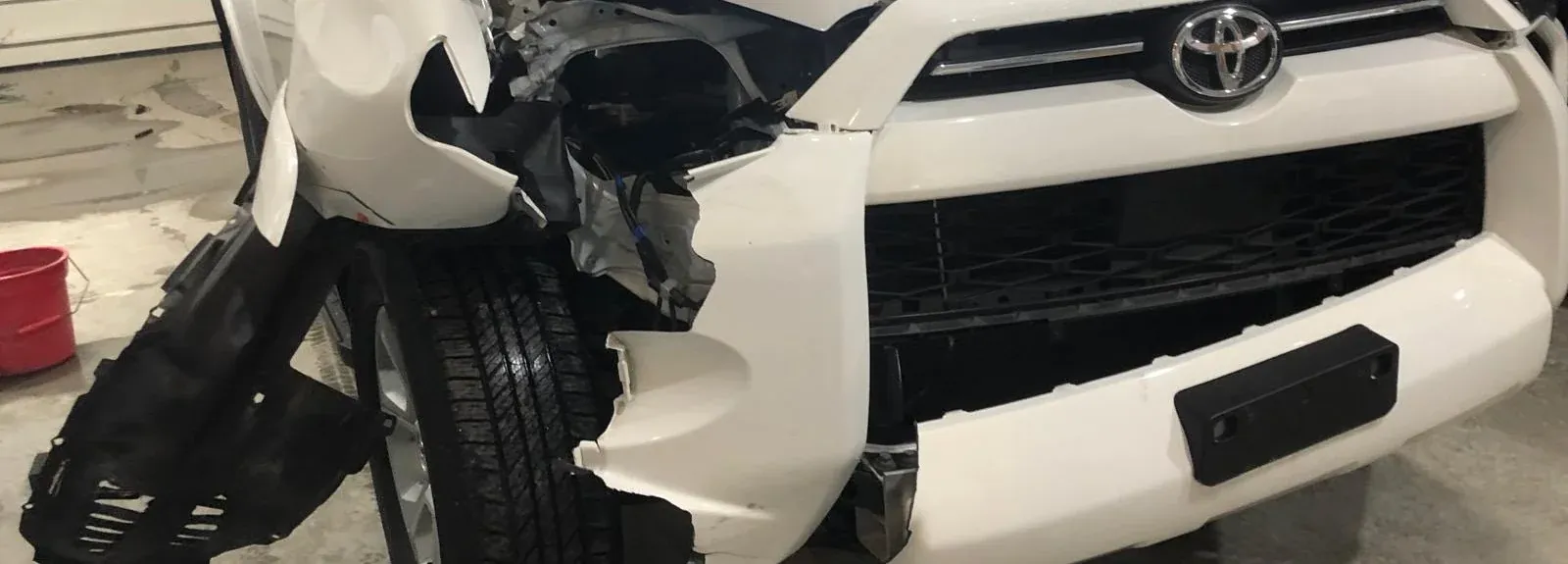
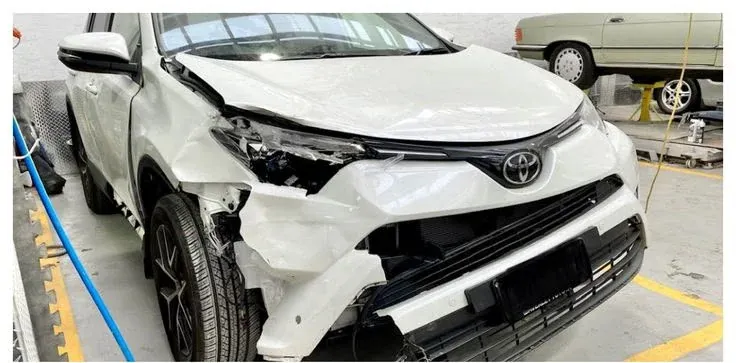
Ditch damage runs from the bottom up. Snow is soft until it is packed, and beneath it are frozen banks, culvert ends, and buried posts, so the front valance, undertray, rocker panels, and wheel arches take the hits while the visible bodywork looks nearly untouched.
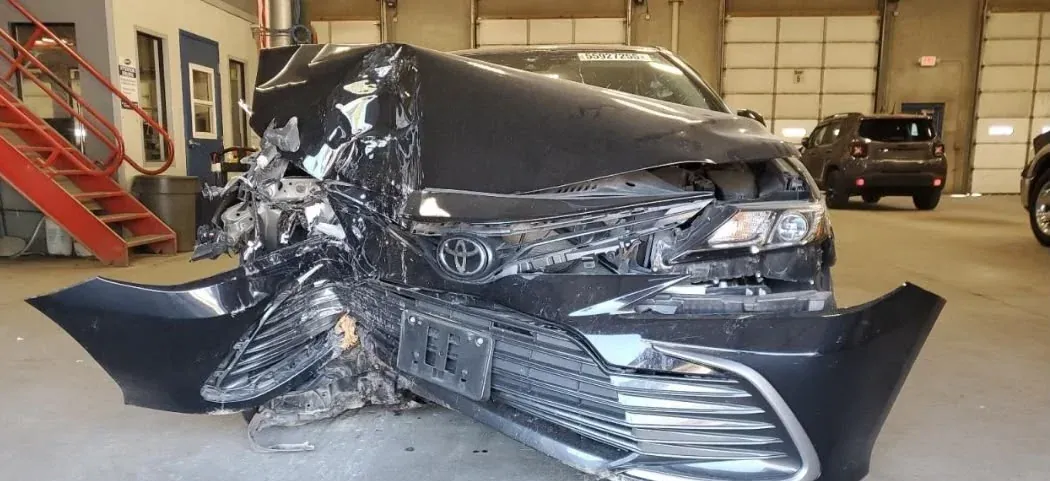
It is also the scenario most likely to move something structural without obvious signs. If the car struck a bank hard enough to stop it abruptly, we measure the body against factory specification before deciding what to repair — because pushing on suspension geometry from a low angle is exactly what a ditch does.
- Undertrays, splash shields, and everything mounted below the bumper
- Rockers and pinch welds where a bank or a recovery strap made contact
- Wheel arches and liners packed or torn by snow and frozen debris
- Body measurements against factory specification after a hard stop
- Any new damage from the recovery itself, documented separately
Getting it assessed after the tow
We coordinate tows into the shop, so if your car is sitting at a recovery yard, call (651) 460-9996 and we will arrange to bring it to Savage. That is usually simpler than paying storage while you decide what to do next.
Once it is here, teardown and measurement tell you the real story rather than the parking-lot version. You get a photographed damage report and a written timeline, and we deal with the adjuster directly — including the supplement, which winter slide-offs need more often than not.