Report it and write it down the same day
Memory for a fleeing vehicle fades within hours. Before you do anything else, write down the color, body style, any part of the plate, the direction it went, and anything odd — a missing mirror, a loud exhaust, a decal. Those fragments are what actually lets police match a vehicle later.
Then file the report. Insurance companies treat the police report as the anchor of a hit-and-run claim, and some policies require prompt reporting as a condition of coverage. Reporting also protects you if the other driver later tells a very different story about the same crash.
- Vehicle color, size, and body style; partial plate if you caught one
- Direction of travel and the exact intersection or address
- Time of day, lighting, and road conditions
- Names and numbers of anyone who saw it
- Photos of your damage and any paint transfer or broken parts left behind
Which coverage pays when nobody is found
Minnesota requires uninsured motorist coverage for bodily injury, but uninsured motorist property damage is an optional add-on. Most drivers who carry collision coverage end up using it for hit-and-run vehicle damage, paying the deductible and letting the claim close as a not-at-fault loss.
If the driver is later identified and insured, your insurance company can recover what it paid and refund your deductible. Broken parts left at the scene are worth keeping for exactly that reason — a grille badge or a lamp lens carries a part number that narrows the vehicle down.
Repairing damage from a hit you did not see coming
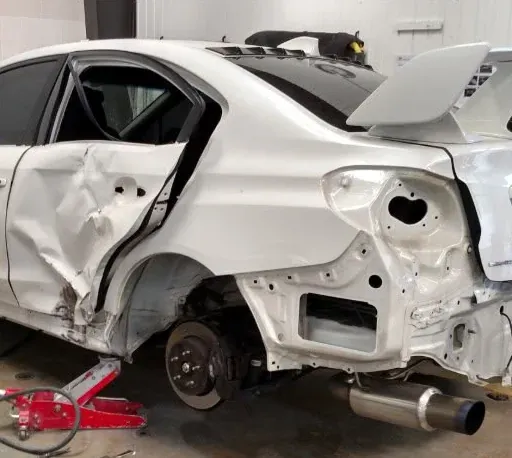
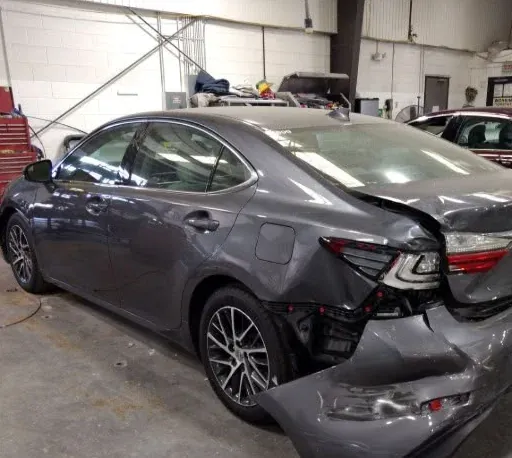
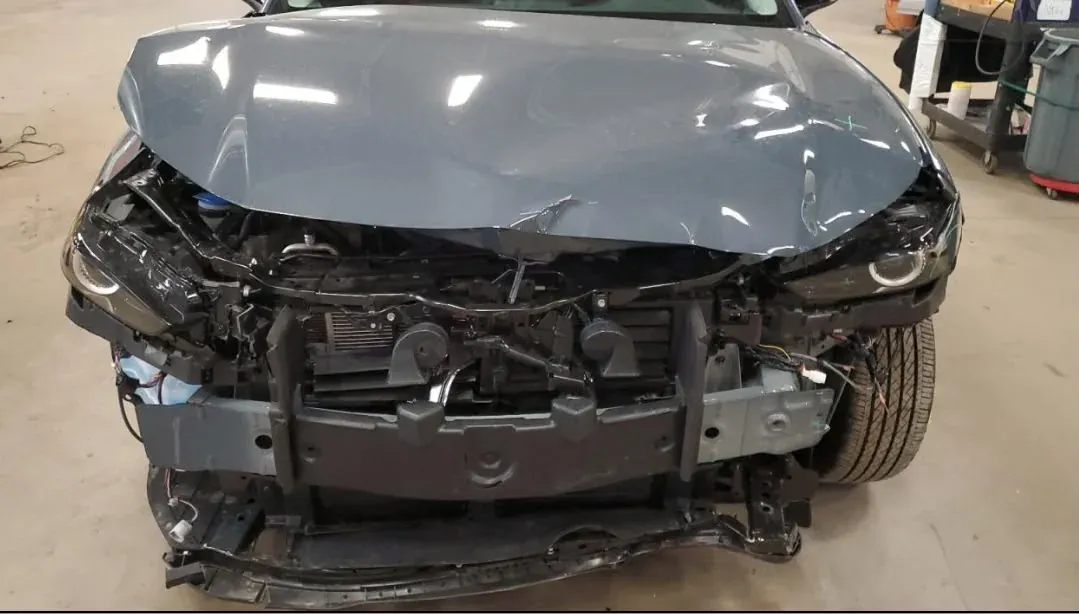
Hit-and-run damage tends to be angled rather than square-on, because the other driver was already leaving. Angled impacts spread across two or three panels and often push a bumper cover sideways off its mounting tabs, which looks minor from six feet away and is not.
The repair starts by separating what is cosmetic from what moved. Panels get realigned before anything is filled or painted, because chasing a gap with body filler is how a repair ends up looking correct in the shop and wrong in daylight.
- Bumper cover mounting tabs, which shear off before the cover itself cracks
- Fender and door alignment, checked at every gap along the panel
- Lamp housings and the tabs that hold them behind the lens
- Paint transfer photographed before the panel is sanded back
- Any part left behind by the other vehicle, kept for the police report
Get an estimate you can bring to the claim
Adjusters handling a hit-and-run file work from photos and documentation more than most claims, so a thorough shop estimate carries weight. Send us three photos and we will write one free within 24 hours, itemized the same way an insurance estimate is.
Riaz has run this shop in Savage since 2010 and handles these files personally, including the supplement if teardown shows the hit went further than it appeared. Call (651) 460-9996 and we will tell you honestly whether it is worth filing at all.