Hyundai builds with a lot of hot-stamped steel
Hyundai makes its own steel, and it has used that position to push high proportions of advanced high-strength and hot-stamped grades into the Tucson, Santa Fe, Elantra and Palisade. Hot-stamped parts arrive at the press line soft, get formed and quenched in the die, and come out several times stronger than the sheet they started as. Nothing a body shop does can put that property back once heat or a pull has taken it away.
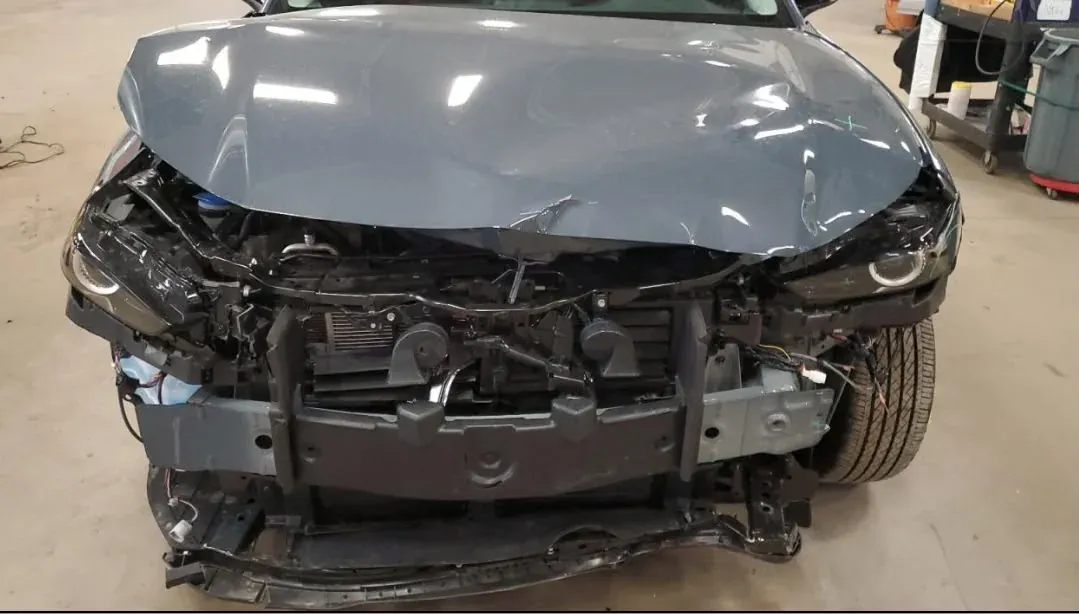
Which is why the structural decision on a Hyundai gets made from measurements rather than from a photo estimate. The vehicle goes on the laser system, the readings are compared to Hyundai’s published dimensions, and parts that fall outside what the procedure permits get replaced at factory joints. Both sets of readings are documented, and they are what we take to your insurance company when a supplement is needed. Photographs from the teardown go with them, because an adjuster reading a number without a picture attached will always push back on it.
SmartSense sensors and the emblem in the grille
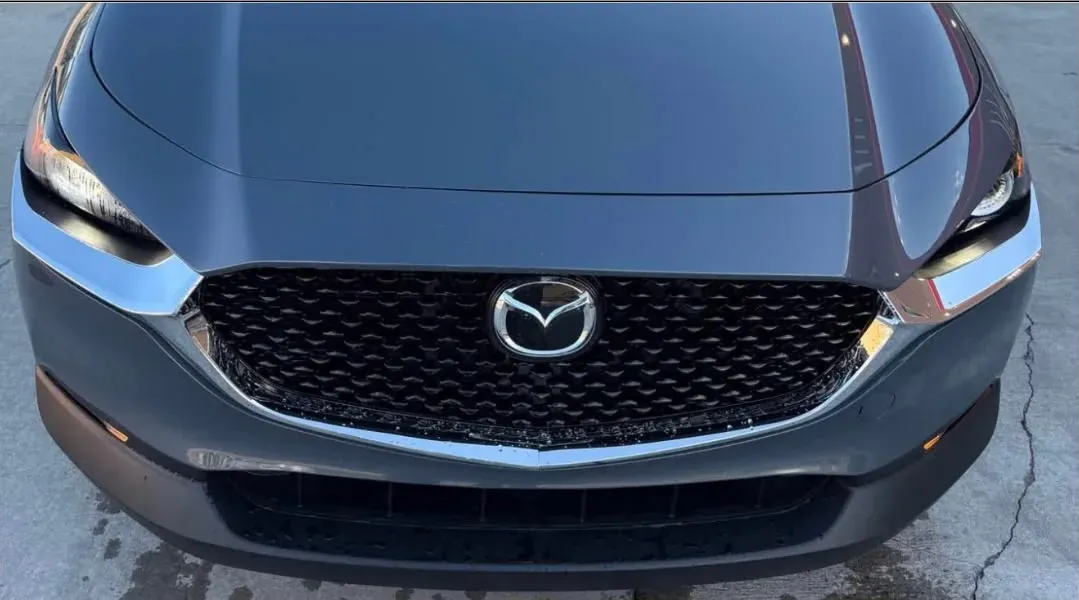
Hyundai SmartSense uses a forward camera at the top of the windshield along with a front radar mounted behind the grille, typically reading out through the emblem area. On many Hyundai models that emblem is built to let radar pass through it rather than to look good in a parking lot, so a substitute part with different metal content or a thicker chrome finish can change what the system detects and how early it reacts.
Rear corner radars for blind spot collision avoidance sit behind the rear bumper cover, which puts them squarely in the path of a typical parking-lot hit. Every Hyundai here is scanned before teardown and again after reassembly, genuine parts are specified where a sensor reads through them, and any calibration Hyundai publishes for the work performed is completed before the vehicle is released. A sensor that was moved and never re-aimed is the kind of defect that stays invisible right up until the moment it matters most.
- Genuine Hyundai grille and emblem parts specified in the front radar path
- Windshield camera calibrated to procedure when the glass or bracket is disturbed
- Rear corner radars checked after any rear bumper or quarter panel repair
- Pre-repair and post-repair scan reports supplied with the final invoice
Ioniq 5 and Ioniq 6: an 800-volt car needs different habits
The Ioniq 5 and Ioniq 6 sit on Hyundai’s E-GMP platform, an 800-volt architecture with a flat battery pack integrated into the floor between the axles. That pack is structural. It also means the underside of the car is not a place to guess about, so lift points are the ones Hyundai specifies and nothing else, and the high-voltage system is shut down and allowed to discharge before any welding, cutting or structural pulling begins.
Rocker panel and floor damage on these cars is inspected against the pack case, not just against the sheet metal, and any sign of case deformation or coolant weeping is reported to you rather than covered up. Regular Tucsons and Elantras never need any of this, which is exactly why the electric ones get their own written process rather than being treated as a slightly heavier hatchback.