Flat panels take the beating
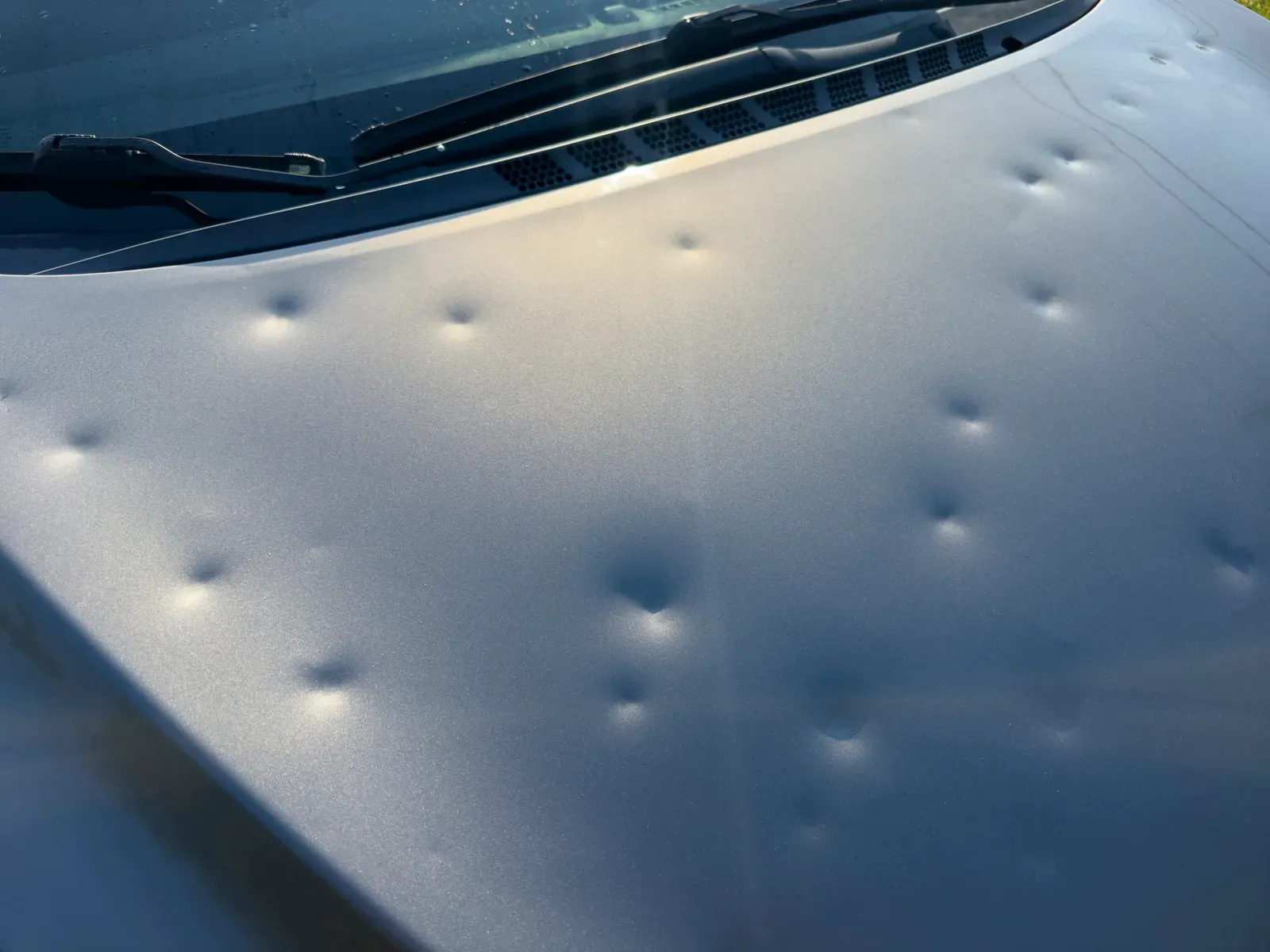
Hail falls down, so it hits the panels facing up. Roofs, hoods and trunk lids collect the dents first, followed by the upper edges of the fenders and the tops of the doors. That is why a car can look untouched from the driver seat and be covered in damage the moment you get above it — and why the first thing we do is put the vehicle under lights and look down at it rather than across it. Mirror caps and pillar tops usually tell the same story once you know to check them.
Around Prior Lake this shows up most on vehicles parked at the lake end of a driveway or alongside a boat and trailer, where the garage is already spoken for. Between Upper and Lower Prior Lake, The Wilds, and the neighborhoods off Fish Point Road, plenty of second cars and pickups live outdoors year-round, and a summer storm coming across the water has nothing standing between it and them. Those are the ones that arrive with the roof dimpled from one edge to the other.
The metro repair queue fills within days
A serious hailstorm damages every exposed vehicle beneath it in a few minutes, and every shop between here and the river takes calls about it the next morning. Capacity does not expand to meet a storm — the same bays, the same booth, the same hours. The cars that get scheduled first are the ones whose owners called first, which is the entire reason we tell Prior Lake drivers not to wait for a quiet weekend to think about it.
You can get in line before anything is sorted out with your insurance company. Send photos from your driveway on County Road 21, and an estimate comes back within a day, the claim gets opened with you, and a slot is held. The ten-minute drive up Eagle Creek Avenue can happen whenever the schedule actually reaches your car. If the household has two vehicles sitting outside, photograph both — each one is a separate claim and each one holds its own place in the schedule.
Working with catastrophe teams after a big storm
When a storm is large enough, insurance companies stop handling the claims locally and route them through a catastrophe team — temporary adjusters brought in from out of state, often working from tents, parking lots, or drive-through inspection sites set up for volume. They are fast, and speed and thoroughness are not the same thing. The estimate they hand you reflects whatever could be seen in whatever light was available, on a schedule measured in minutes per vehicle.
We deal with those teams directly. Where a catastrophe estimate counts half the dents a panel actually carries, we document the difference with photographs and file a supplement rather than asking you to argue about it. You should not have to become an expert on your own roof panel to get the repair paid for properly. That is what a shop is for, and it is why an inspection-site number is a starting point rather than a conclusion.