Measuring straight and driving straight are two tests
A car can read perfectly on the measuring system and still wander on the way home. Control arm mounts, subframe bolts, steering geometry, and the wheels themselves all absorb part of an impact, and none of that shows up in a frame reading. Which is why a structural repair here is not considered finished at the second measurement. The frame reading is where the inspection starts, not where it ends, and the parts hanging off the structure get their own look afterward.
Suspension and alignment get checked after the structure is back to specification, in that order and never the reverse. Aligning a car whose body is still out is a way of hiding a problem rather than fixing one — the numbers can be dialed in while the geometry underneath stays wrong, and the tires tell on it a few thousand miles later on the way up Cedar Avenue.
One road west from Apple Valley
The trip is about as simple as it gets in the south metro. County Road 42, signed 150th Street West through town, runs unbroken from the Cedar Avenue corridor through Burnsville and into Savage. From Cobblestone Lake or the Minnesota Zoo area it is roughly twenty minutes, with the traffic signals doing most of the deciding. Cedar Avenue to 150th is the only decision you have to make, and after that it is one straight line to our door.
Apple Valley collision work tends to default to whichever chain sits on Cedar. For a dent that is a reasonable habit. For structural repair it is worth knowing where the frame machine actually is, who operates it, and whether anyone will show you measurements at the end. Here the answers are on site, the owner, and yes. Frame work is where the gap between a location and an actual shop shows up most clearly, and it is worth twenty minutes to close it.
Why the geometry matters after a hard hit
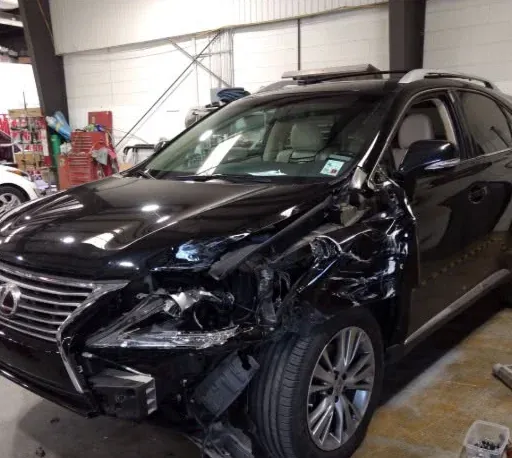
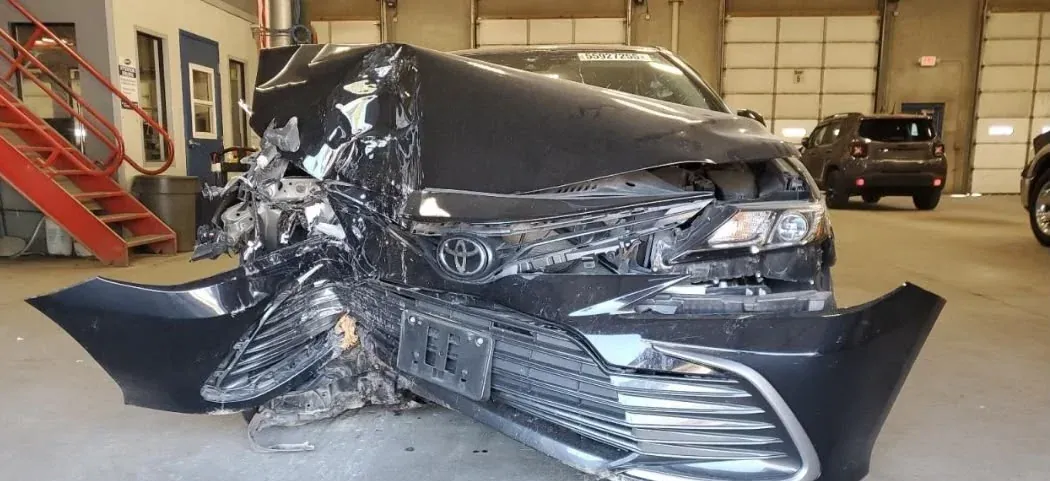
The structure of a car sets the reference for everything bolted to it. Suspension pickup points, engine cradle mounts, door openings, and glass all depend on the shell holding its designed shape. Push a rail back and the effects spread outward — a door that needs a shove, a steering wheel that sits off center, uneven tire wear that starts within a season. None of it is dramatic on day one, which is exactly why it gets ignored.
Those symptoms are the visible half. The invisible half is that crumple zones and airbag sensors are calibrated around a structure that folds in a specific sequence. Restoring the factory dimensions restores that behavior. It is the whole reason the measurements are worth taking, and the reason the alignment check at the end is a safety step rather than a courtesy. A courtesy would be washing the car before you pick it up; this is the part that keeps it protecting you.