The aluminum F-150 changed what a body shop has to do
Since the 2015 model year Ford has built the F-150 cab, box and closure panels from aluminum alloy over a high-strength steel frame, and the Super Duty and Expedition followed the same path. Aluminum does not behave like steel on the bench. It work-hardens as it moves, it tears rather than stretching, it cannot be heated to relax a crease, and large parts of the structure are joined with self-piercing rivets and structural adhesive instead of welds.
It also cannot share a work area with steel. Steel dust that settles on bare aluminum starts galvanic corrosion, which surfaces months later as bubbling under fresh paint, so aluminum panels get their own tooling, their own abrasives and dust extraction well away from steel work. Ford publishes the rivet types, adhesive specifications and panel replacement points for each body, and that is the document the repair is built from. Nothing about an aluminum panel is guesswork, and very little of it transfers from experience with a steel truck.
Explorer, Escape, Edge and the unibody half of the lineup
The Explorer, Escape, Edge and Bronco Sport are unibody vehicles with hot-stamped boron steel through the passenger cage and progressively softer, more collapsible grades ahead of it. That design is the reason a front hit that presents as bumper-and-headlight damage so often turns out to have shortened a rail or shifted the radiator support — and none of it is visible until the fascia and liners come off the vehicle.
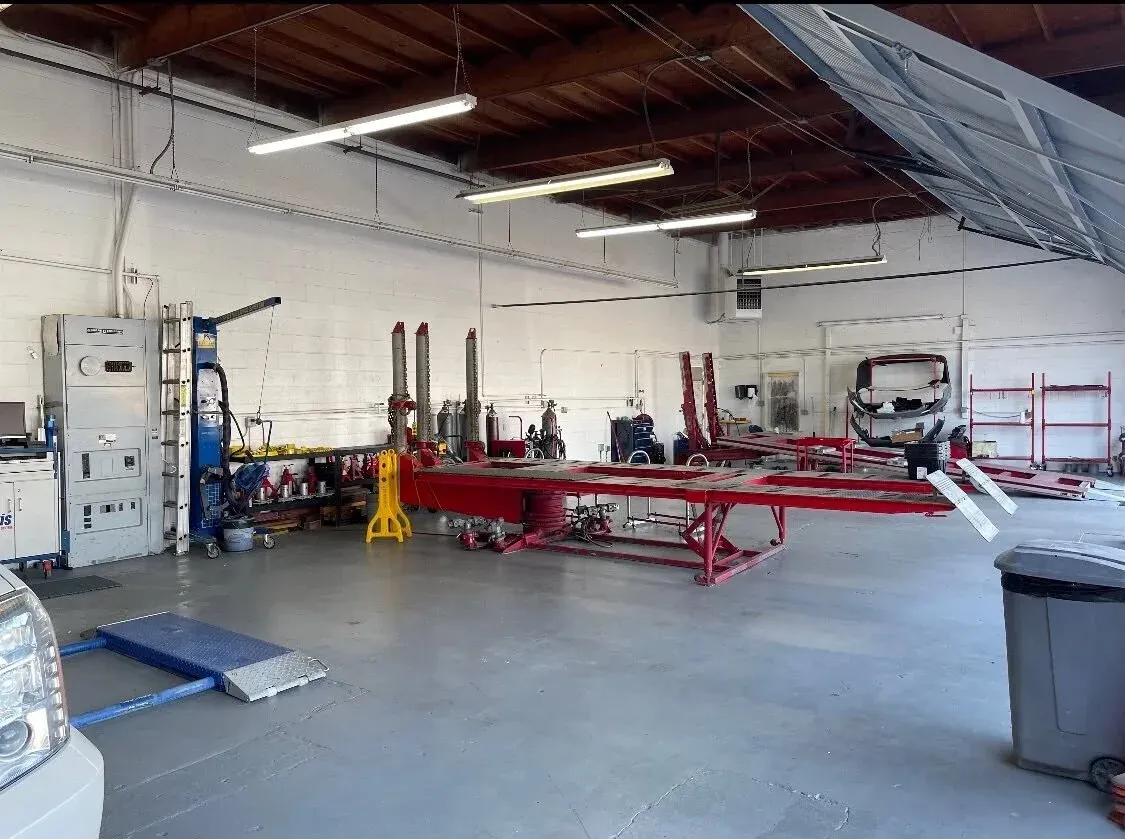
Every Ford is torn down before the estimate is finalized, then measured against factory dimensions on the laser system. Structural pulls are made on the frame machine and the vehicle is re-measured afterward, then suspension geometry and alignment are checked, because a truck that measures correctly on paper and still tracks to the right has not actually been finished. Older Fords also arrive with corrosion in places nobody mentioned on the phone, and we photograph what we find underneath so a supplement is never a surprise.
Co-Pilot360 sensors and Ford’s harder colors
Ford Co-Pilot360 places a forward camera at the windshield and a radar module in the front fascia, with corner radars in the rear bumper handling blind spot monitoring. On trucks the rear coverage extends to cover a trailer, which makes those rear sensors more consequential on an F-150 than on most cars. Everything is scanned before teardown and again after reassembly, and any calibration Ford publishes for the work performed is completed to that procedure.
Ford’s color range includes tri-coat reds such as Rapid Red and Ruby Red, where a translucent tinted layer sits over a metallic base and the number of passes across that layer decides the final depth. Those are spray-out-card colors every single time. We mix to your paint code, test on a card, adjust the mid-coat, then blend into the adjacent panels so the repair has no edge to catch the light.
- Aluminum panel work isolated from steel dust and steel tooling
- Self-piercing rivets and structural adhesive per Ford’s published joint specs
- Forward camera, front radar and rear corner radars scanned before and after
- Tri-coat reds matched from a sprayed test card, never from the code alone