Dodge colors are the loudest in the business, and the least forgiving
TorRed, Go Mango, Plum Crazy, Sublime — Dodge sells colors most manufacturers would not attempt, and they are genuinely difficult to repair. High-chroma finishes carry very little metallic to disguise a transition, so the eye picks up any difference in film build or pigment loading instantly. A spot repair that would vanish on a silver sedan will show as an obvious patch on an orange Challenger. Owners of these cars know it as well as we do, which is why they ask about the paint before they ask about anything else.
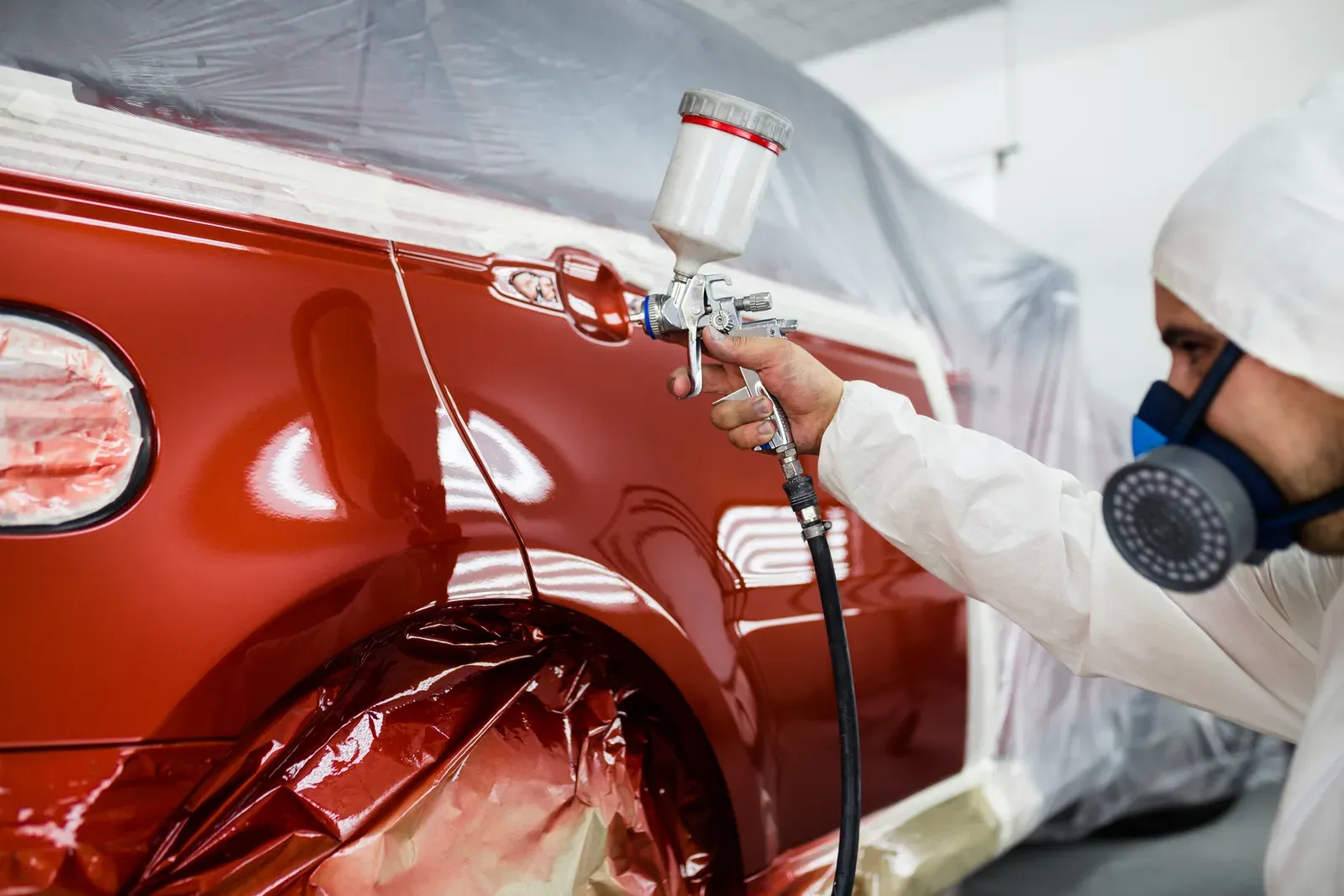
The answer is not to accept it. It is to test on a sprayed card first, then blend the color out across the adjacent panels so there is no place for a transition to hide. On a two-door with long panels that sometimes means bringing more of the car into the blend than an insurance estimate initially allows, and that argument gets made in writing with photographs rather than after the fact.
Charger and Challenger structures move in rear-drive ways
The Charger and Challenger are rear-drive cars with a long front structure, a substantial subframe and a driveline running the length of the floor. A front impact loads the subframe and the steering hardware bolted to it; a rear impact can move the rear rails and shift driveline geometry. Both can leave a car that looks straight in the parking lot and tracks wrong on Highway 13 at speed. Rear-drive geometry is far less tolerant of a structure that is merely close than a front-drive layout is.
Widebody models add bonded and fastened fender flares that only sit correctly if the panel underneath is right, so those cannot be used to cover a body that was never measured. Every Dodge with structural suspicion goes on the laser system, gets corrected within the published limits, is re-measured, has the steering angle sensor reset and is road tested before delivery. If the numbers do not come back where they belong, the car returns to the machine rather than going out the door.
- Spray-out card approved before any high-chroma panel is committed
- Blend planned across adjacent panels and documented for the adjuster
- Laser measurement recorded before and after structural correction
- Steering angle reset, alignment verified and the car road tested
Durango, Hornet and the everyday Dodges
Not every Dodge is a muscle car. The Durango is a rear-drive-based three-row SUV that is frequently towing something in this part of Minnesota, and the Hornet is a compact crossover with a plug-in hybrid option. A hitch-equipped Durango hit from behind transfers load through the hitch mounting into the rear structure, which is why the receiver and its mounting points get inspected rather than admired.
Driver assistance hardware on these vehicles follows the usual pattern — a forward camera at the windshield, radar at the front of the vehicle, corner sensors in the rear bumper. Every Dodge is scanned before teardown and after reassembly, calibrations published for the work performed are completed, and the sensors are function-checked before the vehicle is handed back to you. A Durango towing a boat every weekend earns the same sensor check as anything else on the lot.