A town that knows what a good finish looks like
The AutoMotorPlex sits in Chanhassen, which means a meaningful number of people here can spot a bad blend from across a parking lot. That standard usually gets reserved for weekend cars, while the daily driver gets whatever the nearest shop hands back. We have never seen a reason for the two to be different, so the same booth, the same color process, and the same final inspection apply to a minivan door ding. A dent on a school-run car gets looked at under the same light as anything wearing a show plaque.
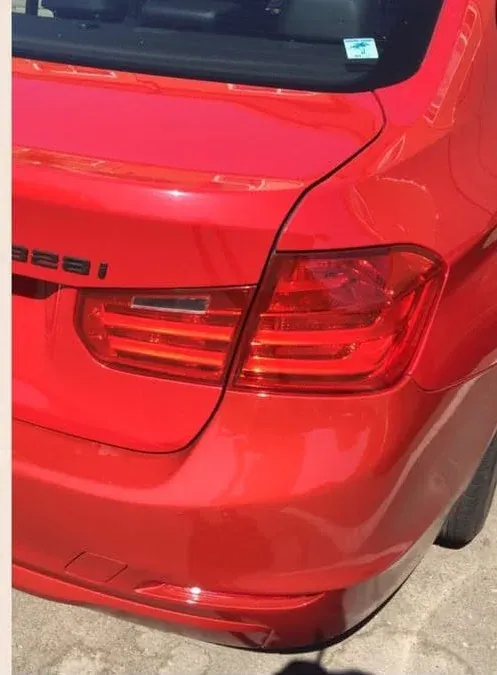
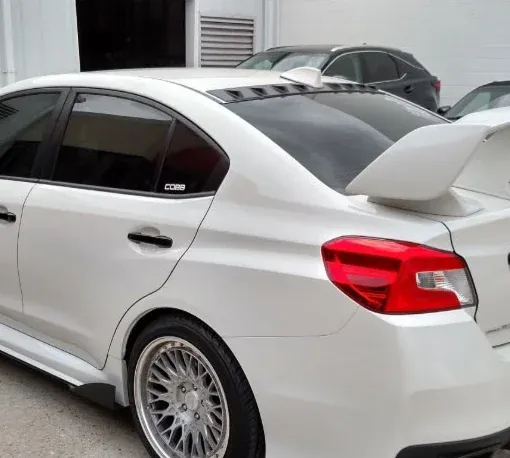
In practice, on a small repair, that means the panel is assessed under a light board rather than by eye in a bay, color goes onto a test card before it goes onto the car, and the finished panel is checked outside in daylight before you are called. None of it costs extra. It is simply the order the work happens in, and doing it in that order prevents almost every mismatch we get asked to correct later.
Dents on a body line are the hard ones
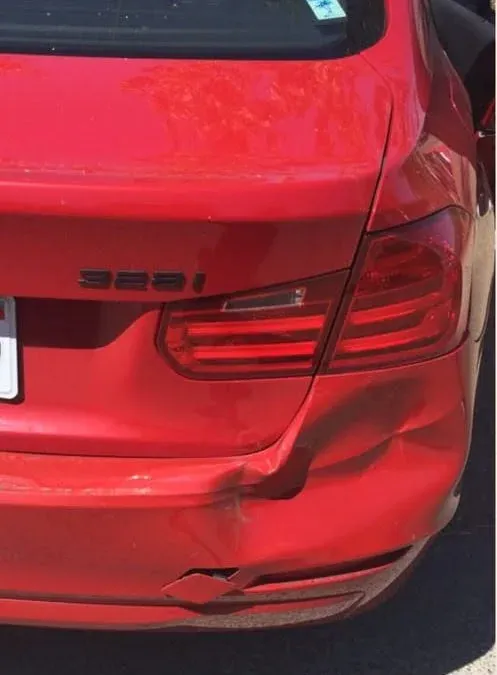
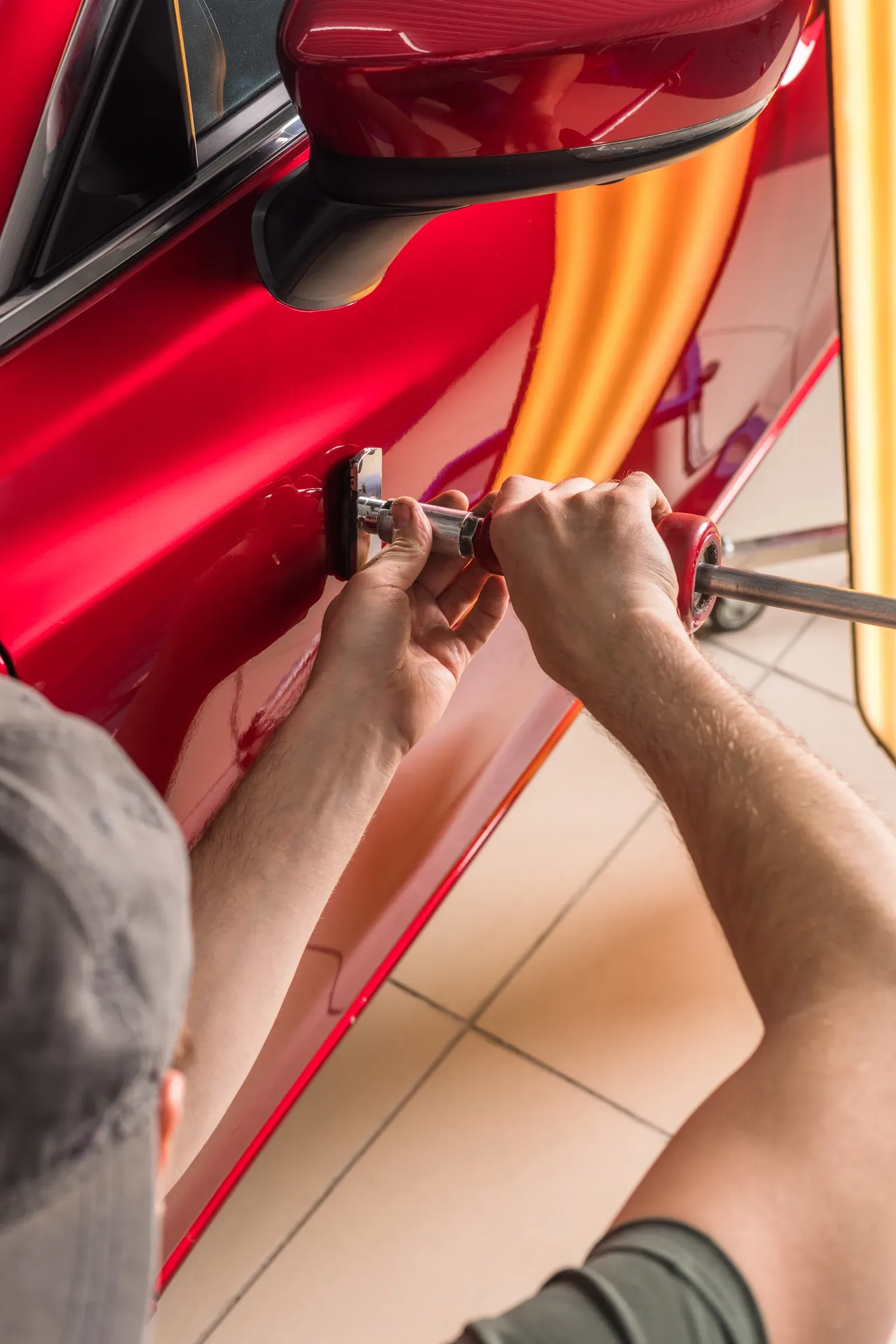
The character line running along a door is a fold, and folds are stiff by design — that is how a thin panel stays rigid at highway speed. A dent landing on that line fights being pulled back out, and any distortion left in the line itself is immediately visible, because the eye tracks straight lines closely and forgives curved surfaces almost entirely. A crease that crosses the line rather than sitting beside it is harder again.
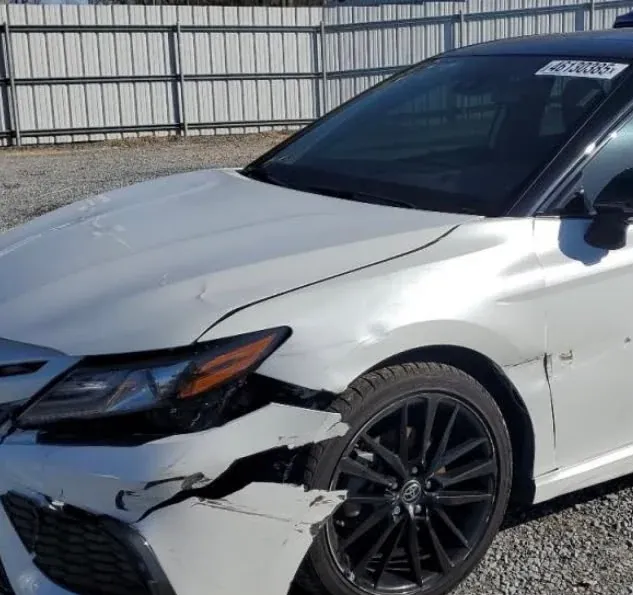
Dents in the open middle of a panel are far more cooperative and often come back with the factory paint untouched. This is why two dents that look the same size can carry very different numbers, and why we want to see the actual panel before committing to a price when the damage sits near an edge, a line, or a wheel arch. Ten seconds of looking in person saves an argument about the number later on.
- Open panel, paint unbroken — worked back, factory finish kept
- Body-line dent — pulled, leveled, and refinished to straighten the line
- Sharp crease — stretched metal, so filler and refinish every time
- Deep scratch — sanded, primed, sprayed to code, blended outward
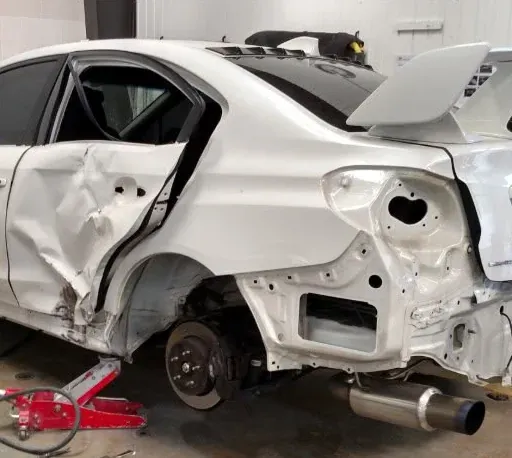
Repair, refinish, or replace — priced honestly
Three paths exist for most damaged panels and only one of them is right for your car. We write down what each costs: working the dent and keeping the original paint, filling and refinishing the panel, or replacing it outright. The differences are sometimes large and sometimes surprising, and the decision gets much easier when the numbers are sitting next to each other on one page. Replacement is not automatically the premium option, and repair is not automatically the cheap one.
This is not a sales technique. It is the reason the shop has held a 5.0 across more than 110 Google reviews since opening in 2010. Riaz writes the estimates himself, so the person making the recommendation is the one whose name is on the finished result, and the paint work is warranted for as long as you own the vehicle.