Twenty-five minutes up the valley
The 169 run out of Jordan is one most people here could drive half asleep — past the big yellow candy store, along the river valley, up to Highway 101 and onto Highway 13. Twenty-five minutes lands you at West 125th Street in Savage. There is no body shop in Jordan and none between here and there, which makes the choice fairly simple. The last few minutes on 13 are the only city driving in the whole trip.
Valley driving is fast and open, and that is exactly what wears a finish. Highway 169 at speed throws sand and stone at the front of every vehicle on it, the county roads around Sand Creek add gravel, and the deer that use the valley account for the sudden damage. Most of what arrives from Jordan is a hood, a fender, or a bumper cover, with windshield-line chips on towing pickups close behind.
Highway 169 sandblasts a front end
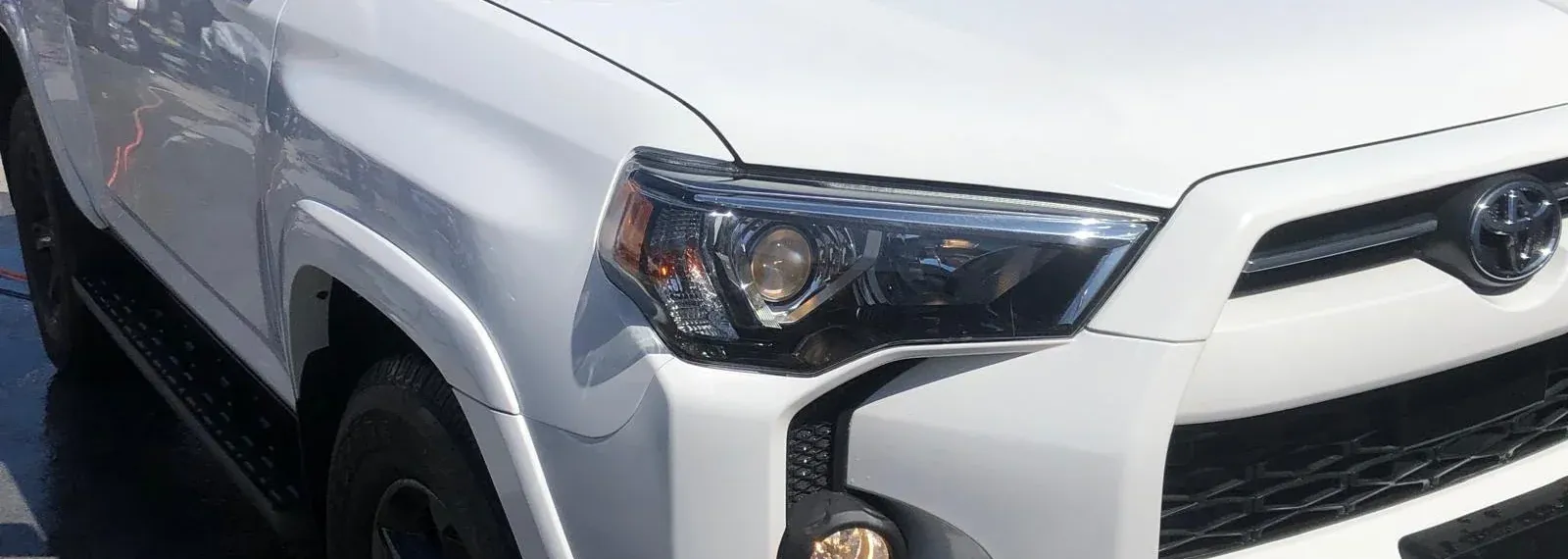
After enough valley miles a hood stops looking chipped and starts looking hazy, because the individual impacts have merged into a field of them and the clearcoat has been abraded between them. Mirror caps, A-pillars, and the top of the front bumper cover go the same way. Wax hides it for a weekend; once the clear is gone, the color underneath is on its own.
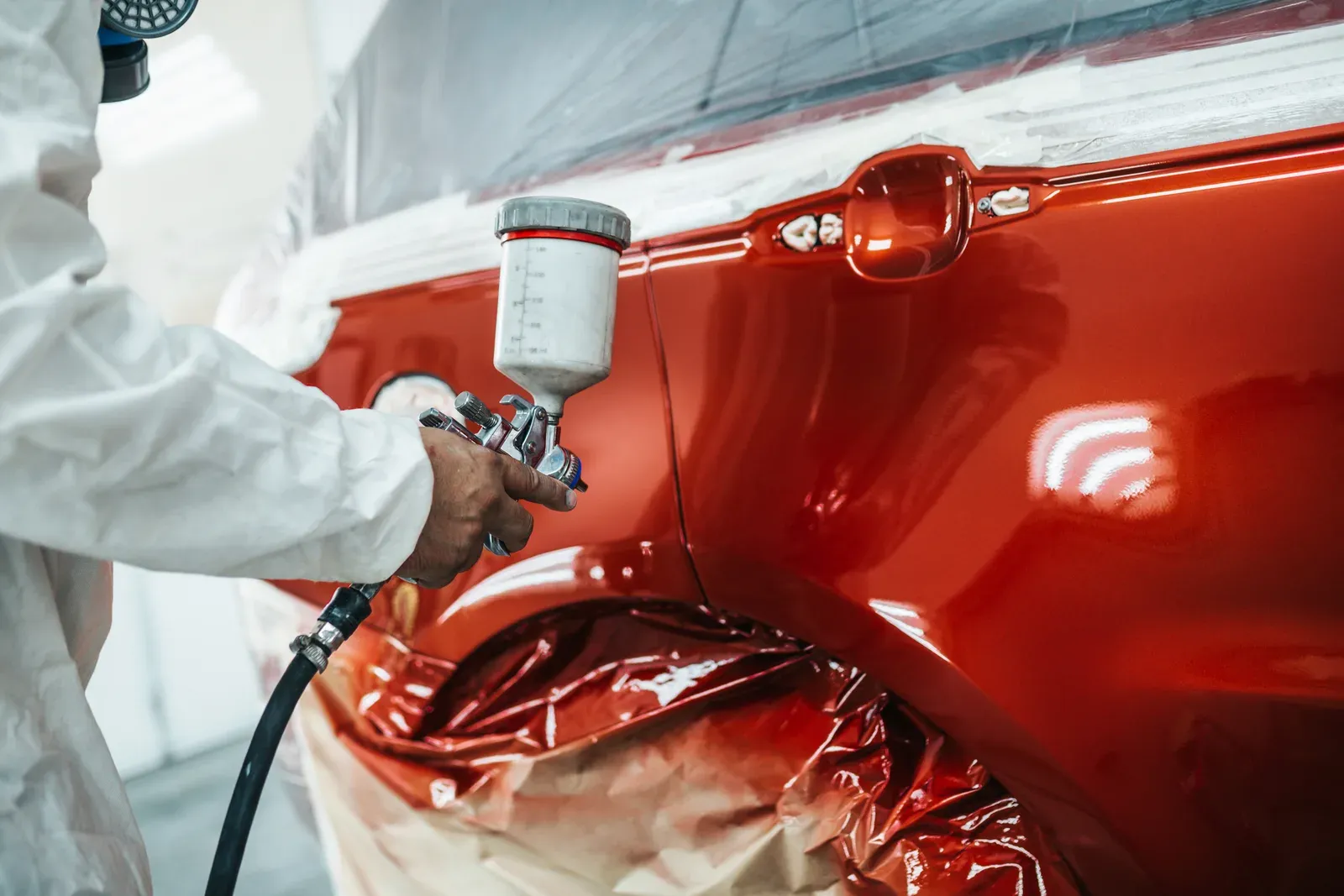
The repair is a full-panel refinish rather than a patch. A hood sprayed only along its leading edge leaves a line across the middle that shows in every low sun, so the panel is done end to end and the color is blended into the fenders on both sides. On a metallic that blend is what makes the difference invisible, and it is the only version worth paying for. Mirror caps and pillar edges usually go in the same visit, since they are already masked by then.
Deer strikes and panels that arrive in primer
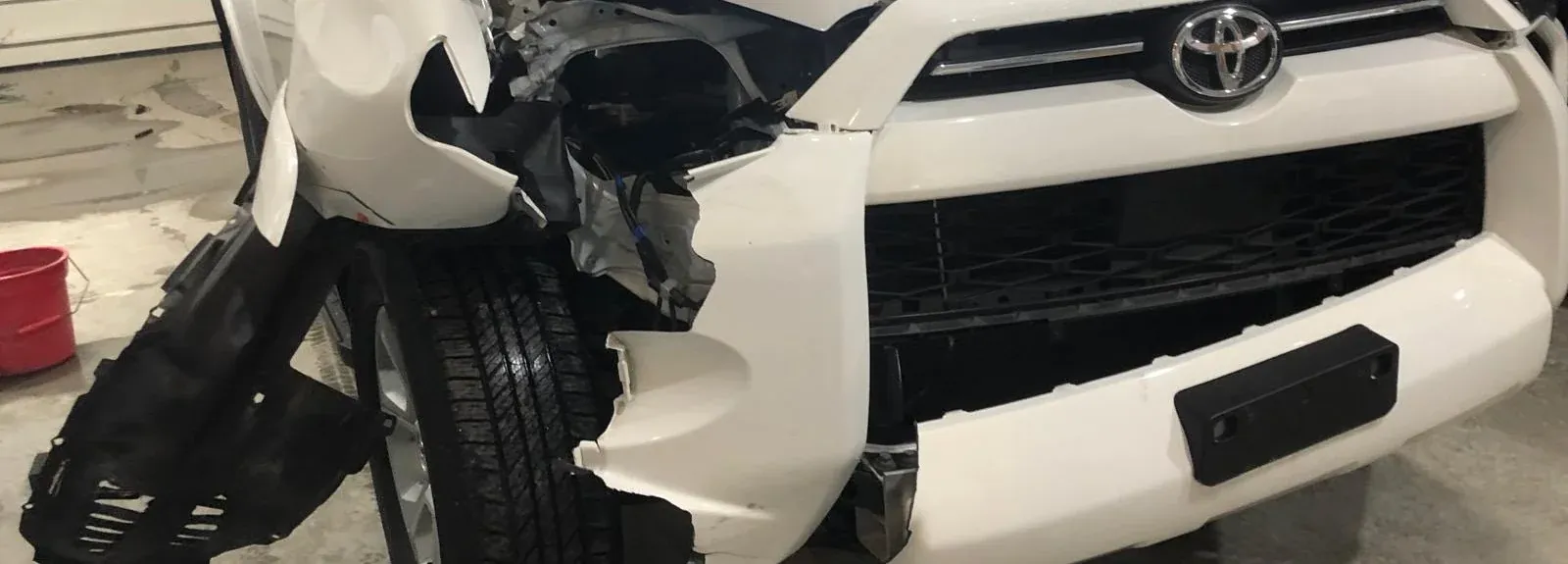
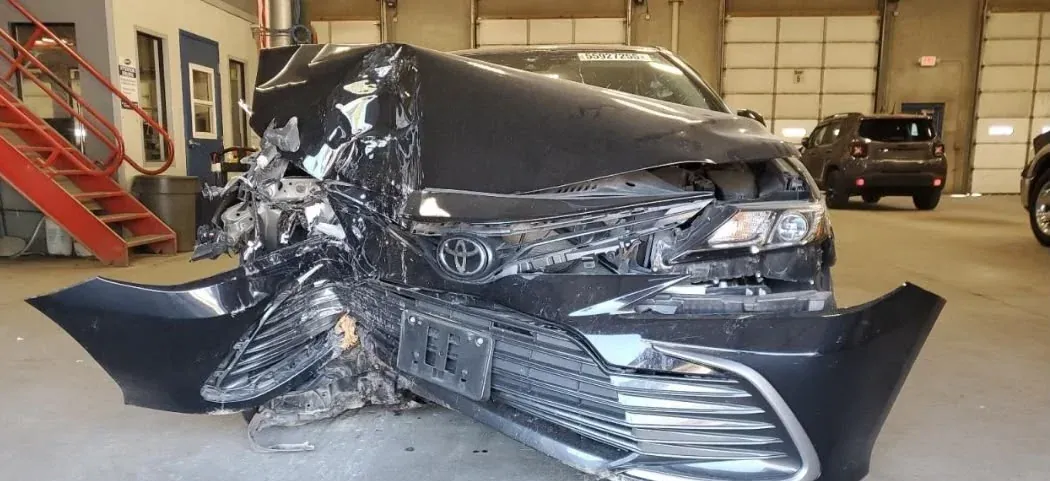
A deer at valley speed usually takes the hood, a fender, the bumper cover, and a lamp with it. Replacement panels ship in bare primer or raw plastic, so every one of them has to be prepped and refinished here before the vehicle is whole again. We spray them off the car where that gives better coverage on edges and returns, then hang them and blend into whatever stayed on the vehicle. A new fender beside a ten-year-old door is the whole problem in one sentence.
Matching new panels to a farm truck that has spent years outside means measuring the color the truck has now, not the color it left the factory with. If the strike is an insurance claim we open it, accept every insurance company, and file supplements when teardown finds more than the photos showed. Tows from Jordan are arranged when the vehicle cannot make the drive, and most of those calls come in at dusk, which is when the valley deer move.
- Replacement panels prepped and refinished before they go on
- Parts sprayed off the car where edges and returns need coverage
- Color measured off the panels that stayed on the vehicle
- Tow arranged from Jordan when the car is not drivable