
Why do parts take so long to arrive?
Quick answer
Common parts for common vehicles usually arrive in a day or two. Delays happen when a part is back-ordered at the manufacturer, ships from a distant or overseas warehouse, arrives damaged and has to be reordered, or when the insurance approval that authorizes the order has not come through yet.
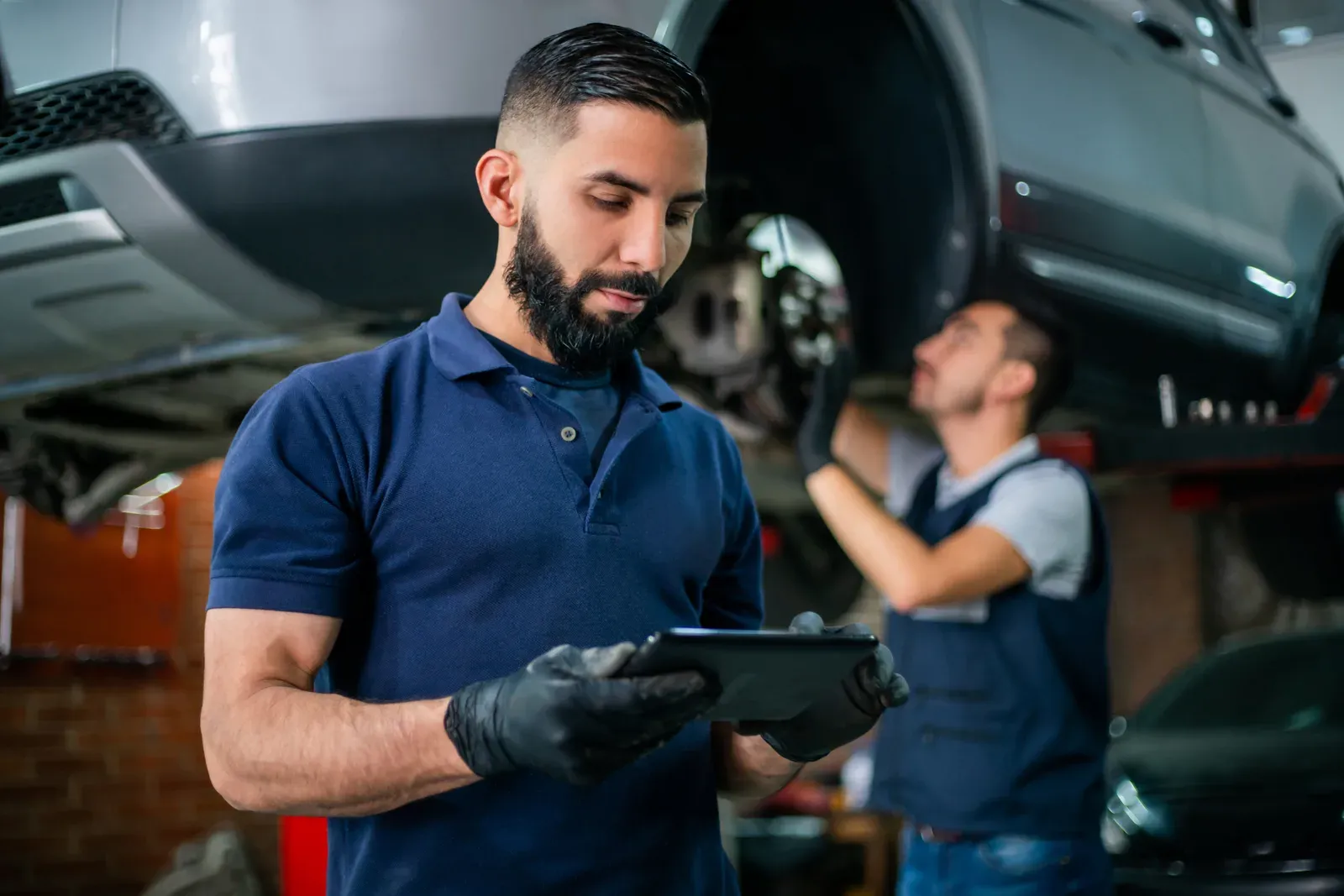
How parts ordering actually works
A shop does not keep body panels on a shelf. Every part is ordered for your specific vehicle, usually by VIN, from a dealer or a parts distributor. Fast-moving items for high-volume vehicles sit in regional warehouses and arrive next day. Everything else moves down a chain: regional warehouse, then national, then the manufacturer, then a production queue.
The order also cannot be placed until it is authorized. On an insurance repair, that means the estimate or supplement covering that part has been approved. On a self-pay repair, it means you have said yes. This is why the calendar sometimes shows nothing happening for days — the part has not been ordered because the approval has not arrived.
The five reasons parts run late
When a part is holding up your repair, it is almost always one of these:
- Back-order at the manufacturer, sometimes with no estimated availability date
- The part ships from a national or overseas warehouse rather than a regional one
- The part arrived damaged in transit — panels ship on racks and get creased — and has to be returned and reordered
- The wrong part was sent, because a mid-year production change or a trim difference was not caught
- Approval had not cleared yet, so the order was placed later than you assumed
Why the order sometimes has not been placed
This is the delay that frustrates people most, because it is invisible. Your car sits at the shop, nothing is happening, and the reason is a supplement waiting in a review queue at your insurance company.
Shops generally cannot order parts that have not been approved. Ordering ahead means eating the cost if the item is denied or if a used part is required instead, and on an expensive panel that is not a risk a shop can absorb repeatedly.
You can help here. Approve your estimate quickly and return your insurance company’s calls. A surprising number of stalled repairs are waiting on the vehicle owner rather than the shop.
It also helps to ask for the parts order date rather than the delivery date. If the order has not been placed, the delivery date is a guess. If it has, the shop can usually give you a tracked arrival window, and that number is worth planning around.
Damaged in transit is more common than people think
Body panels are large, thin, and painted or primed. They travel on racks in trucks, and a hood or door that arrives with a crease or a dented edge is not usable — installing it would mean repairing a brand-new part, which nobody should pay for.
A shop that inspects parts on arrival catches this on day one and reorders immediately. A shop that opens the crate the morning it needs the part loses a week. It is a small process difference with a large effect on your pickup date, and it is a fair thing to ask about.
The same applies to wrong parts. Vehicles change mid-model-year, trims differ in ways that are invisible from the outside, and a part ordered against the wrong build can arrive looking correct and fit nothing. Ordering by VIN reduces this substantially, which is why a shop asks for it.
How the wait can be shortened
The most effective thing a shop can do is order before your car arrives. If the estimate is written from photos, approved, and the parts brought in ahead of time, the days spent waiting are days you are still driving your vehicle rather than paying for a rental.
The second is early teardown, so hidden damage is found and its parts ordered at the same time as the obvious ones instead of a week later.
The third is honest conversation about alternatives. When an original part is genuinely on indefinite back-order, a good quality recycled original panel is sometimes the better outcome than waiting six weeks. When it is not equivalent, you should be told that too. Minnesota requires restoration to pre-accident condition with parts of like kind and quality, and you generally cannot be forced to accept non-original parts.
When a part is genuinely stuck, these are the options worth discussing:
- A recycled original part from a salvage vehicle — same manufacturer part, often available immediately
- A remanufactured or reconditioned original part, common for lamps and some mechanical items
- A quality aftermarket part, where the component is cosmetic and fit can be verified
- Keeping your vehicle and driving it until the part lands, if it is safe and legal to drive
- Repairing the existing part rather than replacing it, where that restores it fully
- Waiting — sometimes the right answer on a structural or safety-related component, with rental coverage extended
What to ask your shop
Ask three questions: which parts are on order, what is the expected delivery date on the last one, and have the parts been inspected on arrival. The answer to the second question is your realistic pickup date.
We order parts before drop-off whenever the estimate allows, inspect them when they land, and tell you the same day if a date moves and why. You should never have to chase a body shop for a status update.
It is also worth asking whether your vehicle needs to be at the shop at all while parts are on order. If the car is safe and legal to drive, keeping it means fewer rental days and less time staring at an empty driveway. Cars that sit at a shop waiting on a warehouse are a cost with no benefit to anyone.